The story of Juan Pujol García and the intelligence operations that secured the success of D-Day.
1,226 words7 min read
The Unlikely Spy
Juan Pujol García, a Spanish citizen with no formal training in espionage, became one of the most influential figures of World War II. His journey began with a deep disillusionment following the Spanish Civil War, a conflict that exposed him to the brutal realities of ideological extremism. This formative experience motivated him to oppose the Nazi regime, leading him to offer his services to the British intelligence services in 1942.
Pujol's strategy was as bold as it was simple: he would create an entirely fictitious network of sub-agents to feed the German intelligence service, the Abwehr, with a mixture of true but useless information and carefully crafted lies. Known to the British as Garbo and to his German handlers as Alaric, he successfully convinced the Nazis that he had established a vast network called Arabal within the United Kingdom. This deception was so effective that he was eventually awarded the Iron Cross by Germany, even as he was being decorated with the Member of the Order of the British Empire by the United Kingdom.
Pujol's work was the cornerstone of the Double-Cross System, a sophisticated counter-espionage operation managed by the Twenty Committee. This system relied on turning captured or volunteer Nazi agents into conduits for controlled disinformation. By maintaining a consistent and believable flow of intelligence, the British could manipulate the strategic decisions of the German High Command.
The success of this system relied heavily on individuals like Tomás Harris, an MI5 officer and art dealer whose fluency in Spanish and deep understanding of the Iberian political landscape made him the perfect handler for Pujol. Harris managed the delicate relationship between the British intelligence apparatus and the fictitious network, ensuring that the information provided to the Abwehr remained credible while serving the broader Allied strategic goals.
Operation Bodyguard and the Path to Normandy
On 12 April 1931, the Republicans won the elections and the Second Spanish Republic was proclaimed two days later. King Alfonso XIII went into exile.
As the Allies prepared for the invasion of Europe, they developed Operation Bodyguard, a massive strategic deception plan designed to mislead the Oberkommando der Wehrmacht regarding the timing and location of the invasion. Within this umbrella, Operation Fortitude emerged as the critical campaign to protect the Normandy landings.
Through Operation Fortitude, the Allies created elaborate illusions, including the use of dummy equipment and fictitious army groups, to convince the Germans that the main invasion would occur at the Pas-de-Calais rather than Normandy. Pujol was the central figure in this effort, sending constant, high-value reports that confirmed these false assumptions. By keeping German forces diverted to the wrong location, he ensured the Normandy landings could achieve tactical surprise.
The Normandy landings on 6 June 1944, the initial phase of Operation Overlord, were a success in part because the German intelligence network was effectively blinded by the very agents they thought were their greatest assets. The ability of the British to turn the Abwehr against itself through the Double-Cross System remains one of the most remarkable achievements in the history of military intelligence.
Meeting of the Supreme Headquarters Allied Expeditionary Force (SHAEF), 1 February 1944. Front row: Air Chief Marshal Sir Arthur Tedder; General Dwight D. Eisenhower; General Sir Bernard Montgomery. Back row: Lieutenant General Omar Bradley; Admiral Sir Bertram Ramsay; Air Chief Marshal Sir Trafford Leigh-Mallory; Lie...
Juan Pujol García's contribution was not merely a tactical success; it was a strategic triumph that fundamentally altered the course of the war. By providing the Allies with the ability to control the information reaching the enemy, he helped ensure that the liberation of Western Europe was achieved with significantly fewer casualties than might otherwise have been expected. His life, from his origins in the Spanish Civil War to his post-war anonymity in Venezuela, stands as a testament to the power of individual agency in the face of global conflict.
Sources
References from the graph material and illustrations used to generate this article. Saved with the article and preserved when you edit it.
 Juan Pujol García, a Spanish citizen with no formal training in espionage, became one of the most influential figures of World War II. His journey began with a deep disillusionment following the
 Spanish Civil War, a conflict that exposed him to the brutal realities of ideological extremism. This formative experience motivated him to oppose the Nazi regime, leading him to offer his services to the British intelligence services in 1942.
 Abwehr, with a mixture of true but useless information and carefully crafted lies. Known to the British as Garbo and to his German handlers as Alaric, he successfully convinced the Nazis that he had established a vast network called Arabal within the United Kingdom. This deception was so effective that he was eventually awarded the Iron Cross by Germany, even as he was being decorated with the Member of the Order of the British Empire by the United Kingdom.
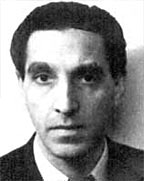 Tomás Harris, an
 MI5 officer and art dealer whose fluency in Spanish and deep understanding of the Iberian political landscape made him the perfect handler for Pujol. Harris managed the delicate relationship between the British intelligence apparatus and the fictitious network, ensuring that the information provided to the
 Operation Bodyguard, a massive strategic deception plan designed to mislead the Oberkommando der Wehrmacht regarding the timing and location of the invasion. Within this umbrella,
 Operation Fortitude emerged as the critical campaign to protect the
 Normandy landings.
 Operation Overlord, were a success in part because the German intelligence network was effectively blinded by the very agents they thought were their greatest assets. The ability of the British to turn the