The Soul of the Maker: The Origins and Motivations of the Arts and Crafts Movement
How a Victorian reaction against industrialization redefined the relationship between labor, art, and society.
997 words5 min read
A Reaction Against the Machine
The Arts and Crafts movement emerged in the 1880s within the British Isles as a profound, organized reaction against the dehumanizing effects of the Industrial Revolution. At its core, the movement was a protest against the perceived decline in standards and the loss of individual agency caused by mass production. It sought to restore the dignity of the individual craftsman, arguing that the quality of a society's art is an inseparable reflection of the moral and social health of its people.
The Intellectual Foundation: John Ruskin
William Morris 's design for Trellis wallpaper, 1862
The philosophical bedrock of the movement was laid by the critic John Ruskin. In his seminal treatise, The Stones of Venice, Ruskin articulated a scathing critique of the industrial division of labor, which he believed degraded the worker's spirit. His essay, 'The Nature of Gothic,' served as a manifesto for the movement, championing the idea that manual labor, when allowed to express individual creativity, was a noble and essential human activity.
Ruskin’s influence extended beyond theory; he was a fierce advocate for the preservation of historic buildings. This commitment to traditional craftsmanship and the preservation of the past directly inspired the next generation of reformers, most notably William Morris.
William Morris and the Manifestation of Ideals
William Morris became the most influential figure of the movement, translating Ruskin’s philosophy into practice. In 1859, he and architect Philip Webb designed Red House, which stands as the architectural manifesto of the movement. By emphasizing structural honesty and the integration of the home with its environment, Red House rejected the artificiality of Victorian design.
Morris’s commitment to these ideals led to the founding of Morris & Co. in 1861. The firm served as the commercial vehicle for movement aesthetics, producing high-quality, handcrafted textiles, wallpapers, and stained glass. Morris believed that beauty should be accessible to all, not just the elite, and his work sought to bring art into the everyday lives of people.
The movement’s aesthetic roots were deeply intertwined with the Pre-Raphaelite Brotherhood, founded in 1848. Figures like Edward Burne-Jones were central to this circle, sharing a fascination with medievalism and a rejection of the mechanical, academic approaches to art. This shared history of rejecting the status quo provided the visual language that would define Arts and Crafts design.
The Kelmscott Press: Reviving the Book
In his later years, Morris founded the Kelmscott Press in 1891 with Emery Walker. The press was a practical application of the movement's philosophy, seeking to return to the standards of incunabula—books printed before 1501. By prioritizing the physical beauty of the book as an object, the press became a cornerstone of the fine press movement.
Social Reform and Legacy
The Bauhaus emblem, designed by Oskar Schlemmer, was adopted in 1922.
Morris’s political convictions were inseparable from his art. In his utopian novel, News from Nowhere (1890), he imagined a future where labor was transformed into a source of joy. This vision of communal living was also explored through initiatives like the Guild and School of Handicraft, which attempted to create cooperative, workshop-based production models.
William Morris, News from Nowhere: Or, an Epoch of Rest (London, Kelmscott Press, 1892); Pequot Library Special Collections
The movement eventually gave way to new design philosophies. While the Bauhaus school (1919–1933) adopted the Arts and Crafts emphasis on the unity of art and craft, it fundamentally diverged by embracing industrial technology and mass production. Despite this, the Arts and Crafts movement remains a pivotal moment in history, having established the enduring principle that the dignity of labor and the quality of design are essential to a humane society.
Sources
References from the graph material and illustrations used to generate this article. Saved with the article and preserved when you edit it.
The Soul of the Maker: The Origins and Motivations of the Arts and Crafts Movement — The Arts and Crafts Rebellion, a good reminder that AI is about to make history repeat · Aristotree





 Arts and Crafts movement emerged in the 1880s within the British Isles as a profound, organized reaction against the dehumanizing effects of the Industrial Revolution. At its core, the movement was a protest against the perceived decline in standards and the loss of individual agency caused by mass production. It sought to restore the dignity of the individual craftsman, arguing that the quality of a society's art is an inseparable reflection of the moral and social health of its people.
 John Ruskin. In his seminal treatise, The Stones of Venice, Ruskin articulated a scathing critique of the industrial division of labor, which he believed degraded the worker's spirit. His essay, 'The Nature of Gothic,' served as a manifesto for the movement, championing the idea that manual labor, when allowed to express individual creativity, was a noble and essential human activity.
 William Morris.
 Morris & Co. in 1861. The firm served as the commercial vehicle for movement aesthetics, producing high-quality, handcrafted textiles, wallpapers, and stained glass. Morris believed that beauty should be accessible to all, not just the elite, and his work sought to bring art into the everyday lives of people.
 Pre-Raphaelite Brotherhood, founded in 1848. Figures like
 Edward Burne-Jones were central to this circle, sharing a fascination with
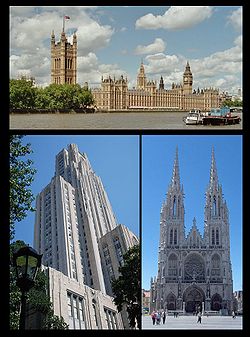 medievalism and a rejection of the mechanical, academic approaches to art. This shared history of rejecting the status quo provided the visual language that would define Arts and Crafts design.
 Kelmscott Press in 1891 with
 Emery Walker. The press was a practical application of the movement's philosophy, seeking to return to the standards of incunabula—books printed before 1501. By prioritizing the physical beauty of the book as an object, the press became a cornerstone of the fine press movement.
 News from Nowhere (1890), he imagined a future where labor was transformed into a source of joy. This vision of communal living was also explored through initiatives like the
 Guild and School of Handicraft, which attempted to create cooperative, workshop-based production models.
 Bauhaus school (1919–1933) adopted the Arts and Crafts emphasis on the unity of art and craft, it fundamentally diverged by embracing industrial technology and mass production. Despite this, the