
The Maritime Frontier of the 19th Century
In the early 19th century, the coastal waters of Guangdong were not merely trade routes; they were a contested frontier where the authority of the Qing dynasty met the formidable power of organized  piracy. At the center of this maritime landscape was
 Zheng Yi Sao, a leader whose command of the Red Flag Fleet transformed fragmented banditry into a disciplined, state-like entity. Her rise was facilitated by the unique geography of the Pearl River Delta and the immense economic stakes of the region, particularly the lucrative salt trade.
The Red Flag Fleet operated with a level of sophistication that defied traditional notions of piracy. By implementing a strict code of laws, Zheng Yi Sao ensured that her tens of thousands of followers adhered to a rigid hierarchy. This internal discipline allowed her to control vast territories, including areas within the historical  Bao'an County, where her fleet could effectively dominate local traffic and extract tribute.
The Economics of Outlawry
Salt was the lifeblood of the imperial economy, and its production was a tightly controlled state monopoly. However, the sheer scale of the Red Flag Fleet allowed Zheng Yi Sao to bypass these regulations. By dominating the illicit salt trade, her organization functioned as a shadow economy, directly undermining the fiscal authority of the Qing government. This economic power was not just a means of enrichment; it was a strategic tool that provided the resources necessary to maintain a massive fleet of junks.
Bao'an County as a Strategic Hub
The geography of Bao'an County, with its complex coastline and proximity to major trade centers, made it an ideal base for the Red Flag Fleet. The administrative center at Nantou was often powerless to stop the pirate incursions that plagued the region. Because the pirates operated from the water, they could easily retreat into the intricate bays and inlets of the Pearl River Delta, effectively rendering the land-based administrative structures of the county obsolete in the face of maritime insurgency.
The International Dimension: Macau and the Royal Navy
The presence of 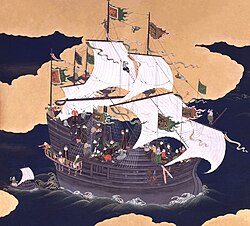 Portuguese Macau added another layer of complexity to the region. As a European trading outpost, Macau served as a diplomatic and commercial nexus. It was here that negotiations for the eventual surrender of the pirate fleet took place. Meanwhile, the
 Royal Navy began to exert increasing pressure on the South China Sea. As the British expanded their global maritime influence, their presence challenged the autonomy of local pirate groups, contributing to the eventual decline of large-scale piracy in the region.
Synthesis of Power
The story of Zheng Yi Sao is not just one of piracy, but of the shifting nature of power in the Pearl River Delta. Her ability to navigate the complex interplay between the Qing dynasty, the Portuguese administration in Macau, and the encroaching influence of the Royal Navy highlights a period of intense transition. By successfully negotiating her retirement in 1810, she demonstrated a pragmatic understanding of the limits of her power, ultimately choosing a stable life over the inevitable collapse of her maritime confederation.