


The Crisis of the Late Republic
The late Roman Republic was a period defined by intense political friction and the rapid expansion of state power. As Rome extended its reach across the Mediterranean, the mechanisms of governance struggled to keep pace with the influx of wealth and the complexity of provincial administration. Central to this transformation were the publicani, private contractors who held immense influence over the state's financial operations. These men, largely drawn from the equestrian order, managed everything from public building construction to the collection of port duties and, most controversially, tax farming in the provinces.
The publicani were not merely contractors; they were the financial backbone of the Roman state, yet their predatory practices often left provincial populations destitute. This systemic exploitation created a deep divide between the senatorial class, which sought to maintain order, and the equites, who sought to maximize profit. The tension between these groups would eventually claim one of the most principled figures of the era: Publius Rutilius Rufus.
A Statesman's Stand
Publius Rutilius Rufus was a man of traditional Roman virtues—a soldier, orator, and politician who reached the height of his career as consul in 105 BC. His career is documented in the list of Roman consuls, a record that tracks the evolution of leadership through the Republic's most turbulent centuries. Rutilius Rufus was not merely a career politician; he was a man of deep intellectual conviction, heavily influenced by the tenets of Stoicism.
When Rutilius Rufus served as governor of Asia, he acted with a rare sense of justice. Alongside his close associate Quintus Mucius Scaevola Pontifex, he implemented reforms designed to protect the provincials from the unchecked greed of the publicani. Scaevola, a foundational figure in the development of Roman law, shared Rutilius Rufus's belief in the necessity of a systematic, ethical approach to governance. Their efforts, however, were met with fierce resistance from the equites, who viewed any limitation on their profits as an existential threat.
Exile and Intellectual Refuge
The backlash against Rutilius Rufus was swift and brutal. Prosecuted on fabricated charges of extortion by the very people he had sought to restrain, he was forced into exile. For a Roman of his stature, this was a profound humiliation, yet Rutilius Rufus met his fate with the composure of a true Stoic. He chose Smyrna as his place of refuge, a strategic and prosperous Ancient Greek city on the Aegean coast of Anatolia.
In Smyrna, Rutilius Rufus found not just a place of banishment, but an intellectual sanctuary. He was welcomed by the local community and spent his remaining years writing history and engaging in philosophical discourse. His experience of exile—a state of forced displacement that has shaped the lives of countless figures throughout history—became the crucible for his final contributions to Roman historiography.
The Stoic Legacy
The philosophy of Stoicism provided Rutilius Rufus with the mental fortitude to endure his unjust conviction. Stoics believe that the universe is governed by logos, or universal reason, and that the only true good is the cultivation of virtue. By accepting his exile without bitterness, Rutilius Rufus demonstrated the practical application of these principles. His life became a testament to the idea that one's character remains inviolable, even when one's political status is stripped away.
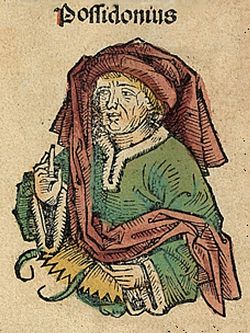
His historical writings, composed in Greek, were later utilized by the polymath Posidonius. Posidonius, a prominent Stoic philosopher and historian, incorporated the accounts of Rutilius Rufus into his own work, ensuring that the story of the struggle against the publicani would be preserved for future generations. This intellectual lineage highlights how Roman history was not merely a series of events, but a dialogue between the actors of the Republic and the thinkers who sought to interpret their actions.
Synthesis: The Cost of Integrity
The story of Publius Rutilius Rufus illustrates the fundamental fragility of the Roman Republic. His downfall was not merely a personal tragedy; it was a symptom of a state where the influence of private financial interests—the publicani—had begun to outweigh the rule of law. His commitment to virtue and his subsequent exile to Smyrna serve as a poignant reminder of the risks faced by those who challenged the established order.
Ultimately, the life of Rutilius Rufus demonstrates that the strength of a society depends on the integrity of its leaders and the resilience of its institutions. While the publicani may have succeeded in forcing him from Rome, they could not erase his influence. Through his writings and his adherence to Stoicism, he left a legacy that transcended his political career, proving that even in the face of systemic corruption, the pursuit of a well-reasoned life remains the highest form of resistance.