The Odyssey
An epic knowledge graph tracing Homer's Odyssey. Its gods, monsters, voyages, and the homesick king at the center of them all.
Key topics
Achelous
Achelous was the god in ancient Greek religion and mythology associated with the Achelous River, the largest river in Greece.
- Achelous is a deity in ancient Greek religion and mythology representing the Achelous River.
- The Achelous River is recognized as the largest river system in Greece.
- He is identified as the son of the Titans Oceanus and Tethys according to the poet Hesiod.
Aeaea
Aeaea, Ææa, Ææ̈ä or Eëä was a mythological island said to be the home of the goddess-sorceress Circe."Circe would fain have held me back in her halls, the guileful lady of Aeaea, yearning that I should be her husband."
- Aeaea is a mythical island featured in ancient Greek literature.
- The island serves as the primary residence of the sorceress Circe.
- It is also referred to by the names Ææa, Ææ̈ä, and Eëä.
Aegisthus
Aegisthus was a figure in Greek mythology.
- Aegisthus is a figure in Greek mythology known for his role in the downfall of the House of Atreus.
- His story is documented in Homer's Odyssey, which dates back to the late 8th century BC.
- He is a central character in Aeschylus's 5th-century BC trilogy, the Oresteia.
Agamemnon
In Greek mythology, Agamemnon was a king of Mycenae who commanded the Achaeans during the Trojan War.
- Agamemnon served as the king of Mycenae and commanded the Achaean forces during the Trojan War.
- He was the son of King Atreus and Queen Aerope and the brother of Menelaus.
- His marriage to Clytemnestra produced several children, including Iphigenia, Electra, and Orestes.
Alcimus (mythology)
Alcimus or Alkimos may refer to several figures in Greek mythology:Alcimus, a companion of Achilles; he and Automedon were the two most favored by Achilles after Patroclus' death.
- The name Alcimus refers to multiple distinct figures within the corpus of Greek mythology.
- One version of Alcimus served as a close companion to Achilles alongside Automedon.
- Another Alcimus was a son of Hippocoon and was honored with a heroon in the city of Sparta.
Amphinomus
In Greek mythology, Amphinomus may refer to the following personages:Amphinomus, the Aetolian father of Thyrie (Hyria) who became the mother of Cycnus by Apollo.
- One version of Amphinomus was a prince of Dulichium and the son of King Nisos.
- He was a suitor of Penelope who was noted for being the most well-behaved of the group.
- He was killed by a spear thrown by Telemachus during the massacre in the palace.
Anticlea
In Greek mythology, Anticlea or Anticlia was a queen of Ithaca as the wife of King Laërtes.
- Anticlea held the title of queen of Ithaca.
- She was the wife of King Laertes.
- She is recognized in Greek mythology as the mother of Odysseus.
Antinous of Ithaca
In the Epic Cycle, Antinous or Antinoös was the Ithacan son of Eupeithes, best known for his role in Homer's Odyssey.
- Antinous is identified as the son of Eupeithes in the Epic Cycle.
- He is a prominent character originating from the island of Ithaca.
- His narrative role is primarily defined within the Homeric tradition.
Aphrodite
Aphrodite is an ancient Greek goddess associated with love, lust, beauty, pleasure, passion, procreation, and as her syncretised Roman counterpart Venus, desire, sex, fertility, prosperity, and victory.
- Aphrodite is the Greek goddess governing love, beauty, passion, and procreation.
- Her Roman equivalent is the goddess Venus.
- Her primary symbols include seashells, myrtles, roses, doves, sparrows, and swans.
Argonautica
The Argonautica is a Greek epic poem written by Apollonius Rhodius in the 3rd century BC.
- The Argonautica is a Greek epic poem composed by Apollonius Rhodius during the 3rd century BC.
- It is the only Hellenistic epic poem to survive in its entirety.
- The narrative follows the journey of Jason and the Argonauts as they seek the Golden Fleece in Colchis.
Arnaeus
Arnaeus is a character in Greek mythology.
- Arnaeus is a figure documented in the corpus of Greek mythology.
- He is recognized as a character within the ancient Greek literary tradition.
- The name is associated with specific narrative roles in epic poetry.
Artemis
In ancient Greek religion and mythology, Artemis is the goddess of hunting, the wilderness, wild animals, transitions, nature, vegetation, childbirth, care of children, and chastity.
- Artemis is the ancient Greek goddess of the hunt, wilderness, and wild animals.
- She is also associated with transitions, nature, vegetation, and the protection of children.
- She is traditionally depicted roaming forests and mountains with an entourage of nymphs.
Athena
Athena or Athene, often given the epithet Pallas, is an ancient Greek goddess associated with wisdom, warfare, and handicraft who was later syncretised with the Roman goddess Minerva.
- Athena is the ancient Greek goddess of wisdom, warfare, and handicraft.
- She is often referred to by the epithet Pallas.
- She was syncretised with the Roman goddess Minerva.
Atlas (mythology)
In Greek mythology, Atlas is a Titan condemned to hold up the heavens or sky for eternity after the Titanomachy.
- Atlas is a Titan punished after the Titanomachy by being forced to support the heavens for eternity.
- Ancient accounts place his location at the extreme western edge of the earth.
- He is traditionally associated with the Atlas Mountains in northwest Africa.
Calypso (mythology)
In Greek mythology, Calypso was a nymph who lived on the island of Ogygia, where, according to Homer's Odyssey, she detained Odysseus for seven years against his will.
- Calypso is a nymph featured in Homer's Odyssey.
- She resided on the remote island of Ogygia.
- She held the hero Odysseus captive for a duration of seven years.
Cassandra
In Greek mythology, Cassandra, also spelled Kassandra or Casandra, was a Trojan priestess dedicated to the god Apollo and fated by him to utter true prophecies, but never be believed.
- Cassandra was a Trojan princess and a priestess dedicated to the god Apollo.
- She was cursed by Apollo to possess the gift of prophecy while ensuring that no one would believe her predictions.
- She survived the fall of Troy during the Trojan War.
Castor and Pollux
Castor and Pollux are twin half-brothers in Greek and Roman mythology, known together as the Dioscuri or Dioskouroi.
- Castor and Pollux are twin half-brothers in classical mythology.
- They are collectively known by the title of the Dioscuri or Dioskouroi.
- The pair appears in both Greek and Roman mythological traditions.
Cephalonia
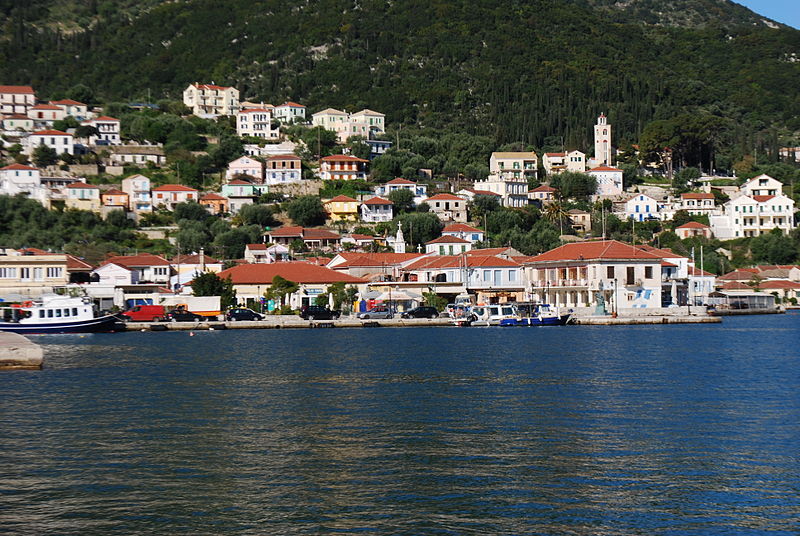
Kefalonia or Cephalonia, formerly also known as Kefallinia or Kephallenia (Κεφαλληνία), is the largest of the Ionian Islands in western Greece and the sixth-largest island in Greece after Crete, Euboea, Lesbos, Rhodes and Chios.
- Cephalonia is the largest island within the Ionian Sea archipelago.
- It ranks as the sixth-largest island in Greece by total land area.
- The island serves as a distinct regional unit within the Ionian Islands administrative region.
Cerberus
In Greek mythology, Cerberus, often referred to as the hound of Hades, is a multi-headed dog that guards the gates of the underworld to prevent the dead from leaving.
- Cerberus is a multi-headed canine guardian of the underworld gates.
- He was born to the monstrous parents Echidna and Typhon.
- He is typically depicted with three heads and a serpent for a tail.
Charon
In Greek mythology, Charon or Kharon is the ferryman of the Greek underworld.
- Charon acts as the ferryman responsible for transporting souls across the underworld river.
- He only accepts passengers who have received proper funeral rites.
- The dead were often buried with coins known as obols to pay his passage fee.
Charybdis
Charybdis is a sea monster in Greek mythology.
- Charybdis is a sea monster originating from Greek mythology.
- The creature is historically and mythologically located within the Strait of Messina.
- It acts as a formidable obstacle for legendary figures like Odysseus, Jason, and Aeneas.
Circe
In Greek mythology, Circe is a witch, sometimes considered a goddess or a nymph.
- Circe is a mythological figure identified as a witch, goddess, or nymph.
- She is the daughter of the sun god Helios and the Oceanid Perse.
- She possesses extensive knowledge of herbalism and potion-making.
Clytemnestra
In Greek mythology, Clytemnestra was the wife of Agamemnon, king of Mycenae, and the half-sister of Helen of Troy.
- Clytemnestra was the queen of Mycenae and the wife of King Agamemnon.
- She was the half-sister of Helen of Troy, who was famously abducted to Troy.
- She was the mother of Orestes and Electra, born from her union with Agamemnon.
Crataeis
In Greek mythology, Crataeis is, by some accounts, the mother of Scylla.
- Crataeis is identified in Greek mythology as the mother of the monster Scylla.
- Her name is invoked by the sorceress Circe in Homer's Odyssey.
- She is described as having birthed Scylla specifically to serve as a bane to mortals.
Ctesius
In Greek mythology, Ctesius may refer to:Ctesius, king of the island called Syra and son of Ormenus.
- Ctesius of Syra was the son of Ormenus and the father of Eumaeus.
- A different Ctesius was one of the 57 suitors of Penelope who arrived from Dulichium.
- The suitor Ctesius was killed by Odysseus alongside his fellow suitors.
Cyclopes
In Greek mythology and later Roman mythology, the Cyclopes are giant one-eyed creatures.
- Cyclopes are defined as giant mythological beings possessing a single eye.
- The Hesiodic tradition identifies Brontes, Steropes, and Arges as the three brothers who forged divine weapons for Zeus, Poseidon, and Hades.
- Homeric tradition depicts the Cyclopes as uncivilized, cave-dwelling shepherds.
Djerba
Djerba, also transliterated as Jerba or Jarbah, is a Tunisian island and the largest island of North Africa at 514 square kilometers (198 sq mi), in the Gulf of Gabès, off the coast of Tunisia.
- Djerba is the largest island in North Africa, covering an area of 514 square kilometers.
- It is located within the Gulf of Gabès off the coast of Tunisia.
- The island is administratively governed as part of the Medenine Governorate.
Doulos
Doulos is a Greek masculine noun meaning "slave".
- Doulos is a Greek masculine noun that translates to slave or bondsman.
- In the New Testament, the term is frequently used metaphorically to describe the relationship between Christians and Jesus Christ.
- The word is sometimes translated as servant in various biblical contexts.
Elysium
Elysium, otherwise known as the Elysian Fields, Elysian Plains or Elysian Realm, is a conception of the afterlife that developed over time and was maintained by some Greek religious and philosophical sects and cults.
- Elysium is a conception of the afterlife that evolved within Greek religious sects.
- It was originally distinct from the realm of Hades.
- Admission was initially restricted to heroes and those related to the gods.
Eumaeus
In Greek mythology, Eumaeus was Odysseus's doulos, swineherd, and friend.
- Eumaeus served as the loyal swineherd and doulos to Odysseus.
- He was the son of King Ctesius of the island of Syra.
- His lineage traces back to his grandfather Ormenus.
Eupeithes
In Greek mythology, Eupeithes was the father of Antinous, the leader of the suitors of Penelope.
- Eupeithes was the father of the suitor leader Antinous.
- He attempted to lead a revolt against Odysseus following the death of his son.
- His life ended when he was killed by Laertes, the father of Odysseus.
Eurymachus
The name Eurymachus or Eurymachos is attributed to the following individuals:
- Eurymachus is a name historically attributed to multiple distinct individuals.
- The name appears in various contexts within Greek mythological records.
- It serves as a designation for several separate characters in ancient literature.
Eurymachus (Odyssey)
In Greek mythology, Eurymachus was an Ithacan nobleman and one of the two leading suitors of Penelope, the other being Antinous.
- Eurymachus was a nobleman from the island of Ithaca.
- He served as one of the two primary suitors competing for the hand of Penelope.
- He was the son of Polybus.
Galatea (mythology)
In Greek mythology, Galatea was the name of the following figures:Galatea, a Nereid who loved the shepherd Acis, and was loved by the cyclops Polyphemus.
- The name Galatea refers to three distinct figures within the corpus of Greek mythology.
- One Galatea is a Nereid associated with the shepherd Acis and the Cyclops Polyphemus.
- A second Galatea is the name given to the ivory statue carved by Pygmalion and animated by Aphrodite.
Glaucus
In Greek mythology, Glaucus was a Greek prophetic sea-god, born mortal and turned immortal upon eating a magical herb.
- Glaucus is a prophetic sea-god in Greek mythology who was originally born mortal.
- He achieved immortality after consuming a specific magical herb.
- He is known for providing assistance to sailors and fishermen during maritime storms.
Hades
Hades, in the ancient Greek religion and mythology, is the god of the dead and riches and the King of the underworld, with which his name became synonymous.
- Hades is the eldest son of the Titans Cronus and Rhea.
- He serves as the king of the underworld and the god of the dead.
- He is associated with the riches found beneath the earth.
Hecate
Hecate is a goddess in ancient Greek religion and mythology, most often shown holding a pair of torches, a key, or snakes, or accompanied by dogs, and in later periods depicted as three formed or triple bodied.
- Hecate is a Greek goddess associated with magic, witchcraft, the Moon, and crossroads.
- She is often depicted holding torches, a key, or snakes, or as a triple-bodied figure.
- Her earliest literary appearance is in Hesiod's 8th-century BC work, Theogony.
Helen of Troy
Helen, also known as Helen of Troy, or Helen of Sparta, and in Latin as Helena, was a figure in Greek mythology said to have been the most beautiful woman in the world.
- Helen is traditionally regarded as the most beautiful woman in Greek mythology.
- She is identified as the daughter of the god Zeus and either Leda or Nemesis.
- Her siblings include Clytemnestra, Castor, Pollux, Philonoe, Phoebe, and Timandra.
Helios
In ancient Greek religion and mythology, Helios is the god who personifies the Sun.
- Helios is the ancient Greek deity who personifies the Sun.
- He is frequently identified by the epithets Hyperion and Phaethon.
- Artistic depictions show him wearing a radiant crown and driving a horse-drawn chariot.
Hermes
Hermes is an Olympian deity in ancient Greek religion and mythology considered the herald of the gods.
- Hermes serves as the official herald of the Olympian gods.
- He acts as a patron deity for travelers, merchants, thieves, and orators.
- He utilizes winged sandals to facilitate rapid movement between the mortal and divine realms.
Hermione (mythology)
In Greek mythology, Hermione was the daughter of Menelaus, king of Sparta, and his wife, Helen of Troy.
- Hermione was the daughter of the Spartan King Menelaus and Helen of Troy.
- She was the granddaughter of King Tyndareus.
- Her grandfather betrothed her to her cousin Orestes, the son of Agamemnon.
Homer
Homer was an ancient Greek poet who is widely credited as the author of the Iliad and the Odyssey, two epic poems that are foundational works of ancient Greek literature.
- Homer was an ancient Greek poet credited with the authorship of the Iliad and the Odyssey.
- His life and personal history remain largely obscure to modern historians.
- He is regarded as one of the most influential figures in the history of literature.
Homer's Ithaca
Ithaca was, in Greek mythology, the island home of the hero Odysseus.
- In Greek mythology, Ithaca is identified as the island home of the hero Odysseus.
- The island's geography is described in detail within Homer's epic poem, the Odyssey.
- Scholars have engaged in long-standing debates regarding the precise real-world location of the mythological island.
Hubris
Hubris, or less frequently hybris, is extreme or excessive pride or dangerous overconfidence and complacency, often in combination with arrogance.
- Hubris is defined as a state of extreme or excessive pride.
- The concept encompasses dangerous overconfidence and a lack of caution.
- It is frequently characterized by a combination of arrogance and complacency.
Iliad
The Iliad is one of two major surviving ancient Greek epic poems attributed to Homer.
- The Iliad is a foundational epic poem of ancient Greek literature attributed to Homer.
- The text is composed in dactylic hexameter verse.
- The standard edition of the poem consists of 15,693 lines.
Ionian Islands (region)
The Ionian Islands Region is the smallest by area of the thirteen administrative regions of Greece located in the Ionian Sea.
- The Ionian Islands Region is the smallest administrative region in Greece by land area.
- It consists of thirteen administrative regions located within the Ionian Sea.
- The region encompasses the majority of the Ionian island chain.
Iphigenia
In Greek mythology, Iphigenia was a daughter of King Agamemnon and Queen Clytemnestra, and thus a princess of Mycenae.
- Iphigenia was a princess of Mycenae born to King Agamemnon and Queen Clytemnestra.
- She is a prominent figure in Greek mythological accounts regarding the events of the Trojan War.
- Her story is frequently associated with the sacrifices required for the Greek fleet to sail to Troy.
Ithaca (island)
Ithaca, also Ithaki or Ithaka, is a Greek island located in the Ionian Sea, off the northeast coast of Kefalonia and to the west of continental Greece.
- Ithaca is a Greek island situated in the Ionian Sea.
- It is geographically positioned off the northeast coast of Kefalonia.
- The island lies to the west of the Greek mainland.
Judgement of Paris
The Judgement of Paris is a story from Greek mythology, which was one of the events that led up to the Trojan War, and in later versions to the foundation of Rome.
- The Judgement of Paris is a foundational narrative event in Greek mythology.
- The story serves as a direct precursor to the outbreak of the Trojan War.
- Later mythological traditions link the event to the eventual founding of Rome.
Laertes (father of Odysseus)
In Greek mythology, Laertes was the king of the Cephallenians, an ethnic group who lived both on the Ionian Islands and on the mainland.
- Laertes reigned as the king of the Cephallenians, a people inhabiting the Ionian Islands and parts of the mainland.
- He succeeded his father Arcesius and his grandfather Cephalus to the throne.
- His kingdom encompassed Ithaca and the surrounding islands.
Leda (mythology)
In Greek mythology, Leda, also rendered as Lede, was an Aetolian princess who became queen consort of Sparta through her marriage to King Tyndareus.
- Leda was an Aetolian princess who became the queen consort of Sparta.
- She was married to the Spartan King Tyndareus.
- Zeus seduced Leda by assuming the form of a swan.
Leodes
In the Odyssey, Leodes, Leiodes or Liodes was an Ithacan diviner and a minor suitor of Penelope.
- Leodes served as a diviner among the suitors of Penelope in Ithaca.
- He was considered a minor suitor compared to the primary leaders.
- He possessed the ability to interpret omens and signs.
Lotus tree
The lotus tree is a plant that is referred to in stories from Greek and Roman mythology.
- The lotus tree is a recurring botanical element in ancient Greek and Roman mythology.
- Its existence as a real biological species remains unverified and debated.
- Multiple real-world plant species have been proposed as candidates for the mythical lotus tree.
Lotus-eaters
In Greek mythology, lotophages or the lotus-eaters were a race of people living on an island dominated by the lotus tree on the island of Djerba off the coast of Tunisia, a plant whose botanical identity is uncertain.
- The lotus-eaters are a mythical race described in Homer's Odyssey.
- They inhabit an island dominated by a specific lotus tree.
- The primary diet of the population consists of the sweet, honey-like fruit of the lotus plant.
Medon (mythology)
In Greek mythology and history, Medon is the name of a number of different figures:Medon, one of the Tyrrhenian pirates who attempted to enslave Dionysus and were changed into fish or dolphin.
- Medon served as the faithful herald in the household of Odysseus.
- He was spared by Odysseus during the slaughter of the suitors on the advice of Telemachus.
- He attempted to defend Odysseus's actions by claiming they were sanctioned by the gods.
Melanthius (Odyssey)
Melanthius, the son of Dolius, is a minor character in Homer's Odyssey: Odysseus's enslaved goatherd.
- Melanthius was the son of Dolius and served as the goatherd for Odysseus.
- He is characterized by his disloyalty to his master during Odysseus's twenty-year absence.
- He stands in direct contrast to the loyal swineherd Eumaeus and cowherd Philoetius.
Menelaus
In Greek mythology, Menelaus was a king of Sparta.
- Menelaus served as the king of Sparta and was the husband of Helen of Troy.
- He led the Spartan contingent of the Greek army during the Trojan War.
- He was the younger brother of Agamemnon, the king of Mycenae.
Mentor (Odyssey)
In the Odyssey, Mentor was the son of Alcimus.
- Mentor is identified in Greek mythology as the son of Alcimus.
- He served as a trusted friend and advisor to Odysseus during his later years.
- Odysseus entrusted Mentor with the guardianship of his son Telemachus.
Mentorship
Mentorship is the patronage, influence, guidance, or direction given by a mentor.
- Mentorship involves the provision of guidance, patronage, and professional direction to a mentee.
- The relationship focuses on facilitating the personal and professional growth of the less experienced individual.
- Mentors utilize their specific knowledge and past experiences to educate and advise others.
Metamorphoses
The Metamorphoses is a Latin narrative poem from 8 CE by the Roman poet Ovid.
- The Metamorphoses is a Latin narrative poem composed by the Roman poet Ovid in 8 CE.
- It is widely regarded as the magnum opus of Ovid's literary career.
- The work spans 15 books and contains a total of 11,995 lines.
Metamorphosis
Metamorphosis is a biological process in which an animal undergoes a conspicuous and relatively abrupt change in its body structure as part of its development.
- Metamorphosis is a biological process involving abrupt changes in an organism's body structure.
- The process occurs during the postembryonic development of various animals including insects and amphibians.
- Complete metamorphosis, or holometaboly, involves transition between radically different lifecycle stages.
Moly (herb)
Moly is a magical herb mentioned in book 10 of Homer's Odyssey.
- Moly is a magical herb described in the tenth book of Homer's Odyssey.
- It is characterized by its supernatural properties within the context of Greek legend.
Muses
In ancient Greek religion and mythology, the Muses were the inspirational goddesses of literature, science, and the arts.
- The Muses are goddesses in ancient Greek religion who serve as the primary source of inspiration for the arts and sciences.
- They are credited with embodying the knowledge found in poetry, lyric songs, and oral myths.
- Their influence spans across literature, scientific inquiry, and creative expression.
Mycenae
Mycenae is an archaeological site near Mykines in Argolis, north-eastern Peloponnese, Greece.
- Mycenae is an archaeological site situated in the Argolis region of the north-eastern Peloponnese in Greece.
- The site is located approximately 120 kilometres south-west of Athens.
- It is positioned 11 kilometres north of Argos and 48 kilometres south of Corinth.
Nostos
Nostos is a theme used in Ancient Greek literature, which includes an epic hero returning home, often by sea.
- Nostos is a literary theme in ancient Greek works involving a hero's return home.
- The journey is typically conducted by sea and involves extensive trials and shipwrecks.
- Successful completion of a nostos was considered a mark of high heroism in Greek society.
Nymph
A nymph is a minor female nature deity in ancient Greek folklore.
- Nymphs are categorized as minor female nature deities in ancient Greek folklore.
- They are typically depicted as maidens and serve as personifications of specific natural features.
- Each nymph is usually bound to a particular location, landform, or tree.
Odysseus
In Greek and Roman mythology, Odysseus, also known by the Latin variant Ulysses, is a legendary Greek king of Ithaca and the hero of Homer's epic poem, the Odyssey.
- Odysseus is a legendary king of Ithaca in Greek and Roman mythology.
- He is also referred to by the Latin name Ulysses.
- He serves as the central protagonist of the epic poem the Odyssey.
Odyssey
The Odyssey is one of two major epics of ancient Greek literature attributed to Homer.
- The Odyssey is an ancient Greek epic poem traditionally attributed to the poet Homer.
- The narrative is structured into 24 distinct books.
- It chronicles the ten-year return journey of the king of Ithaca, Odysseus, following the Trojan War.
Ogygia
Ogygia is an island mentioned in Homer's Odyssey, Book V, as the home of the nymph Calypso, the daughter of the Titan Atlas.
- Ogygia is a mythical island described in Book V of Homer's Odyssey.
- The island serves as the primary residence of the nymph Calypso.
- Calypso is identified as the daughter of the Titan Atlas on this island.
Oresteia
The Oresteia is a trilogy of Greek tragedies written by Aeschylus in the 5th century BC, concerning the murder of Agamemnon by Clytemnestra, the murder of Clytemnestra by Orestes, the trial of Orestes, the end of the curse on the House of Atreus, and the pacification of the Furies.
- The Oresteia is a trilogy of Greek tragedies authored by Aeschylus in the 5th century BC.
- The narrative focuses on the murder of Agamemnon by his wife, Clytemnestra.
- It details the subsequent murder of Clytemnestra by her son, Orestes.
Orpheus
In Greek mythology, Orpheus was a Thracian bard, legendary musician and prophet.
- Orpheus is a legendary Thracian figure recognized as a master musician, poet, and prophet.
- He participated in the expedition of the Argonauts to retrieve the Golden Fleece.
- He is famous for his journey into the underworld to attempt the rescue of his wife, Eurydice.
Outis
Outis is an often used pseudonym that appeared famously in Classical Greek legends.
- Outis is a Greek term that translates literally to no one or nobody.
- The pseudonym originated in Classical Greek legends as a tool for deception.
- It is frequently utilized by modern public figures and artists to maintain anonymity.
Paris (mythology)
Paris, also known as Alexander, is a figure from Greek mythology who appears in the numerous stories about the Trojan War, including the Iliad.
- Paris is a prince of Troy born to King Priam and Queen Hecuba.
- He is also referred to by the name Alexander in various mythological accounts.
- He is the younger brother of the Trojan hero Hector.
Parthenope (siren)
Parthenope was one of the sirens in Greek mythology.
- Parthenope is identified as a specific individual among the sirens of Greek mythology.
- Her name is derived from the Greek words parthenos and ops.
- The etymology of her name translates to maiden-voiced.
Penelope
Penelope is a legendary mythological Greek Queen of Ithaca and Princess of Sparta or Acarnania, who plays a prominent character in Homer's Odyssey.
- Penelope is a mythological Queen of Ithaca and a central figure in the Odyssey.
- She is the daughter of the Spartan king Icarius and the Naiad Periboea.
- She is the mother of Telemachus.
Persephone
In ancient Greek mythology and religion, Persephone, also called Kore or Cora, is the daughter of Zeus and Demeter.
- Persephone is the daughter of the deities Zeus and Demeter.
- She is also known by the names Kore or Cora.
- She became the queen of the underworld following her abduction by Hades.
Perses (brother of Aeetes)
In Greek mythology, Perses is a son of Helios, the god of the Sun, and the Oceanid nymph Perse.
- Perses is a son of the sun god Helios and the Oceanid nymph Perse.
- He is the brother of Aeëtes, the king of Aea and guardian of the Golden Fleece.
- Perses usurped the throne of Aea following the theft of the Golden Fleece by Jason.
Phemius
In Homer's epic poem the Odyssey, Phemius, son of Terpes/Terpius, is an Ithacan poet who performs narrative songs in the house of the absent Odysseus.
- Phemius was an Ithacan poet and bard featured in the Odyssey.
- He was the son of Terpes, sometimes referred to as Terpius.
- He performed narrative songs for the suitors within the house of the absent Odysseus.
Phorcys
In Greek mythology, Phorcys or Phorcus is a primordial sea god, generally cited as the son of Pontus and Gaia (Earth).
- Phorcys is a primordial sea god in Greek mythology, born to Pontus and Gaia.
- He is recognized as the father of numerous monstrous children with his wife, Ceto.
- Hellenistic-Roman mosaics depict him as a merman with a fish tail and crab-claw legs.
Pluto (god)
In ancient Greek religion and mythology, Pluto was the ruler of the underworld.
- Pluto is a title for the ruler of the underworld that emphasizes a more positive aspect.
- The name is etymologically linked to the Greek god of wealth, Ploutos.
- He is associated with the mineral wealth and seeds found deep within the earth.
Polybus (Odyssey)
In Ancient Greek epic tradition recounted in Homer's Odyssey, Polybus was the father of a suitor, Eurymachus, who was killed by Odysseus once he returned from his 10-year journey during the Trojan War.
- Polybus is identified in the Odyssey as the father of the suitor Eurymachus.
- He is a figure within the Ancient Greek epic tradition.
- His son Eurymachus was killed by Odysseus upon the hero's return to Ithaca.
Polyphemus
Polyphemus is the one-eyed giant son of Poseidon and Thoosa in Greek mythology, one of the Cyclopes described in Homer's Odyssey.
- Polyphemus is a giant belonging to the race of Cyclopes in Greek mythology.
- He is the biological son of the sea god Poseidon and the nymph Thoosa.
- The name Polyphemus is etymologically interpreted as meaning many-voiced or abounding in songs.
Poseidon
Poseidon is one of the twelve Olympians in ancient Greek religion and mythology, presiding over the sea, storms, earthquakes and horses.
- Poseidon is one of the twelve Olympian deities in ancient Greek religion.
- He presides over the sea, storms, earthquakes, and horses.
- He was historically venerated as a chief deity in Bronze Age Pylos and Thebes.
Scylla
In Greek mythology, Scylla is a legendary, man-eating monster that lives on one side of a narrow channel of water, opposite her counterpart, the sea-swallowing monster Charybdis.
- Scylla is a legendary man-eating monster from Greek mythology.
- She resides on one side of a narrow, dangerous strait of water.
- Her physical presence forces sailors to navigate extremely close to her lair.
Siren (mythology)
In Greek mythology, sirens are female humanlike beings with alluring voices; they appear in a scene in the Odyssey in which Odysseus saves his crew's lives.
- Sirens are female beings in Greek mythology characterized by their alluring and dangerous voices.
- They are historically depicted in two distinct forms: as woman-headed birds or as mermaids.
- Mythological traditions locate their dwelling place on rocky, cliff-surrounded islands known as Sirenum Scopuli.
Sirenum Scopuli
According to the Roman poets Virgil and Ovid, the Sirenum Scopuli were three small rocky islands where the sirens of Greek mythology lived and lured sailors to their deaths.
- Sirenum Scopuli refers to a group of three small, sharp, rocky islands.
- Roman poets Virgil and Ovid identified these islands as the primary residence of the Sirens.
- The islands are characterized by dangerous, jagged terrain intended to lure sailors to shipwreck.
Strait of Messina
The Strait of Messina is a narrow strait between the eastern tip of Sicily and the western tip of Calabria in Southern Italy.
- The Strait of Messina separates the eastern tip of Sicily from the western tip of Calabria.
- It serves as a vital waterway connecting the Tyrrhenian Sea and the Ionian Sea.
- The narrowest point of the strait measures 3.1 kilometers between Torre Faro and Villa San Giovanni.
Styx
In Greek mythology, Styx, also called the River Styx, is a goddess and one of the rivers of the Greek Underworld.
- Styx is both a goddess and a river located in the underworld.
- She is the daughter of the Titans Oceanus and Tethys.
- She is the mother of Zelus, Nike, Kratos, and Bia.
Suitors of Penelope
In Greek mythology, the suitors of Penelope are one of the main subjects of Homer's Odyssey.
- The suitors of Penelope are a central group of antagonists featured in Homer's Odyssey.
- They reside in the palace of Odysseus on the island of Ithaca during his long absence.
- The group competes for the hand of Penelope in marriage while consuming the resources of the household.
Tartarus
In Greek mythology, Tartarus is the deep abyss that is used as a dungeon of torment and suffering for the wicked and as the prison for the Titans.
- Tartarus is a deep abyss serving as a dungeon for the wicked.
- It functions as a prison for the defeated Titans.
- It is the site where souls are judged and receive divine punishment after death.
Telegonus (son of Odysseus)
In Greek mythology, Telegonus was the youngest son of Circe and Odysseus and thus, brother to Agrius and Latinus or Nausithous and Nausinous, and Cassiphone.
- Telegonus is identified in Greek mythology as the youngest son of Odysseus and Circe.
- He is considered the brother of Agrius, Latinus, Nausithous, Nausinous, and Cassiphone.
- Alternative mythological traditions identify him as the son of Odysseus and the nymph Calypso.
Telemachus
Telemachus is the son of Odysseus and Penelope in Greek mythology, and a central character in Homer's Odyssey.
- Telemachus is the son of Odysseus and Penelope in Greek mythology.
- He plays a central role in the narrative of the Odyssey.
- He traveled to Pylos and Sparta as a young man to seek information about his father.
Telemachy
The Telemachy is a term traditionally applied to the first four books of Homer's epic poem the Odyssey.
- The Telemachy comprises the first four books of the epic poem the Odyssey.
- The narrative focuses exclusively on the journey of Telemachus.
- It depicts the first time Telemachus leaves his home to seek information.
Theogony
The Theogony is a poem by Hesiod describing the origins and genealogies of the Greek gods, composed c.
- The Theogony is an epic poem authored by Hesiod.
- The text was composed during the period between 730 and 700 BC.
- It consists of 1,022 lines written in the epic dialect of Ancient Greek.
Thoosa
In Greek mythology, Thoosa, also spelled Thoösa, was, according to Homer, the sea nymph daughter of the primordial sea god Phorcys.
- Thoosa is a sea nymph featured in the traditions of Greek mythology.
- She is identified as the daughter of the primordial sea deity Phorcys.
- Her lineage is documented in the works of the ancient poet Homer.
Titanomachy
In Greek mythology, the Titanomachy was a ten-year war fought in ancient Thessaly, consisting of most of the Titans fighting against the Olympians and their allies.
- The Titanomachy was a ten-year conflict fought in ancient Thessaly.
- The war pitted the Titans against the Olympian gods and their allies.
- The outcome of the war determined which generation of gods would rule the universe.
Trojan War
The Trojan War was a legendary conflict in Greek mythology that took place around the thirteenth century or early twelfth century BC.
- The Trojan War was a legendary conflict occurring in the 13th or 12th century BC.
- The war was fought between the Achaeans and the city of Troy.
- The conflict was initiated by the abduction of Helen of Sparta by Paris of Troy.
Tyndareus
In Greek mythology, Tyndareus was a Spartan king.
- Tyndareus was a historical figure serving as the King of Sparta in Greek mythology.
- He was the husband of Leda and the stepfather of Helen of Troy.
- He played a significant role in the betrothal arrangements of his granddaughter Hermione.
Xenia (Greek)
Xenia is an ancient Greek concept of hospitality.
- Xenia is an ancient Greek institutionalized practice of guest-friendship.
- The concept is fundamentally based on the principles of reciprocity, generosity, and gift exchange.
- It functioned as both a moral obligation and a political imperative for the treatment of foreigners.
Zeus
Zeus is the supreme deity of the Greek pantheon.
- Zeus is recognized as the supreme deity within the Greek pantheon.
- He holds the title of king of the gods.
- He is specifically associated with the domains of the sky and thunder.
Ziziphus lotus
Ziziphus lotus is a small deciduous tree in the buckthorn family Rhamnaceae, native to the Mediterranean region, including the Sahara in Morocco and also Somalia.
- Ziziphus lotus is a small deciduous tree belonging to the Rhamnaceae buckthorn family.
- The species is native to regions across the Mediterranean, including the Sahara and Somalia.
- It is commonly referred to as a type of jujube.
Connections to explore
-
 Odyssey ↔
 Trojan War: historical and mythological context
-
Odyssey ↔
 Penelope: central female figure and wife of the protagonist
-
Odyssey ↔
 Telemachus: son of the protagonist and secondary protagonist
-
 Polyphemus ↔ Odyssey: primary literary source
-
 Agamemnon ↔ Trojan War: commander-in-chief of the Greek forces
-
Agamemnon ↔
 Iliad: central antagonist and leader in the epic
-
Agamemnon ↔
 Clytemnestra: wife and murderer of Agamemnon
-
Agamemnon ↔
 Aegisthus: co-conspirator in the murder of Agamemnon
-
Agamemnon ↔
 Cassandra: captive and prophetess brought by Agamemnon
-
Agamemnon ↔
 Oresteia: dramatic trilogy depicting the aftermath of his death
-
Agamemnon ↔
 Artemis: deity who demanded the sacrifice of his daughter
-
Agamemnon ↔
 Odysseus: Fellow Greek leaders in the Trojan War
-
Calypso (mythology) ↔
Odysseus: Captive of Calypso -
Odyssey: Primary literary source for Calypso's narrative
-
 Homer: Author of the narrative featuring Calypso
-
 Athena: Divine advocate for Odysseus's release from Calypso
-
 Poseidon: Antagonist preventing Odysseus's return from Ogygia
-
 Nostos: Thematic goal of Odysseus's escape from Calypso
-
 Ogygia: Mythical island residence of Calypso
-
 Atlas (mythology): Father of Calypso
-
 Hermes: Messenger sent to command Calypso's release of Odysseus
-
 Zeus: Divine authority ordering Calypso to release Odysseus
-
 Nymph: Divine classification of Calypso
-
 Theogony: Literary source documenting Calypso's genealogy
-
 Helen of Troy ↔
 Menelaus: husband
-
Helen of Troy ↔ Trojan War: central cause
-
Helen of Troy ↔ Iliad: literary depiction
-
Helen of Troy ↔ Agamemnon: brother-in-law
-
Helen of Troy ↔ Clytemnestra: sister
-
Helen of Troy ↔ Cassandra: fellow resident of Troy
-
Helen of Troy ↔
 Paris (mythology): abductor and lover
-
Helen of Troy ↔
 Leda (mythology): mythological mother
-
Helen of Troy ↔
 Castor and Pollux: mythological siblings
-
Helen of Troy ↔
 Judgement of Paris: mythological origin event
-
Helen of Troy ↔
 Aphrodite: divine patron
-
Helen of Troy ↔
 Tyndareus: mortal father
-
Helen of Troy ↔
 Hermione (mythology): daughter
-
 Mentor (Odyssey) ↔ Odyssey: primary literary source for the character
-
Mentor (Odyssey) ↔ Athena: goddess who impersonates Mentor
-
Mentor (Odyssey) ↔ Telemachus: mentee of the character Mentor
-
Mentor (Odyssey) ↔ Odysseus: friend and king of Mentor
-
Mentor (Odyssey) ↔
 Alcimus (mythology): father of the mythological character Mentor
-
Mentor (Odyssey) ↔
 Mentorship: eponymous origin of the modern term mentor
-
Mentor (Odyssey) ↔
 Suitors of Penelope: antagonists opposed by Mentor
-
 Eumaeus ↔ Telemachus: Protege and ally
-
Eumaeus ↔ Suitors of Penelope: Antagonists to Eumaeus's loyalty
-
Eumaeus ↔
 Laertes (father of Odysseus): Employer of Eumaeus
-
Eumaeus ↔
 Xenia (Greek): Cultural framework for Eumaeus's hospitality
-
 Antinous of Ithaca ↔ Suitors of Penelope: primary social group of Antinous
-
Antinous of Ithaca ↔ Xenia (Greek): violated by Antinous
-
Antinous of Ithaca ↔ Odysseus: antagonist of Antinous
-
Antinous of Ithaca ↔ Penelope: target of Antinous's pursuit
-
Antinous of Ithaca ↔ Telemachus: rival of Antinous
-
Antinous of Ithaca ↔
 Eupeithes: father of Antinous
-
Antinous of Ithaca ↔
 Arnaeus: rival suitor of Odysseus
-
Antinous of Ithaca ↔ Eurymachus: co-leader of the suitors
-
Antinous of Ithaca ↔
 Hubris: thematic motivation for Antinous's actions
-
Antinous of Ithaca ↔
 Telemachy: initial narrative arc featuring Antinous
-
 Eurymachus (Odyssey) ↔ Antinous of Ithaca: Co-leader of the suitors
-
Eurymachus (Odyssey) ↔ Suitors of Penelope: Member of the group
-
Eurymachus (Odyssey) ↔ Penelope: Target of the suitor's advances
-
Eurymachus (Odyssey) ↔ Odysseus: Antagonist of the suitor
-
Eurymachus (Odyssey) ↔ Telemachus: Target of the suitor's assassination plot
-
Eurymachus (Odyssey) ↔ Xenia (Greek): Violator of the code
-
Eurymachus (Odyssey) ↔ Polybus (Odyssey): Father of the suitor Eurymachus
-
Eurymachus (Odyssey) ↔ Arnaeus: Rival of the suitors in Ithaca
-
Eurymachus (Odyssey) ↔ Amphinomus: Prominent suitor of Penelope
-
Eurymachus (Odyssey) ↔ Leodes: Soothsayer among the suitors
-
Eurymachus (Odyssey) ↔ Melanthius (Odyssey): Traitorous goatherd aiding the suitors
-
Eurymachus (Odyssey) ↔
 Medon (mythology): Herald loyal to Penelope
-
Eurymachus (Odyssey) ↔
 Phemius: Bard forced to entertain the suitors
-
 Circe ↔ Odysseus: protagonist who encounters the enchantress
-
Circe ↔ Hermes: divine messenger who aids the hero against the enchantress
-
Circe ↔
 Telegonus (son of Odysseus): son of the enchantress and Odysseus
-
Circe ↔
 Moly (herb): magical herb provided by Hermes
-
Circe ↔
 Metamorphosis: signature magical power of the enchantress
-
Circe ↔ Perses (brother of Aeetes): brother of the enchantress
-
Circe ↔
 Glaucus: subject of the enchantress's unrequited love
-
 Scylla ↔ Odyssey: primary literary context for the encounter
 Iphigenia
 Mycenae
 Anticlea
 Doulos
 Aeaea
 Helios
 Hecate