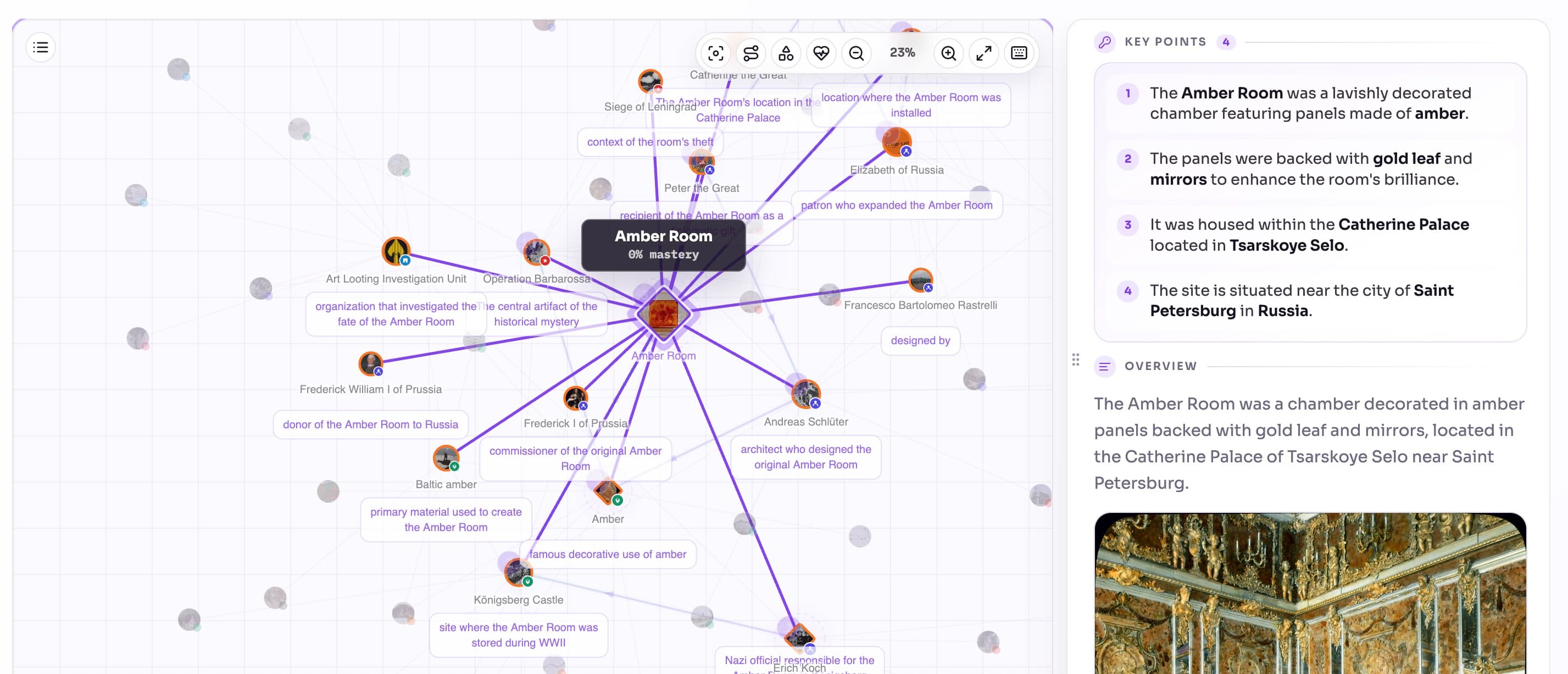
History graph
See how the people, events and ideas you discover fit together.
For the endlessly curious
Bring together what you discover in books, podcasts, documentaries, articles, and museums — and turn it into a connected history that stays with you.
You spend hours discovering history. Months later, most of it is gone.
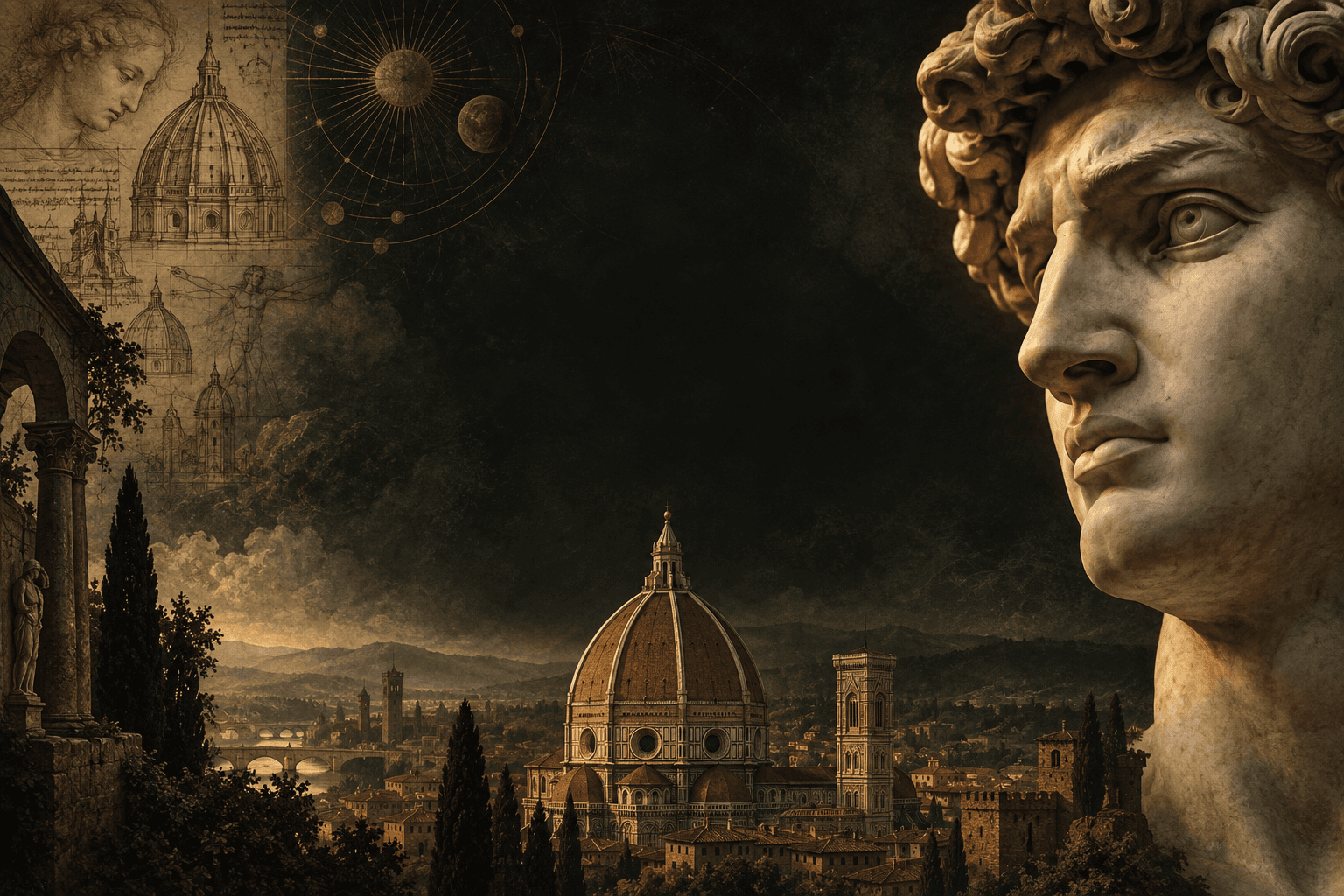
ITALY · 15TH–16TH CENTURIES
Wikimedia images, displayed as cropped thumbnails.
The Uffizi, Florence
The Uffizi completes the story: Michelangelo and David, Rome and Savonarola — everything you heard and read now hangs on one wall.
AI-assisted, guided by you
Aristotree uses AI to help you explore further: find related people, events, places, and ideas, with sources you can check, then practice what matters with thoughtful questions. You decide what belongs in your graph and what you want to learn.
Save an excerpt, a link or a museum photograph. Start with something you have just learned.
AI finds related people, events, places and ideas, with sources to check. Review each suggestion and choose what joins your history.
Revisit what matters with questions that help you understand the connections and keep them fresh.
One history, five perspectives
Follow a connection, place it in time, then see where it happened. Your history map, timeline, geographic map, tree view and learning path are different views of the same knowledge.
See how the people, events and ideas you discover fit together.
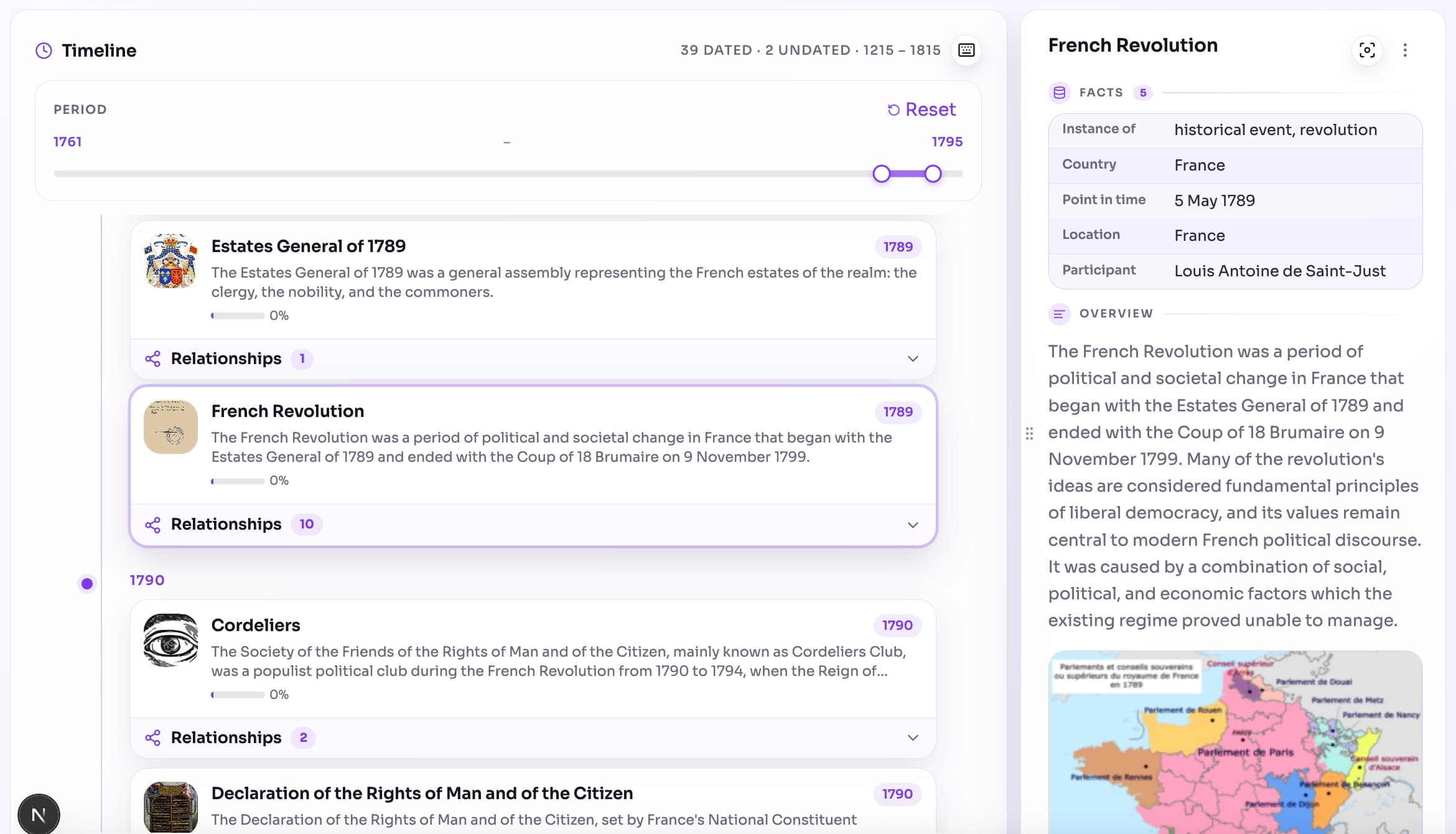
Place dated discoveries alongside each other and follow what changed over time.
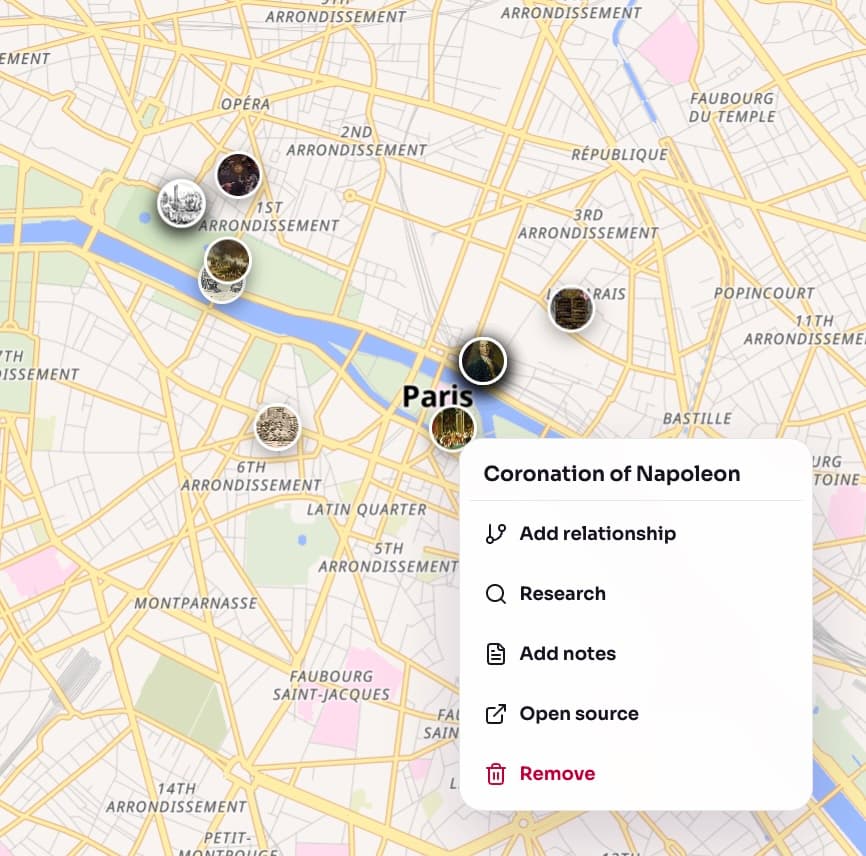
See discoveries with locations in their geographic context.
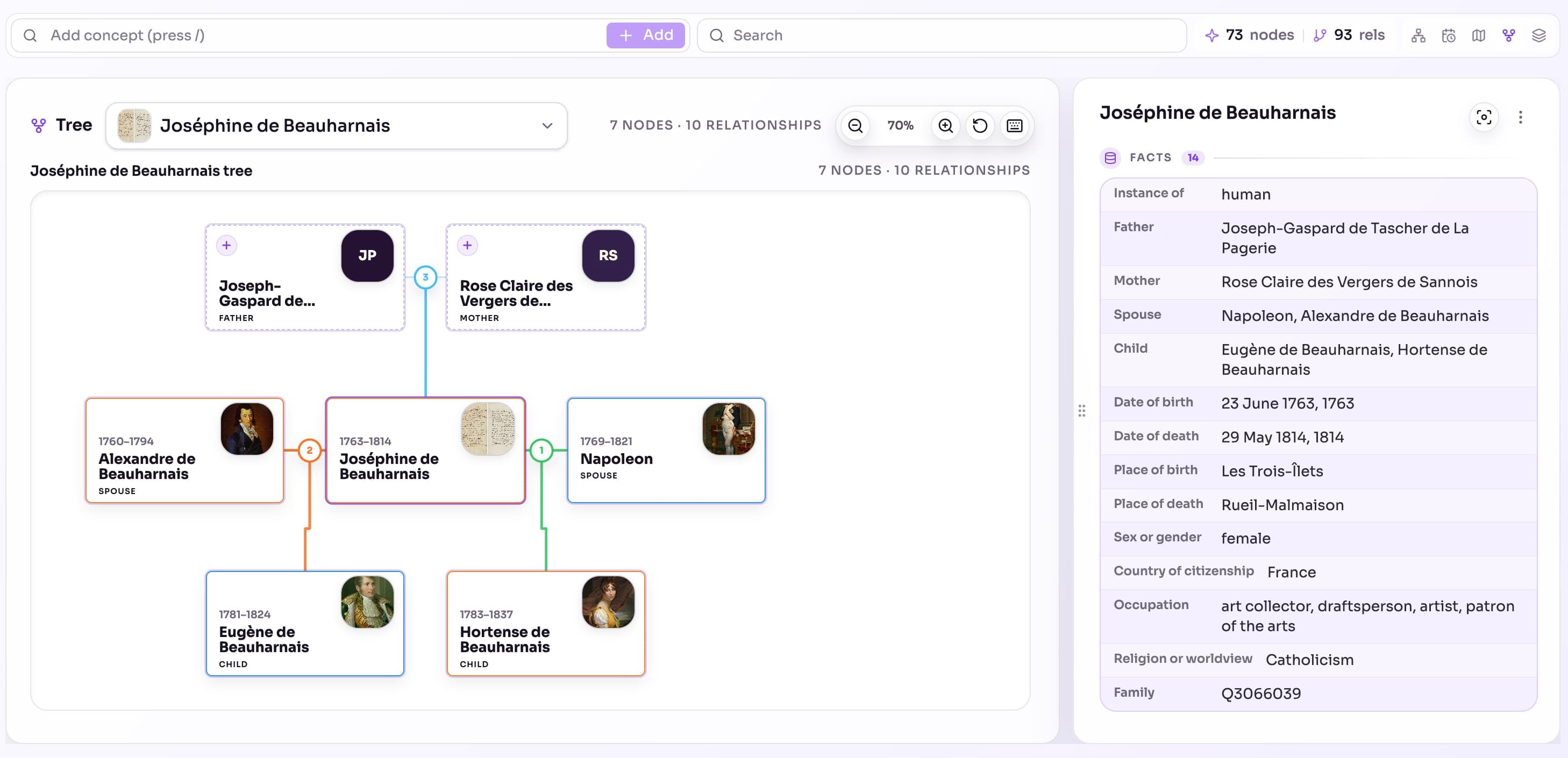
Trace people and their relationships as a genealogy tree and follow each family branch.
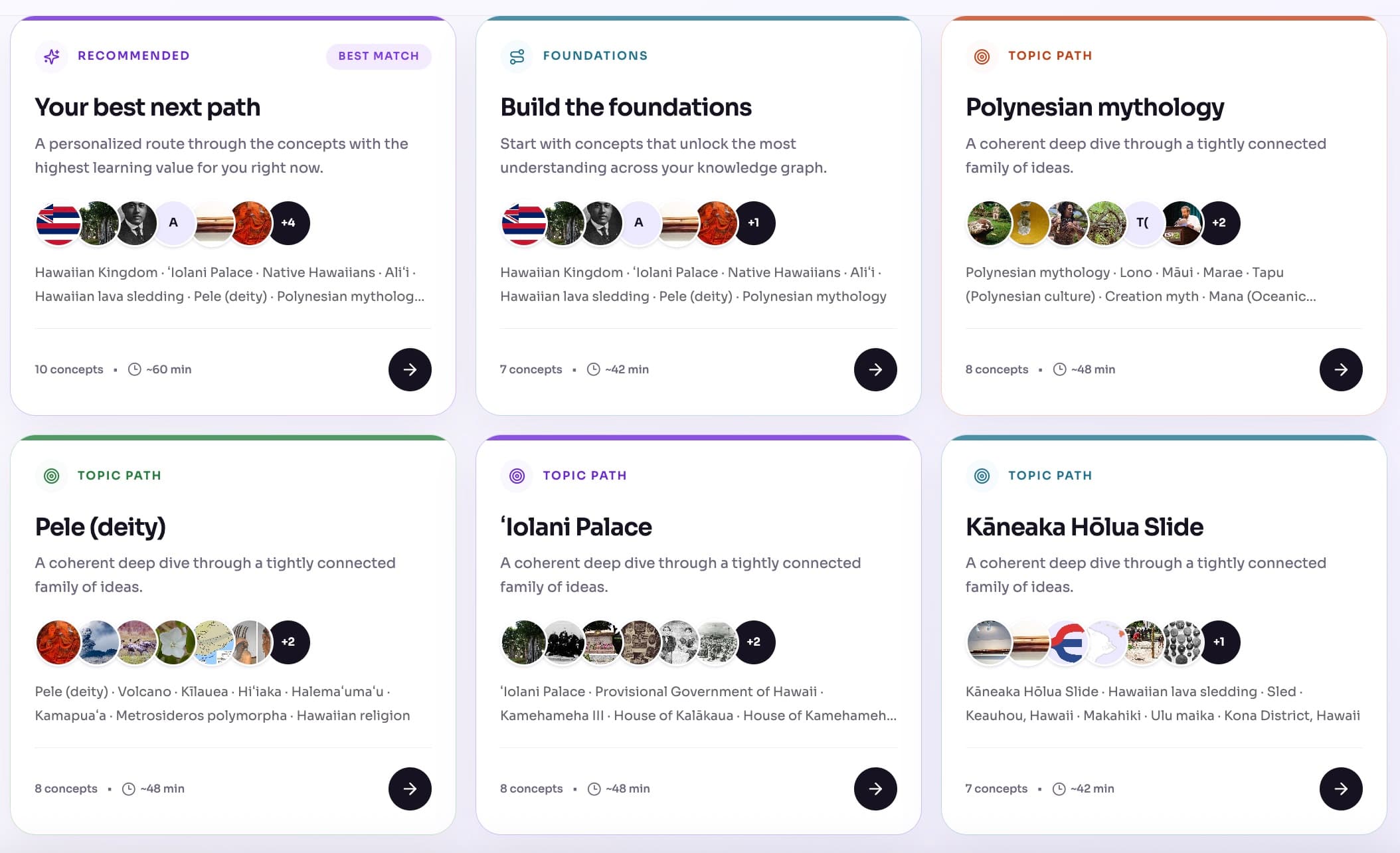
Walk different paths through your graph — each one explores a different idea, event, or character.
Remember
Aristotree brings back important people, events, and connections before they fade — and plans short tasks that help make what you’ve learned stick.
Worth revisiting today
Why did Caesar and Pompey’s alliance collapse?
Why the balance collapsed
Julia’s marriage had tied the two men together personally, while Crassus kept either one from dominating the alliance. Their deaths removed both restraints just as Caesar’s growing power made Pompey increasingly uneasy.
Your history keeps growing
Your sources come and go. The history you connect stays with you. Free to start. No credit card required.