About this project45 concepts · 61 relationships45 concepts61 relationships
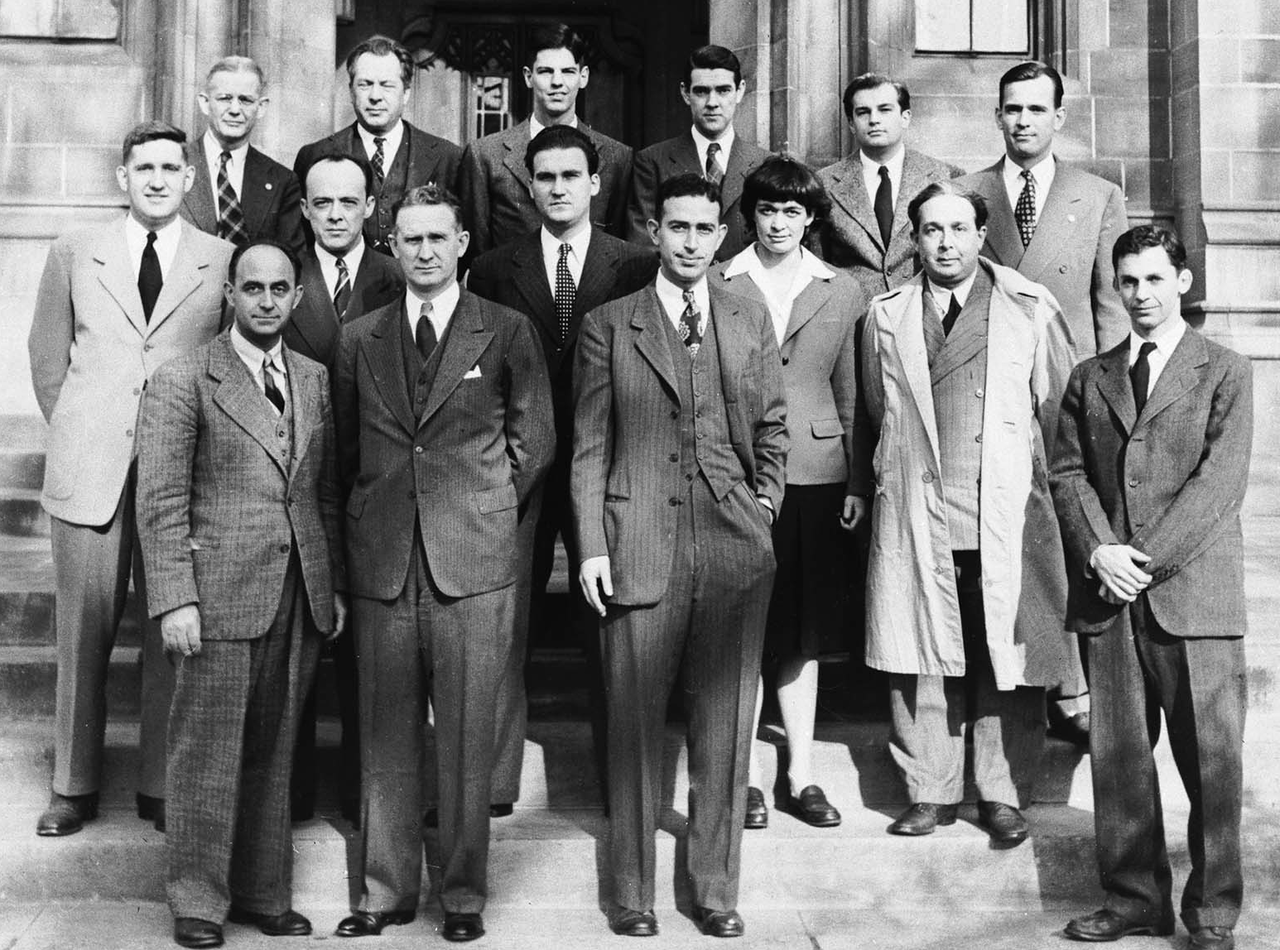
Via Panisperna boys
The Via Panisperna Boys were a group of young Italian physicists led by Enrico Fermi in Rome in the 1930s. Learn here their contributions to the development of nuclear physics.
By @darkoUpdated Aug 11, 2026
Keystone concepts

Connects 16 concepts
Enrico Fermi was an Italian-American physicist, renowned for being the creator of the world's first artificial nuclear reactor, Chicago Pile-1, and a member of the Manhattan Project.

Connects 13 concepts
The Manhattan Project was a research and development program undertaken during World War II to produce the first nuclear weapons.
Connects 11 concepts
Fermium is a synthetic chemical element; it has symbol Fm and atomic number 100.
Articles
- The Architects of the Nuclear Age: The Via Panisperna Boys
How a small group of Italian physicists in the 1930s unlocked the power of the neutron and changed the course of history.
Relationships around keystone concepts
- Fermium — related to → Spontaneous fission: Primary decay mode
- Fermium — related to → Isotopes of fermium: Most stable isotope
- Fermium — related to → Neutron capture: Synthesis mechanism
- Fermium — related to → Actinide: Chemical series
- Fermium — related to → Transuranium element: Chemical classification
- Fermium — related to → Lawrence Berkeley National Laboratory: Discovery institution
- Fermium — related to → Albert Ghiorso: Lead discoverer
- Fermium — related to → Ivy Mike: Site of initial discovery
100%