Claude Shannon
Claude Shannon was an American mathematician who founded information theory and laid the digital groundwork for the modern computing age.
Key topics
A Mathematical Theory of Communication
"A Mathematical Theory of Communication" is an article by mathematician Claude Shannon published in Bell System Technical Journal in 1948.
- Published in **1948** in the **Bell System Technical Journal** by **Claude Shannon**.
- Renamed **The Mathematical Theory of Communication** in a **1949** book release.
- Described by **Scientific American** as the **Magna Carta of the Information Age**.
AT&T Corporation
AT&T Corporation, an abbreviation of its former name, the American Telephone and Telegraph Company, was an American telecommunications company that provided voice, video, data, and Internet telecommunications and professional services to businesses, consumers, and government agencies.
- Formerly the **American Telephone and Telegraph Company**.
- Provided **voice, video, and data** telecommunications.
- Served **businesses, consumers, and government agencies**.
Anthropic
American artificial intelligence company
Bell Labs
Bell Labs was the research and development subsidiary of the American Telephone and Telegraph Company where Shannon performed his most significant work.
- Located in Murray Hill, New Jersey.
- Known for producing numerous Nobel Prize-winning researchers.
- Provided the environment for Shannon to develop information theory.
Bit
The bit is the most basic unit of information in computing and digital communication.
- Serves as the most basic unit of **information**.
- The name is a **portmanteau** of **binary digit**.
- Represents a logical state with **two possible values**.
Boolean algebra
In mathematics and mathematical logic, Boolean algebra is a branch of algebra.
- Boolean algebra uses **truth values** instead of numerical variables.
- The system typically represents values as **1** for true and **0** for false.
- Core logical operators include **conjunction (∧)**, **disjunction (∨)**, and **negation (¬)**.
C (programming language)
C is a general-purpose programming language created in 1972 by Dennis Ritchie.
- Created in **1972** by **Dennis Ritchie**.
- Provides direct access to **CPU architecture** features.
- Widely used for **operating systems** and **device drivers**.
Charge-coupled device
A charge-coupled device (CCD) is an integrated circuit containing an array of linked, or coupled, capacitors.
- Composed of an array of linked **capacitors**.
- Transfers **electric charge** between neighboring cells.
- Functions as a core technology for **digital imaging**.
Claude Shannon
Claude Shannon was an American mathematician and engineer who founded the field of information theory through his groundbreaking 1948 paper.
- Born in Petoskey, Michigan, in 1916.
- Graduated from MIT with degrees in electrical engineering and mathematics.
- Worked at Bell Labs during World War II.
Cybernetics
Cybernetics is the transdisciplinary study of circular causal processes such as feedback and recursion, where the outcomes of actions return as inputs for subsequent actions.
- Studies **circular causal processes** like **feedback** and **recursion**.
- Applies to diverse fields including **engineering**, **biology**, and **economics**.
- Focuses on systems where **outcomes** become **inputs** for future actions.
Data compression
In information theory, data compression, source coding, or bit-rate reduction is the process of encoding information using fewer bits than the original representation.
- Reduces the number of **bits** required to represent information.
- **Lossless compression** allows for the exact reconstruction of original data.
- **Lossy compression** discards less important information to achieve higher efficiency.
Entropy (information theory)
Shannon entropy is a mathematical measure of the average amount of information produced by a stochastic source of data.
- Quantifies the uncertainty associated with a random variable.
- Measured in bits, nats, or bans.
- Used to determine the theoretical limit for lossless data compression.
Entropy (statistical thermodynamics)
The concept entropy was first developed by German physicist Rudolf Clausius in the mid-nineteenth century as a thermodynamic property that predicts that certain spontaneous processes are irreversible or impossible.
- First developed by **Rudolf Clausius** in the **mid-nineteenth century** as a thermodynamic property.
- Predicts that certain **spontaneous processes** are **irreversible** or impossible.
- Introduced as a statistical property by **Ludwig Boltzmann** in **1870**.
Error detection and correction
In information theory and coding theory with applications in computer science and telecommunications, error detection and correction (EDAC) or error control are techniques that enable reliable delivery of digital data over unreliable communication channels.
- Enables reliable data delivery over **unreliable communication channels**.
- Addresses data corruption caused by **channel noise**.
- **Error detection** identifies the presence of transmission errors.
Information theory
Information theory is a scientific field concerned with the quantification, storage, and communication of information.
- Introduced the concept of the bit as the fundamental unit of information.
- Established the Shannon entropy as a measure of uncertainty or information content.
- Defined the channel capacity limit for reliable data transmission.
John von Neumann
John von Neumann was a Hungarian and American mathematician, physicist, computer scientist and engineer.
- Von Neumann was a **Hungarian-American** polymath active in the mid-**20th century**.
- He pioneered the mathematical framework for **quantum physics**.
- He introduced concepts such as **cellular automata** and the **universal constructor**.
Kullback–Leibler divergence
In mathematical statistics, the Kullback–Leibler (KL) divergence, denoted , is a type of statistical distance: a measure of how much an approximating probability distribution Q is different from a true probability distribution P.
- Acts as a **statistical distance** measure between two probability distributions.
- Quantifies the difference between an **approximating distribution** Q and a **true distribution** P.
- Widely utilized in the field of **mathematical statistics**.
Laser
A laser is a device that emits light through a process of optical amplification based on the stimulated emission of electromagnetic radiation.
- Operates via **stimulated emission** of electromagnetic radiation.
- First built in **1960** by **Theodore Maiman**.
- Based on theoretical work by **Charles H. Townes** and **Arthur Leonard Schawlow**.
Mutual information
In probability theory and information theory, the mutual information (MI) of two random variables is a measure of the mutual dependence between the two variables.
- Quantifies the **mutual dependence** between two random variables.
- Measures the information gained about one variable by observing another.
- Intimately linked to the concept of **entropy**.
Noisy-channel coding theorem
In information theory, the noisy-channel coding theorem, establishes that for any given degree of noise contamination of a communication channel, it is possible to communicate discrete data nearly error-free up to a computable maximum rate through the channel.
- Establishes a **computable maximum rate** for error-free data transmission.
- Addresses the impact of **noise contamination** on communication channels.
- Introduced by **Claude Shannon** in **1948**.
Nokia
Nokia Corporation is a Finnish multinational telecommunications, information technology, and consumer electronics corporation, originally established as a pulp mill in 1865.
- Founded in **1865** as a pulp mill.
- Headquartered in **Espoo, Finland**.
- Listed on the **Nasdaq Helsinki** and **New York Stock Exchange**.
Principle of maximum entropy
The principle of maximum entropy states that, among all probability distributions consistent with a given set of constraints, the distribution that maximizes Shannon entropy should be selected.
- Selects the distribution that maximizes **Shannon entropy** given specific **constraints**.
- Produces the **least committal distribution** compatible with known information.
- Used extensively in **Bayesian statistics** for objective inference.
Ralph Hartley
Ralph Vinton Lyon Hartley was an American electronics researcher.
- Lived from **1888** to **1970**.
- Inventor of the **Hartley oscillator**.
- Developer of the **Hartley transform**.
Shannon–Hartley theorem
In information theory, the Shannon–Hartley theorem tells the maximum rate at which information can be transmitted over a communications channel of a specified bandwidth in the presence of noise.
- The theorem defines the **maximum rate** of error-free information transmission.
- It is named after **Claude Shannon** and **Ralph Hartley**.
- The formula accounts for **bandwidth** and **Gaussian noise** interference.
Solar cell
A solar cell, also known as a photovoltaic cell, is an electronic device that converts the energy of light directly into electricity by using the photovoltaic effect.
- Utilizes the **photovoltaic effect** to generate electricity.
- Serves as the building block for **solar panels**.
- Composed primarily of **crystalline silicon** (95% market share).
Theseus
Theseus was a divine hero in Greek mythology, famous for slaying the Minotaur.
- Theseus was a legendary king of **Athens** in **Greek mythology**.
- He is famous for slaying the **Minotaur**.
- He is categorized as a **divine hero** in classical myths.
Timeline of cryptography
Below is a timeline of notable events related to cryptography.
- The timeline tracks the history of **secure communication** methods.
- It covers the evolution from **manual ciphers** to modern encryption.
- The record documents key developments in **cryptographic algorithms**.
Transistor
A transistor is a semiconductor device used to amplify or switch electrical signals and power.
- Functions as an **electrical switch** or **signal amplifier**.
- Composed of **semiconductor material** with at least three terminals.
- Controls output current via **input voltage or current**.
Unix
Unix is a family of multitasking, multi-user computer operating systems that derive from the original AT&T Unix, the development of which started in 1969 at the Bell Labs research center by Ken Thompson, Dennis Ritchie, and others.
- Developed in **1969** at **Bell Labs**.
- Created by **Ken Thompson** and **Dennis Ritchie**.
- Supports **multitasking** and **multi-user** environments.
Connections to explore
-
 Claude Shannon ↔
 Information theory: Shannon founded information theory.
-
Claude Shannon ↔
 Bell Labs: Shannon conducted his research at Bell Labs.
-
Information theory ↔
 Entropy (information theory): Entropy is a fundamental component of information theory.
-
Information theory ↔ Bell Labs: Institutional birthplace of the theory
-
Information theory ↔
 A Mathematical Theory of Communication: Foundational publication establishing the field
-
Information theory ↔
 Noisy-channel coding theorem: Core theoretical limit of communication
-
Information theory ↔
 Data compression: Practical application of information theory
-
Information theory ↔
 Error detection and correction: Technological implementation of information theory
-
Information theory ↔
 Cybernetics: Interdisciplinary field sharing common roots
-
Information theory ↔
 Bit: Fundamental unit of information
-
Information theory ↔
 Mutual information: Measure of statistical dependence
-
Information theory ↔
 Ralph Hartley: Precursor to information theory
-
Entropy (information theory) ↔ Claude Shannon: Primary developer of the concept
-
Entropy (information theory) ↔ Bell Labs: Institutional birthplace of the theory
-
Entropy (information theory) ↔ A Mathematical Theory of Communication: Foundational publication introducing the concept
-
Entropy (information theory) ↔
 Entropy (statistical thermodynamics): Conceptual precursor in statistical mechanics
-
Entropy (information theory) ↔
 Kullback–Leibler divergence: Measure of difference between probability distributions
-
Entropy (information theory) ↔ Data compression: Practical application of entropy limits
-
Entropy (information theory) ↔ Bit: Standard unit of information entropy
-
Entropy (information theory) ↔ Mutual information: Measure of shared information between variables
-
Entropy (information theory) ↔
 Principle of maximum entropy: Principle for statistical inference
-
Entropy (information theory) ↔ Noisy-channel coding theorem: Constraint on reliable communication
-
Claude Shannon ↔
 Boolean algebra: foundation for digital circuit design
-
Claude Shannon ↔ A Mathematical Theory of Communication: seminal paper establishing information theory
-
Claude Shannon ↔ Bit: coined and formalized as the unit of information
-
Claude Shannon ↔
 Shannon–Hartley theorem: defines the maximum data rate of a channel
-
Claude Shannon ↔ Cybernetics: participated in the foundational Macy conferences
-
Claude Shannon ↔ Timeline of cryptography: applied information theory to secure communication
-
Claude Shannon ↔
 John von Neumann: intellectual peer and contributor to information theory
-
Claude Shannon ↔
 Theseus: early example of machine learning and robotics
-
Bell Labs ↔
 Transistor: Site of invention and early development
-
Bell Labs ↔
 C (programming language): Created to support Unix development
-
Bell Labs ↔
 Laser: Pioneering research site for optical physics
-
Bell Labs ↔
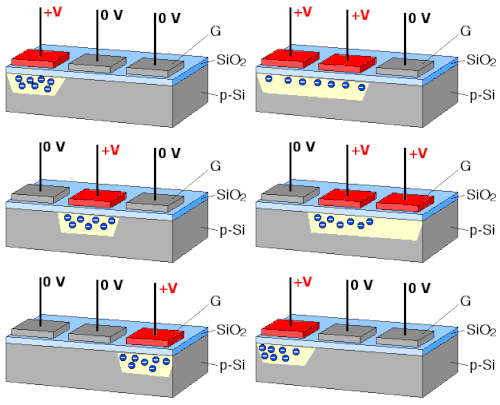 Charge-coupled device: Invented by researchers at the laboratory
-
Bell Labs ↔
 Solar cell: Site of the first practical solar cell
-
Bell Labs ↔
 AT&T Corporation: Parent company and primary funding source
-
 Anthropic ↔ Claude Shannon: Namesake relationship
 Unix
 Nokia