Gaius Marius and Sulla rivalry
Gaius Marius and Lucius Cornelius Sulla were rival Roman generals whose personal feud escalated into a series of civil wars that permanently destabilized the Roman Republic
Key topics
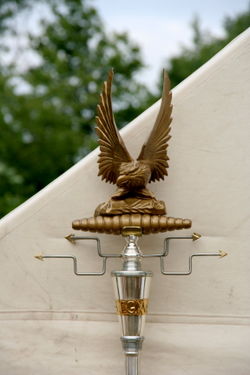
Aquila (Roman)
An aquila was a prominent symbol used in ancient Rome, especially as the standard of a Roman legion.
- The **aquila** is the standard of a **Roman legion**.
- The **aquilifer** is the specific soldier responsible for carrying the eagle.
- Each legion carried exactly **one eagle**.
Archelaus (Pontic army officer)
Archelaus was a prominent Greek general who served under King Mithridates VI of Pontus in northern Anatolia and was also his favorite general.
- Archelaus served as a **Greek general**.
- He was a top military officer for **King Mithridates VI**.
- He operated in the region of **northern Anatolia**.
Ascoli Piceno
Ascoli Piceno is a comune (municipality) and capital of the province of Ascoli Piceno, in the Italian region of Marche.
- It is the capital of the **province of Ascoli Piceno**.
- The city is located in the **Marche** region of **Italy**.
- The estimated population as of **2026** is **45,100**.
Asiatic Vespers
The Asiatic Vespers were massacres of Roman and other Latin-speaking peoples living in parts of western Anatolia c.
- The massacre occurred in **88 BC** and targeted **Roman** and Latin-speaking populations in **Asia Minor**.
- Approximately **80,000 individuals** were killed under the orders of **Mithridates VI Eupator**.
- The event acted as the primary **casus belli** for the **First Mithridatic War** between Rome and Pontus.
Battle of Aquae Sextiae
The Battle of Aquae Sextiae (Aix-en-Provence) took place in 102 BC.
- Took place in **102 BC** at the site of modern **Aix-en-Provence**.
- Commanded by the Roman general **Gaius Marius**.
- Resulted in a victory over the **Teutons** and **Ambrones** tribes.
Battle of Chaeronea (86 BC)
The Battle of Chaeronea was fought by the Roman forces of Lucius Cornelius Sulla and Mithridates' general, Archelaus, near Chaeronea, in Boeotia, in 86 BC during the First Mithridatic War.
- The battle occurred in **86 BC** during the **First Mithridatic War**.
- **Lucius Cornelius Sulla** led the Roman forces to victory.
- The opposing army was commanded by **Archelaus** of Pontus.
Battle of Tigranocerta
The Battle of Tigranocerta was fought on 6 October 69 BC between the forces of the Roman Republic and the army of the Kingdom of Armenia led by King Tigranes the Great.
- The battle occurred on **6 October 69 BC**.
- The Armenian forces were led by **King Tigranes the Great**.
- The Roman forces were commanded by **Lucius Licinius Lucullus**.
Battle of Vercellae
The Battle of Vercellae or Battle of the Raudine Plain was fought on 30 July 101 BC on a plain near Vercellae in Gallia Cisalpina, modern-day Northern Italy.
- Fought on **30 July 101 BC**.
- Took place near **Vercellae** in **Gallia Cisalpina**.
- Commanded by **Gaius Marius** and **Quintus Lutatius Catulus**.
Battle of Zela (67 BC)
The Battle of Zela, not to be confused with the more famous battle in 47 BC, was fought in 67 BC near Zela in the Kingdom of Pontus.
- The battle occurred in **67 BC** near the city of **Zela**.
- It resulted in a major victory for **King Mithridates VI** and the reclamation of his kingdom.
- The victory was short-lived, as **Pompey the Great** defeated the Pontic forces shortly thereafter.
Battle of the Colline Gate
The Battle of the Colline Gate, fought on 1 November 82 BC, was the decisive battle of the civil war between Lucius Cornelius Sulla and the Marians, Samnites and Lucanians.
- Fought on **1 November 82 BC**.
- Secured total control of **Italy** for **Lucius Cornelius Sulla**.
- Involved a coalition of **Marians**, **Samnites**, and **Lucanians**.
Capite censi
Capite censi were the lowest class of citizens in ancient Rome, people not of the nobility or middle classes.
- The term **capite censi** means **those counted by head** in the Roman census.
- They represented the lowest class of citizens who owned little or no **property**.
- The **proletarii** were distinguished from the **capite censi** by owning property worth up to **11,000 asses**.
Cato the Younger
Marcus Porcius Cato Uticensis, also known as Cato the Younger, was an influential conservative Roman senator during the late Republic.
- Cato was a committed adherent of **Stoic philosophy**.
- He served as a **Roman senator** and was a vocal critic of the **First Triumvirate**.
- He was known for his **uncompromising integrity** and defense of traditional Roman values.
Cicero
Marcus Tullius Cicero was a Roman statesman, lawyer, scholar, philosopher, orator, and writer who tried to uphold optimate principles during the political crises of the Roman Republic that led to the establishment of the Roman Empire.
- Cicero was a master of **Latin prose** and a pioneer of **Ciceronian rhetoric**.
- He held the office of **consul** in **63 BC**.
- His writings include influential works on **Stoic philosophy** and **political theory**.
Cimbri
The Cimbri were an ancient tribe in Europe.
- Inhabited the region of **Jutland**, historically known as the **Cimbrian peninsula**.
- Described by ancient authors as potentially **Celtic-Gaulish**, **Germanic**, or **Cimmerian**.
- Lacked direct evidence regarding their **native language**.
Cimbrian War
The Cimbrian or Cimbric War was fought between the Roman Republic and the Germanic and Celtic tribes of the Cimbri and the Teutons, Ambrones and Tigurini, who migrated from the Jutland peninsula into Roman-controlled territory, and clashed with Rome and her allies.
- Fought between **113 and 101 BCE**.
- Involved the **Cimbri**, **Teutons**, **Ambrones**, and **Tigurini** tribes.
- Tribes migrated from the **Jutland peninsula**.
Constitutional reforms of Sulla
The constitutional reforms of Sulla were a series of laws enacted by Lucius Cornelius Sulla between 82 and 80 BC, reforming the constitution of the Roman Republic in a revolutionary way.
- Enacted between **82 BC** and **80 BC**.
- Followed the **Social War**, which resulted in the extension of **Roman citizenship**.
- Included the use of **proscriptions** to purge political opponents.
Corfinium
Corfinium was an ancient city now near modern Corfinio, in the province of L'Aquila.
- **Corfinium** is an ancient city located in modern-day **Italy**.
- It is situated near the contemporary town of **Corfinio**.
- The site is located within the modern **province of L'Aquila**.
Crisis of the Roman Republic
The crisis of the Roman Republic was an extended period of political instability and social unrest from about c.
- The crisis lasted from approximately **133 BC** to **30 BC**.
- It was defined by widespread **political instability** and **social unrest**.
- The period resulted in the **demise of the Roman Republic**.
Curia Hostilia
The Curia Hostilia was one of the original senate houses or "curiae" of the Roman Republic.
- The **Curia Hostilia** was a foundational senate house of the **Roman Republic**.
- **Tullus Hostilius** is credited with rebuilding the structure after a fire.
- **Sulla** expanded the building in **80 BC**.
First Mithridatic War
The First Mithridatic War was a large conflict in Anatolia and ancient Greece in opposition to the Roman Republic by the Pontic kingdom ruled by Mithridates VI Eupator.
- The war took place between **89 BC** and **85 BC**.
- The conflict involved the **Roman Republic** and the **Pontic kingdom**.
- **Mithridates VI Eupator** was the ruler of the Pontic kingdom.
Gaius Gracchus
Gaius Sempronius Gracchus was a reformist Roman politician and soldier who lived during the 2nd century BC.
- Gaius Gracchus served as **tribune of the plebs** for two consecutive terms in **123–122 BC**.
- He introduced the **Lex Frumentaria**, which established a state-subsidized grain supply for citizens.
- His legislative agenda included **judicial reforms** and the creation of new **provincial assignments**.
Gaius Marius
A Roman general and statesman who held the consulship a record seven times and implemented significant military reforms.
Gaius Marius (consul 82 BC)
Gaius Marius "the Younger" was a Roman republican general and politician who became consul in 82 BC with Gnaeus Papirius Carbo.
- Served as **consul** in **82 BC**.
- Son of the celebrated general **Gaius Marius**.
- Fought against **Sulla** during the civil war.
Gnaeus Papirius Carbo (consul 85 BC)
Gnaeus Papirius Carbo was thrice consul of the Roman Republic in 85, 84, and 82 BC.
- Held the office of **consul** in **85 BC**, **84 BC**, and **82 BC**.
- Assumed leadership of the **Marianists** after the death of **Cinna**.
- Led the military opposition against **Sulla** during the civil war.
Gnaeus Pompeius Strabo
Gnaeus Pompeius Strabo was a Roman general and politician, who served as consul in 89 BC.
- He held the office of **consul** in **89 BC**.
- He is the father of the famous Roman leader **Pompey the Great**.
- He is distinguished from the geographer **Strabo** by his name **Pompey Strabo**.
Hellenistic period
In classical antiquity, the Hellenistic period covers the time in Greek, Eastern Mediterranean and Middle Eastern history following Classical Greece, between the death of Alexander the Great in 323 BC and the death of Cleopatra VII in 30 BC, in which all these regions were under the influence of Greek leadership, culture, and language as a result of Alexander's conquests.
- The period spans from the death of **Alexander the Great** in **323 BC** to the death of **Cleopatra VII** in **30 BC**.
- It is characterized by the spread of **Greek culture**, language, and political influence.
- The era encompasses the history of **Greece**, the **Middle East**, and the **Eastern Mediterranean**.
Infamia
In ancient Rome, infamia was a loss of legal or social standing.
- The term refers to a **juridical exclusion** from the standard protections of Roman citizenship.
- It was imposed as a legal penalty by officials such as a **censor or praetor**.
- Beyond legal status, it represented a severe damage to an individual's **aestimatio**, or social reputation.
Jugurthine War
The Jugurthine War was an armed conflict between the Roman Republic and King Jugurtha of Numidia, a kingdom on the north African coast roughly corresponding to modern-day Algeria.
- The conflict took place in **Numidia**, a kingdom in modern-day **Algeria**.
- **King Jugurtha** gained the throne by assassinating his rivals and adoptive family members.
- **Micipsa** was the king of **Numidia** and the adoptive father of **Jugurtha**.
Julius Caesar
Gaius Julius Caesar was a Roman general, statesman, and author who was the dictator of the Roman Republic almost continuously from 49 BC until his assassination in 44 BC.
- Caesar served as **dictator** of the Roman Republic from **49 BC** until his assassination in **44 BC**.
- He led the Roman military to victory during the **Gallic Wars**.
- He was a member of the **First Triumvirate** alongside Pompey and Crassus.
Kingdom of Bithynia
The Kingdom of Bithynia was a Hellenistic kingdom centred in the historical region of Bithynia, in northwest Anatolia, which seems to have been established in the 4th century BC.
- The kingdom was located in **northwest Anatolia**.
- It was established in the **4th century BC**.
- **Zipoites** assumed the title of **basileus** in **297 BC**.
Kingdom of Pontus
Pontus was a Hellenistic kingdom centered in the historical region of Pontus, in northern Anatolia, on the southern coast of the Black Sea .
- The kingdom was centered in the historical region of **Pontus** in northern **Anatolia**.
- It was ruled by the **Mithridatic dynasty**, which traced its ancestral roots back to **Persia**.
- The dynasty claimed a potential familial connection to **Darius the Great** of the **Achaemenid dynasty**.
Land reform
Land reform is the transfer of agricultural land ownership from large private landowners to small farmers and people without any landholdings.
- Land reform involves transferring ownership from **large private landowners** to **small farmers**.
- It is a **political process** that redistributes **wealth** and **political power**.
- The process includes changing **laws** and **regulations** regarding **land use** and **transfers**.
Lex Cornelia de sicariis et veneficis
The Lex Cornelia de sicariis et veneficis was a Roman statute enacted by Lucius Cornelius Sulla in 81 BC during his dictatorship to write laws and reconstitute the state which aimed at the punishment of murderers, poisoners, abortionists, human sacrifice, and malign magicians and was later also applied to the punishment of castration and circumcision.
- The law was enacted in **81 BC** by **Sulla**.
- It targeted crimes such as **murder**, **poisoning**, and **human sacrifice**.
- The statute was later applied to cases of **castration** and **circumcision**.
Lex Gabinia de piratis persequendis
The lex Gabinia, lex de uno imperatore contra praedones instituendo or lex de piratis persequendis was an ancient Roman special law passed in 67 BC, which granted Pompey the Great proconsular powers in any province within 50 miles of the Mediterranean Sea without holding a properly elected magistracy for the purpose of combating piracy.
- The law was enacted in **67 BC** to combat **Mediterranean piracy**.
- It granted **Pompey the Great** extensive **proconsular powers**.
- The legislation was proposed by the tribune **Aulus Gabinius**.
Lex Julia
A lex Julia was an ancient Roman law that was introduced by any member of the gens Julia.
- A **lex Julia** is defined as a law proposed by a member of the **gens Julia**.
- **Augustus** introduced significant moral legislation under this title in **23 BC**.
- The term is also used to describe various laws linked to **Julius Caesar**.
Lex Plautia Papiria
The lex Plautia Papiria de civitate sociis danda was a Roman plebiscite enacted amidst the Social War in 89 BCE.
- The law was enacted in **89 BCE**.
- It was proposed by tribunes **Marcus Plautius Silvanus** and **Gaius Papirius Carbo**.
- It expanded upon the **lex Julia de civitate**.
List of Roman consuls
This is a list of consuls known to have held office, from the beginning of the Roman Republic to the latest use of the title in Imperial times, together with those magistrates of the Republic who were appointed in place of consuls, or who superseded consular authority for a limited period.
- Records the succession of **Roman consuls** from the start of the **Republic**.
- Includes magistrates who held power in place of **consuls**.
- Covers the period from the **Roman Republic** through the **Imperial era**.
Lucius Appuleius Saturninus
Lucius Appuleius Saturninus was a Roman Republican politician.
- Served as **plebeian tribune** in **103 BC** and **100 BC**.
- Advocated for the reduction of **subsidized grain** prices.
- Proposed a **permanent court** to try treason charges.
Lucius Cornelius Sulla
A Roman general and dictator who marched on Rome and implemented proscriptions against his political enemies.
Lucullus
Lucius Licinius Lucullus was a Roman general and statesman, closely connected with Lucius Cornelius Sulla.
- Lucullus lived from **118 BC** to **57/56 BC**.
- He achieved fame for his victory at the **Battle of Tigranocerta** in **69 BC**.
- His military career included over **20 years** of service.
Manius Aquillius (consul 101 BC)
Manius Aquillius was a Roman politician and general during the late Roman Republic.
- Manius Aquillius served as **Consul** in **101 BC**.
- He fought under **Gaius Marius** during the **Cimbrian War**.
- He played a key role at the **Battle of Aquae Sextiae**.
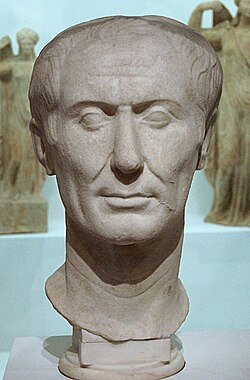
Marcus Licinius Crassus
Marcus Licinius Crassus was a Roman general and statesman who played a key role in the transformation of the Roman Republic into the Roman Empire.
- Lived from **115 BC** to **53 BC**.
- Served as a military commander under **Lucius Cornelius Sulla**.
- Amassed a massive fortune through **property speculation**.
Marcus Livius Drusus (reformer)
Marcus Livius Drusus was a Roman politician and reformer.
- He served as **tribune of the plebs** in **91 BC**.
- His life spanned approximately **124 BC** to **91 BC**.
- He proposed granting **Roman citizenship** to **Italian allies**.
Marian reforms
A series of military reforms that allowed landless citizens to join the army, creating a professional force loyal to their generals.
Metrobius
Metrobius was an actor and singer in the Roman Republic.
Mithridates VI Eupator
Mithridates or Mithradates VI Eupator sometimes known as Mithridates the Great was the Hellenistic ruler of the Kingdom of Pontus from 120 to 63 BC.
- Mithridates VI ruled the **Kingdom of Pontus** for nearly six decades, from **120 to 63 BC**.
- He was a major opponent of the **Roman Republic**, leading multiple wars to expand his influence in **Anatolia**.
- His strategic goals included dominating the **Black Sea** region and challenging **Roman dominion** over the Hellenic world.
Mithridatic Wars
The Mithridatic Wars were three conflicts fought between the Roman Republic and the Pontic kingdom of Mithridates VI Eupator.
- The conflicts lasted from **88 BC** until **63 BC**.
- The primary antagonist was **Mithridates VI Eupator**, king of **Pontus**.
- The wars were fought across **Greece** and **Asia Minor**.
Mithridatism
Mithridatism is the practice of protecting oneself against a poison by gradually self-administering non-lethal amounts.
- Mithridatism involves the regular intake of **small, non-lethal doses** of poison.
- The practice is designed to develop **biological immunity** to specific toxins.
- The name originates from **Mithridates VI**, who used the technique to prevent **poisoning**.
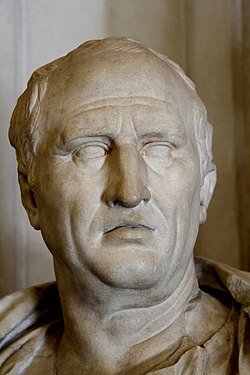
Novus homo
Novus homo or homo novus was the term in ancient Rome for a man who was the first in his family to serve in the Roman Senate or, more specifically, to be elected as consul.
- Latin term meaning **new man**.
- Refers to the first in a family to serve in the **Roman Senate**.
- Specifically denotes the first in a family to be elected **consul**.
Optimates and Populares
The two competing political factions in the late Roman Republic that defined the ideological divide of the era.
Pharnaces I of Pontus
Pharnaces I was the fifth king of Pontus.
- Pharnaces I was the **fifth king** to rule the **Kingdom of Pontus**.
- He was the son of **King Mithridates III** and the queen **Laodice**.
- He possessed a mixed cultural background of **Persian and Greek ancestry**.
Plebeian council
The plebeian council was one of the popular assemblies of ancient Rome.
- The council was restricted to **plebeians**, excluding all **patricians**.
- It was presided over by **plebeian tribunes**.
- The assembly held the power to pass **legislation** and elect **magistrates**.
Plutarch
Plutarch was a Greek and later Roman Middle Platonist philosopher, historian, biographer, essayist, and priest at the Temple of Apollo in Delphi.
- He is the author of the **Parallel Lives**, a collection of biographies comparing illustrious **Greeks and Romans**.
- His literary output includes the **Moralia**, a comprehensive series of **essays and speeches**.
- Upon obtaining Roman citizenship, he likely adopted the name **Lucius Mestrius Plutarchus**.
Pompey
Gnaeus Pompeius Magnus, known in English as Pompey or Pompey the Great, was a Roman general and statesman who was prominent in the final decades of the Roman Republic.
- Lived from **106 BC** to **48 BC**.
- Served as a protégé of the dictator **Sulla**.
- Became a prominent **Roman general** and statesman.
Proconsul
A proconsul was an official of ancient Rome who acted on behalf of a consul.
- Acted as a deputy or extension of the **consul** in ancient Rome.
- Exercised military command, or **imperium**, during the **Roman Republic**.
- Utilized **prorogation** to extend military leadership beyond a one-year term.
Quintus Caecilius Metellus Numidicus
Quintus Caecilius Metellus Numidicus was an ancient Roman statesman and general.
- Leader of the **Optimates** faction in the **Roman Senate**.
- Served as **consul** in **109 BC**.
- Commanded Roman forces in the **Jugurthine War**.
Quintus Poppaedius Silo
Quintus Poppaedius Silo was a leader of the Italian tribe of the Marsi and one of the leaders of the Italian rebels during the Social War against Rome.
- He was a leader of the **Marsi** tribe.
- He was a primary commander of the **Italian rebels** during the **Social War**.
- He was a personal friend of **Marcus Livius Drusus the Younger**.
Quintus Roscius
Quintus Roscius was a highly renowned Roman actor during the 1st century BC.
- He was elevated to the **equestrian order** by the dictator **Sulla** during the late **80s BC**.
- He successfully bypassed the legal status of **infamia** by performing his roles without accepting **pay**.
- His reputation for **acting quality** allowed him to amass a substantial **personal fortune**.
Quintus Sertorius
Quintus Sertorius was a Roman general and statesman who led a large-scale rebellion against the Roman Senate on the Iberian Peninsula.
- Led a large-scale rebellion against the **Roman Senate**.
- Operated primarily on the **Iberian Peninsula**.
- Ruled **Hispania** as an independent leader for nearly a decade.
Roman Senate
The Roman Senate was the highest and constituting assembly of ancient Rome and its aristocracy.
- The Senate functioned across three distinct eras: the **Kingdom**, the **Republic**, and the **Empire**.
- It was the primary assembly representing the **Roman aristocracy**.
- The institution persisted into the **Middle Ages** as the **Byzantine Senate**.
Roman dictator
A Roman dictator was an extraordinary magistrate of the Roman Republic, endowed with full authority to resolve some specific problem to which he had been assigned.
- The **Roman dictator** was an **extraordinary magistrate** with supreme authority.
- The office was intended to resolve a **specific problem** rather than govern indefinitely.
- All other magistrates, including **consuls**, were subordinate to the dictator.
Roman legion
The Roman legion was the largest military unit of the Roman army, composed of Roman citizens serving as legionaries.
- A **Roman legion** was composed of **Roman citizens** serving as legionaries.
- The **manipular legion** originally contained **4,200 infantry** and **300 cavalry**.
- Later Republican legions were structured into **10 cohorts**.
Roman triumph
The Roman triumph was a civil ceremony and religious rite of ancient Rome, held to publicly celebrate and sanctify the success of a military commander who had led Roman forces to victory in the service of the state or, in some historical traditions, one who had successfully completed a foreign war.
- Functioned as a **civil ceremony** and **religious rite** in ancient Rome.
- Celebrated the success of a **military commander**.
- Required the successful completion of a **foreign war**.
Second Mithridatic War
The Second Mithridatic War was one of three wars fought between Pontus and the Roman Republic.
- The war occurred between **83 BC** and **81 BC**.
- The conflict involved the **Roman Republic** and the **Kingdom of Pontus**.
- The Roman forces were commanded by **Lucius Licinius Murena**.
Siege of Cyzicus
The siege of Cyzicus took place in 73 BC between the armies of Mithridates VI of Pontus and the Roman-allied citizens of Cyzicus in Mysia and Roman Republican forces under Lucius Licinius Lucullus.
- The siege took place in **73 BC**.
- It occurred in the region of **Mysia**.
- The Roman commander was **Lucius Licinius Lucullus**.
Social War (91–87 BC)
A conflict between the Roman Republic and its Italian allies over the issue of Roman citizenship.
Sulla's first civil war
The conflict triggered by Sulla's decision to march his legions on Rome in 88 BC to reclaim command of the war against Mithridates.
Sulla's proscription
Sulla's proscription was a reprisal campaign by the Roman proconsul and later dictator, Lucius Cornelius Sulla, to eliminate his enemies in the aftermath of his victory in the civil war of 83–82 BC.
- Occurred in **82–81 BC**.
- Initiated by **Lucius Cornelius Sulla**.
- Followed the **civil war of 83–82 BC**.
Teutons
The Teutons were an ancient northern European tribe mentioned by Roman authors.
- Identified as an ancient tribe from **northern Europe**.
- Participated in the **Cimbrian War** against the **Roman Republic**.
- Operated alongside the **Cimbri** and other tribal groups.
Third Mithridatic War
The Third Mithridatic War, the last and longest of the three Mithridatic Wars, was fought between Mithridates VI of Pontus and the Roman Republic.
- The war spanned a decade, from **73 BC** to **63 BC**.
- It was the longest of the three **Mithridatic Wars**.
- The conflict resulted in the dissolution of the **Pontic Kingdom**.
Tiberius Gracchus
Tiberius Sempronius Gracchus was a Roman politician best known for his agrarian reform law entailing the transfer of land from the Roman state and wealthy landowners to poorer citizens.
- Tiberius Gracchus served as a **tribune of the plebs** in **133 BC**.
- His **agrarian reform** sought to limit the amount of public land held by wealthy individuals.
- He gained military experience during the **Third Punic War** and the **Numantine War**.
Tigranes the Great
Tigranes II, more commonly known as Tigranes the Great, was a king of Armenia.
- Tigranes the Great ruled **Armenia** for forty years, from **95 BC to 55 BC**.
- He belonged to the **Artaxiad dynasty** and significantly expanded the kingdom's borders.
- He held the titles of **Great King** and **King of Kings** at the peak of his power.
Treaty of Dardanos
The Treaty of Dardanos was a treaty between Rome and Pontus signed between Lucius Cornelius Sulla of Rome and King Mithridates VI of Pontus.
- The treaty was signed in **85 BC**.
- It officially ended the **First Mithridatic War**.
- The primary negotiators were **Lucius Cornelius Sulla** and **Mithridates VI**.
Valeria (wife of Sulla)
Valeria or Valeria Messalla was the fifth wife of two-term consul and Roman dictator Lucius Cornelius Sulla.
- **Valeria** was also known as **Valeria Messalla**.
- She was the **fifth wife** of **Lucius Cornelius Sulla**.
- Her husband served as a **two-term consul**.
Connections to explore
-
 Gaius Marius ↔
 Lucius Cornelius Sulla: Political and military rivals
-
 Marian reforms ↔ Gaius Marius: Military structural change
-
 Sulla's first civil war ↔ Lucius Cornelius Sulla: Military action against Rome
-
Gaius Marius ↔
 Optimates and Populares: Leader of the Populares
-
Lucius Cornelius Sulla ↔ Optimates and Populares: Leader of the Optimates
-
Marian reforms ↔ Lucius Cornelius Sulla: Political rival and successor
-
Marian reforms ↔ Optimates and Populares: Political context of reform
-
Marian reforms ↔
 Social War (91–87 BC): Consequence of military mobilization
-
Marian reforms ↔ Sulla's first civil war: Direct outcome of military professionalization
-
Marian reforms ↔
 Capite censi: Recruitment base expansion
-
Marian reforms ↔
 Jugurthine War: Context for military mobilization
-
Marian reforms ↔
 Roman legion: Structural evolution
-
Marian reforms ↔
 Aquila (Roman): Symbol of unit identity
-
Marian reforms ↔
 Land reform: Political mechanism for veteran support
-
Marian reforms ↔
 Crisis of the Roman Republic: Historical period of implementation
-
Social War (91–87 BC) ↔ Lucius Cornelius Sulla: prominent Roman general during the conflict
-
Social War (91–87 BC) ↔ Gaius Marius: Roman commander during the war
-
Social War (91–87 BC) ↔ Sulla's first civil war: immediate political consequence
-
Social War (91–87 BC) ↔ Optimates and Populares: political factions driving the conflict
-
Social War (91–87 BC) ↔ Lex Julia: legislative resolution to the conflict
-
Social War (91–87 BC) ↔ Marcus Livius Drusus (reformer): political catalyst for the war
-
Social War (91–87 BC) ↔
 Corfinium: capital of the rebel Italian confederacy
-
Social War (91–87 BC) ↔ Lex Plautia Papiria: legal mechanism for ending the war
-
Social War (91–87 BC) ↔ Gnaeus Pompeius Strabo: key Roman military commander
-
Social War (91–87 BC) ↔
 Ascoli Piceno: site of the war's outbreak
-
Social War (91–87 BC) ↔ Quintus Poppaedius Silo: primary leader of the Italian rebels
-
Gaius Marius ↔ Sulla's first civil war: conflict triggered by the rivalry over the command against Mithridates
-
Gaius Marius ↔ Jugurthine War: launched Marius's political career and military reputation
-
Gaius Marius ↔
 Cimbrian War: demonstrated Marius's unprecedented military dominance
-
Gaius Marius ↔
 Lucius Appuleius Saturninus: political ally whose radicalism led to Marius's temporary isolation
-
Gaius Marius ↔
 Quintus Caecilius Metellus Numidicus: political rival who represented the conservative senatorial establishme...
-
Gaius Marius ↔
 Sulla's proscription: direct consequence of the power struggle between Marius and Sulla
-
Gaius Marius ↔
 Novus homo: defines Marius's unique status in the Roman political hierarchy
-
Gaius Marius ↔
 Battle of Vercellae: decisive military victory that ended the Cimbrian threat
-
Optimates and Populares ↔ Sulla's first civil war: violent manifestation of the Optimates-Populares conflict
-
Optimates and Populares ↔
 Tiberius Gracchus: pioneer of the Populares political strategy
-
Optimates and Populares ↔
 Gaius Gracchus: expanded the Populares legislative agenda
-
Optimates and Populares ↔
 Cicero: prominent critic of the Populares ideology
-
Optimates and Populares ↔
 Julius Caesar: ultimate practitioner of the Populares political tradition
-
Optimates and Populares ↔
 Cato the Younger: staunch defender of the Optimates' traditional values
-
Optimates and Populares ↔
 Roman Senate: primary power base for the Optimates
-
Optimates and Populares ↔
 Plebeian council: key legislative vehicle for the Populares
-
Optimates and Populares ↔
 Lex Gabinia de piratis persequendis: example of Populares-led legislative action
-
Sulla's first civil war ↔ Sulla's proscription: Systematic purge following the civil war
-
Sulla's first civil war ↔
 Gnaeus Papirius Carbo (consul 85 BC): Leader of the Marian faction opposing Sulla
-
Sulla's first civil war ↔
 Battle of the Colline Gate: Decisive military engagement of the conflict
-
Sulla's first civil war ↔ Gaius Marius (consul 82 BC): Son of Gaius Marius and Marian military leader
-
Sulla's first civil war ↔
 Quintus Sertorius: Marian commander who resisted Sulla
-
Sulla's first civil war ↔
 Marcus Licinius Crassus: Key military ally of Sulla
-
Sulla's first civil war ↔
 Pompey: Young military commander supporting Sulla
-
Sulla's first civil war ↔
 Constitutional reforms of Sulla: Political reforms enacted following the civil war
-
Gaius Marius ↔
 Cimbri: Primary adversary in the Cimbrian War
-
Gaius Marius ↔
 Teutons: Defeated by Marius at the Battle of Aquae Sextiae
-
Gaius Marius ↔
 Battle of Aquae Sextiae: Military engagement defining Marius's career
-
Gaius Marius ↔
 List of Roman consuls: Held the office a record seven times
-
Gaius Marius ↔
 Proconsul: Legal status used to extend military commands
-
Gaius Marius ↔ Mithridates VI Eupator: Rival whose threat triggered conflict with Sulla
-
Gaius Marius ↔
 Roman triumph: Awarded for victories in the Cimbrian and Jugurthine Wars
-
Lucius Cornelius Sulla ↔ Sulla's proscription: Systematic elimination of political enemies
-
Lucius Cornelius Sulla ↔ Constitutional reforms of Sulla: Legislative changes to restore senatorial power
-
Lucius Cornelius Sulla ↔ Mithridates VI Eupator: Sulla's major foreign adversary
-
Lucius Cornelius Sulla ↔ Roman dictator: Sulla's extraordinary political office
-
Lucius Cornelius Sulla ↔
 Lucullus: Sulla's trusted lieutenant and political ally
-
Lucius Cornelius Sulla ↔
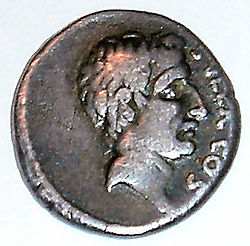 Battle of Chaeronea (86 BC): Decisive victory in the First Mithridatic War
-
Lucius Cornelius Sulla ↔
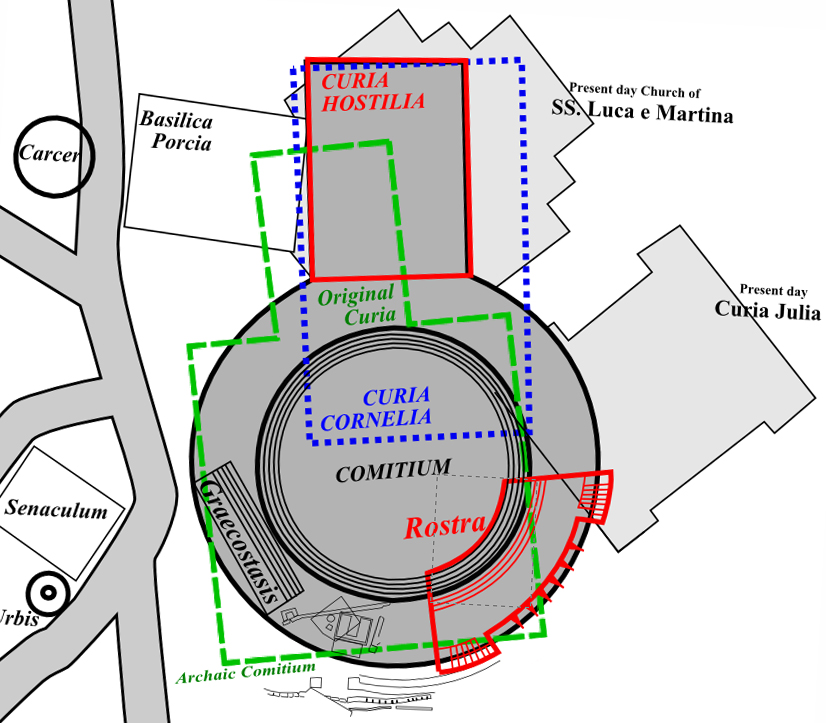 Curia Hostilia: Senate house rebuilt by Sulla
-
Lucius Cornelius Sulla ↔
 First Mithridatic War: Major military conflict led by Sulla
-
Lucius Cornelius Sulla ↔ Lex Cornelia de sicariis et veneficis: Sullan law regarding criminal justice
-
Lucius Cornelius Sulla ↔
 Valeria (wife of Sulla): Sulla's final wife
-
Mithridates VI Eupator ↔ First Mithridatic War: was the initial major military conflict initiated by Mithridates
-
Mithridates VI Eupator ↔ Lucullus: was the Roman commander during the Third Mithridatic War
-
Mithridates VI Eupator ↔ Pompey: was the Roman general who finally defeated Mithridates
-
Mithridates VI Eupator ↔
 Kingdom of Pontus: was the Hellenistic kingdom ruled by Mithridates VI
-
Mithridates VI Eupator ↔ Asiatic Vespers: was the mass execution of Romans ordered by Mithridates
-
Mithridates VI Eupator ↔
 Mithridatic Wars: were the three major conflicts between Mithridates and Rome
-
Mithridates VI Eupator ↔
 Pharnaces I of Pontus: was the grandfather and predecessor of Mithridates VI
-
Mithridates VI Eupator ↔
 Tigranes the Great: was the son-in-law and key ally of Mithridates VI
-
Mithridates VI Eupator ↔
 Battle of Zela (67 BC): was a significant victory for Mithridates against Roman forces
-
Mithridates VI Eupator ↔
 Hellenistic period: is the cultural and historical context of Mithridates' reign
-
Mithridates VI Eupator ↔
 Mithridatism: is the scientific field named after Mithridates' experiments
-
Mithridatic Wars ↔ First Mithridatic War: initial conflict in the series of Mithridatic Wars
-
Mithridatic Wars ↔ Lucius Cornelius Sulla: Roman general who led the campaign in the First Mithridatic War
-
Mithridatic Wars ↔ Lucullus: Roman commander during the early Third Mithridatic War
-
Mithridatic Wars ↔ Pompey: Roman general who concluded the Third Mithridatic War
-
Mithridatic Wars ↔ Tigranes the Great: ally of Mithridates VI during the Third Mithridatic War
-
Mithridatic Wars ↔
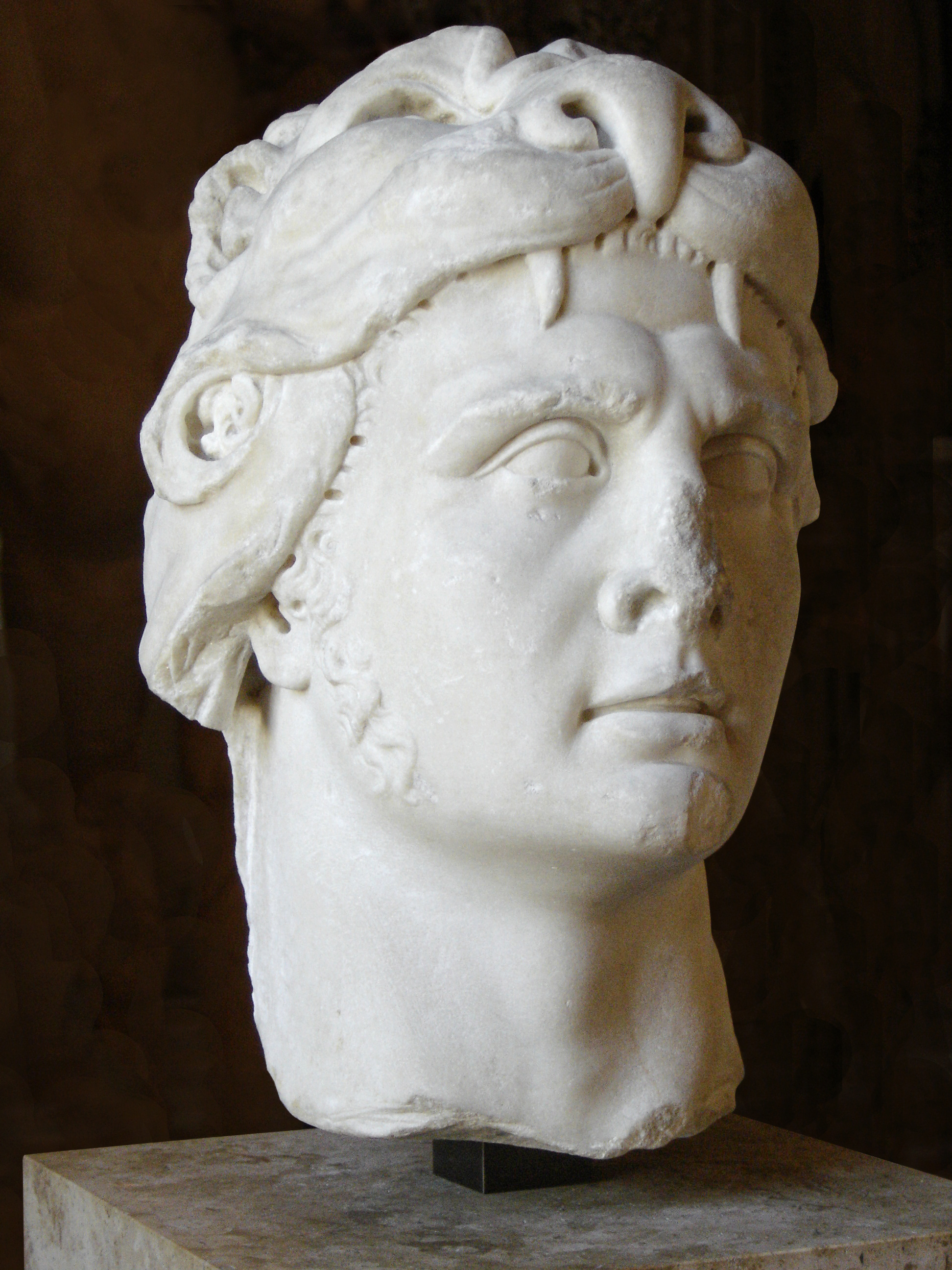 Second Mithridatic War: intermediate conflict in the series of Mithridatic Wars
-
Mithridatic Wars ↔
 Third Mithridatic War: final and most decisive conflict of the Mithridatic Wars
-
Mithridatic Wars ↔ Treaty of Dardanos: peace agreement concluding the First Mithridatic War
-
Mithridatic Wars ↔
 Siege of Cyzicus: pivotal engagement during the Third Mithridatic War
-
Mithridatic Wars ↔
 Battle of Tigranocerta: major Roman victory against the Pontic-Armenian alliance
-
Mithridatic Wars ↔
 Manius Aquillius (consul 101 BC): Roman diplomat whose actions helped trigger the First Mithridatic War
-
Mithridatic Wars ↔
 Kingdom of Bithynia: strategic buffer state and catalyst for the Mithridatic Wars
-
Mithridatic Wars ↔ Archelaus (Pontic army officer): primary Pontic commander during the First Mithridatic War
-
Lucius Cornelius Sulla ↔
 Metrobius: Partner
-
Metrobius ↔ Quintus Roscius: contemporary Roman actor and peer in the theatrical profession
-
Metrobius ↔
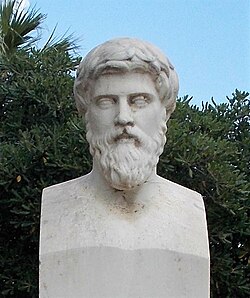 Plutarch: primary historical source documenting the life of Metrobius
-
Metrobius ↔
 Infamia: legal and social status affecting the lives of Roman actors
