Aristotree
mythosGreek Myths: The theft of Apollo's cattle
Apollo

Explore this episode

Greek Myths: The theft of Apollo's cattle

On the day he was born, Hermes stole fifty of Apollo's sacred cattle and drove them backward to hide their tracks... How are Hermes and Theft of Apollo's cattle connected?

Concepts
32
Connections
41
Followers
0
Language
English
Collections

Key ideas

Episode guide

The Theft of Apollo's cattle is a foundational myth detailing the precocious nature of Hermes, the messenger god.
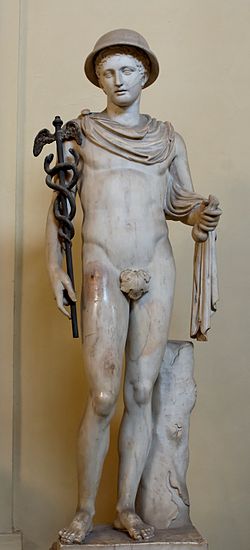
According to the Homeric Hymn to Hermes, the infant god was born in a cave on Mount Cyllene to the nymph Maia. On the very day of his birth, Hermes slipped away and stole fifty of the sacred cattle belonging to his half-brother, Apollo. To evade detection, the clever infant drove the herd backward, confusing their tracks, and sacrificed two of the animals to the gods, establishing early ritual practices. When Apollo discovered the theft, he confronted the infant, leading to a dispute that was eventually brought before their father, Zeus. The conflict was resolved when Hermes presented Apollo with a lyre, an instrument he had invented using a tortoiseshell and the intestines of the sacrificed cattle. This peace offering not only settled the debt but also cemented the lyre's place in the music of ancient Greece, becoming a signature attribute of Apollo.
Interesting connections

Discover what connects these ideas — and why it matters.

These notes analyze unique links between concepts, treating them as two-way.

Main path through this episode

Build the foundations

Selected for graph relevance and prerequisite order.

7 concepts

Follow the story

  1. ApolloStart here

    Apollo is the Olympian god of music, prophecy, healing, and the sun, who serves as the victim of the theft.

    divine half-brother and counterpart

    Apollo and Hermes share a complex relationship defined by the theft of cattle and the subsequent exchange of the lyre for the caduceus.

    Hermes → Apollo

  2. Hermes

    Hermes is the Olympian god of transitions, boundaries, and thieves, known for his cunning and role as a messenger.

    is the mythical inventor of the lyre

    In Greek mythology, Hermes is credited with creating the first lyre from a tortoise shell, which he then gifted to Apollo.

    Lyre → Hermes

  3. Lyre

    The lyre is a stringed musical instrument invented by Hermes from a tortoise shell, which he traded to Apollo to settle the dispute.

    The lyre is the resolution to the theft.

    Hermes gives the lyre to Apollo as compensation for the stolen cattle.

    Lyre → Theft of Apollo's cattle

  4. Theft of Apollo's cattle

    The theft of Apollo's cattle is a central myth describing how the infant Hermes stole his brother's sacred herd to prove his own power.

    Zeus arbitrates the dispute.

    Zeus intervenes to force a settlement between Hermes and Apollo regarding the stolen herd.

    Zeus → Theft of Apollo's cattle

  5. Zeus

    Zeus is the king of the Olympian gods and the father of both Hermes and Apollo, who acts as the final arbiter in their dispute.

    Acts as the final arbiter in the dispute.

    Zeus is called upon to judge the conflict between his two sons, ultimately resolving the matter.

    Homeric Hymn to Hermes → Zeus

  6. Homeric Hymn to Hermes

    The Homeric Hymn to Hermes is the primary literary source that details the story of the cattle theft.

    Connected through other ideas

    1. Features the god as the central protagonist.

      The hymn is entirely dedicated to the birth and early exploits of Hermes.

    2. primary literary source

      This ancient poem provides the most detailed account of Hermes' birth, his precocious theft of Apollo's cattle, and his establishment as a god.

  7. Homeric Hymns

    The Homeric Hymns are a collection of thirty-three ancient Greek hymns and one epigram.

Graph communities

Explore graph communities

Groups of closely connected ideas, ranked by their internal connections and cohesion.

Keep this episode close

Follow this episode to save it to your collection, stay up to date, and learn from it. Fork it to make your own copy and extend the paths that spark your interest.

Sign up free