

Learning in loop
Map a knowledge graph, check source-backed suggestions, accept what belongs, and review it with spaced repetition until it sticks.
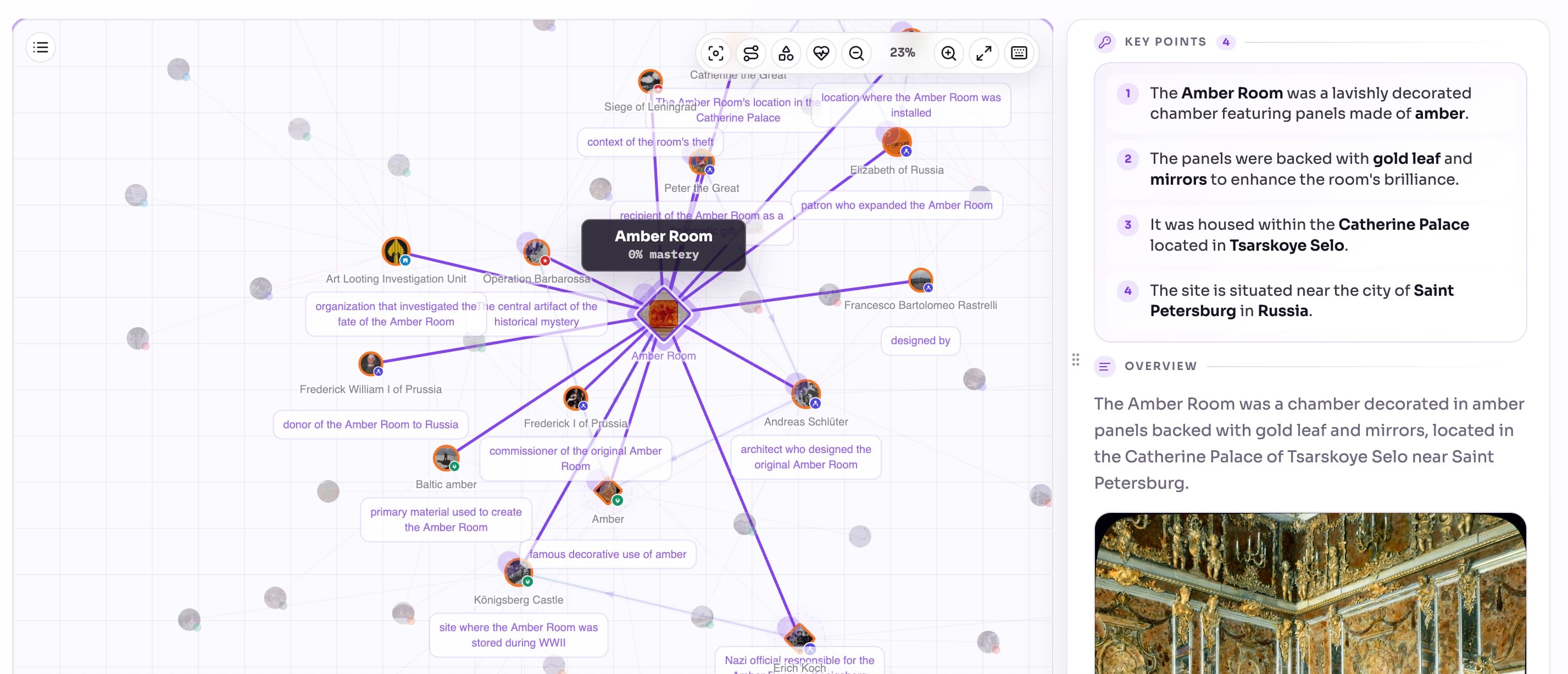
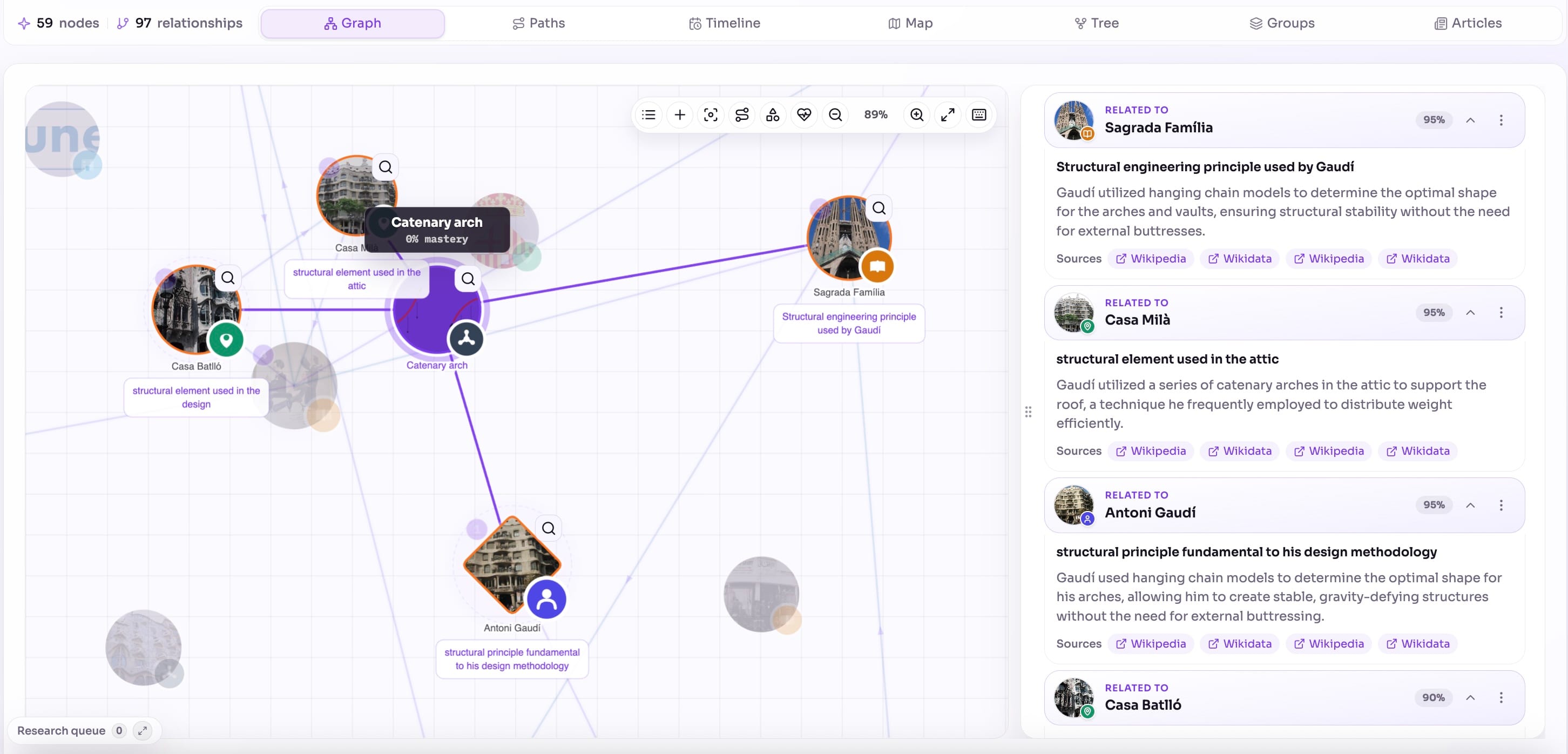
Knowledge graph
See how every idea connects.
Stop losing ideas in a folder of disconnected notes. Build a knowledge graph where every node is something you understand and every edge is a connection you chose.
- Drag-to-arrange canvas with zoom, pan, and focus controls
- Typed edges: prerequisite, contrast, example, and more
- Instant search across your entire graph


Source capture
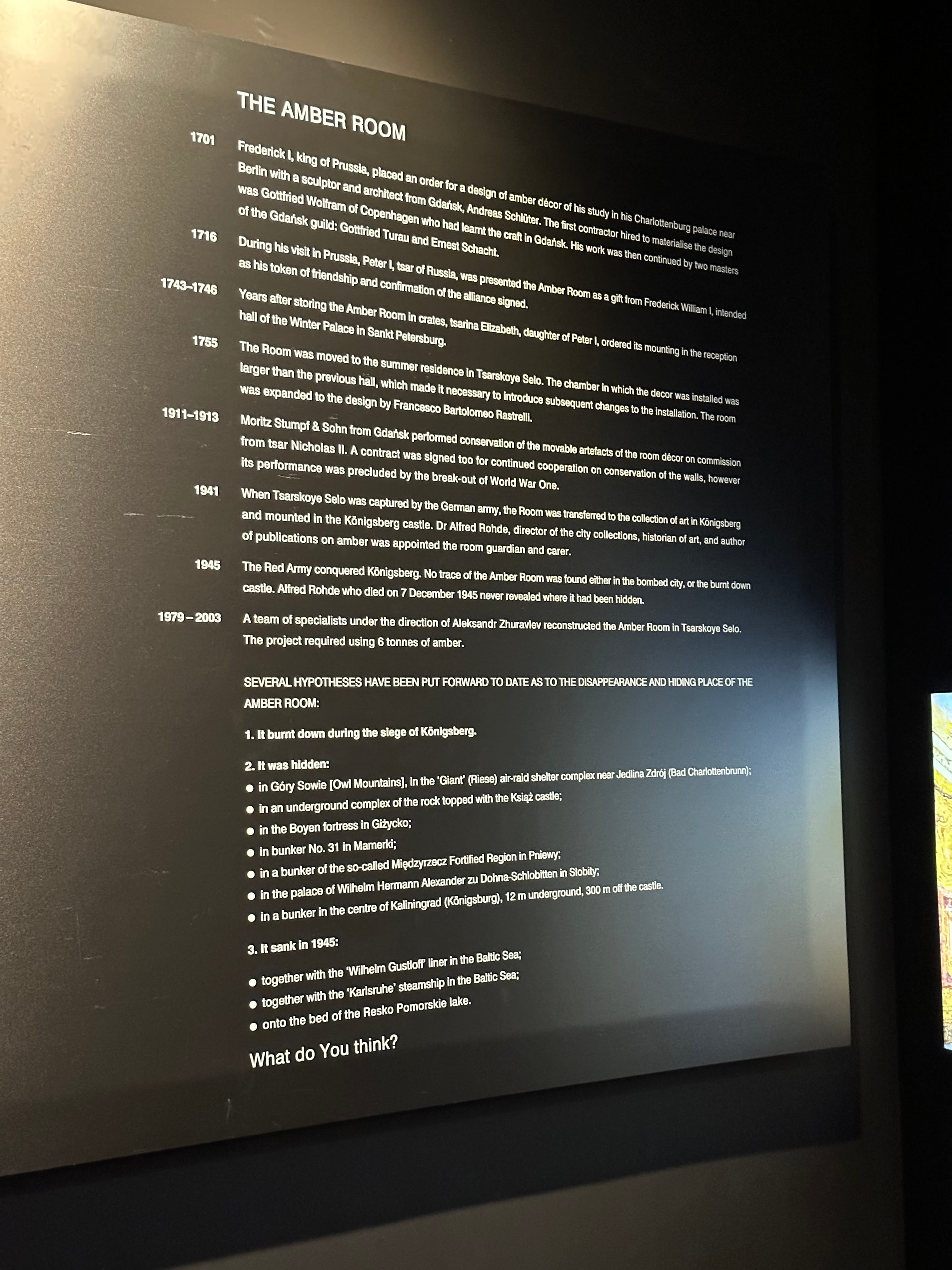
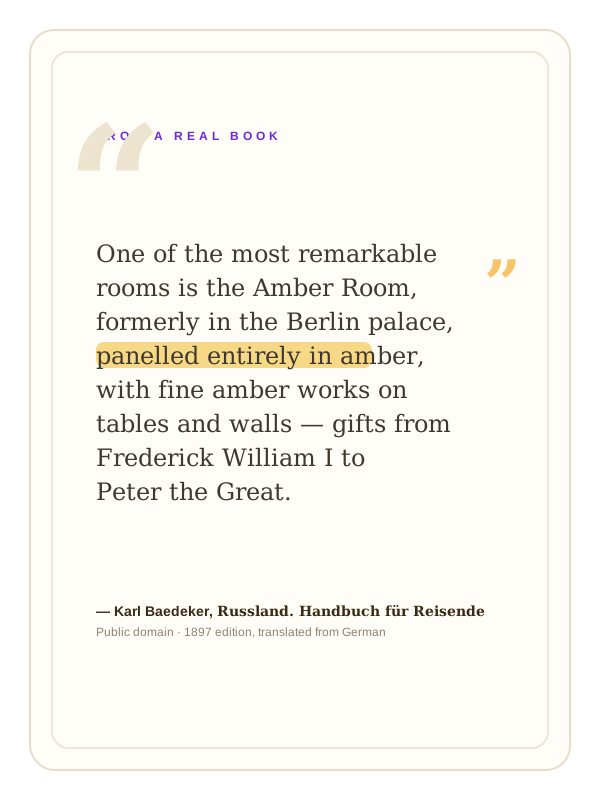
Turn picture or text into a graph.
Upload a picture, like a museum label, or paste a text excerpt. Aristotree identifies concepts and relationships for you to review before they enter your graph.
- Start from an image or pasted excerpt
- Review suggested concepts and connections
- Keep only what belongs in your graph


Recommended learning paths
Know what to learn next.
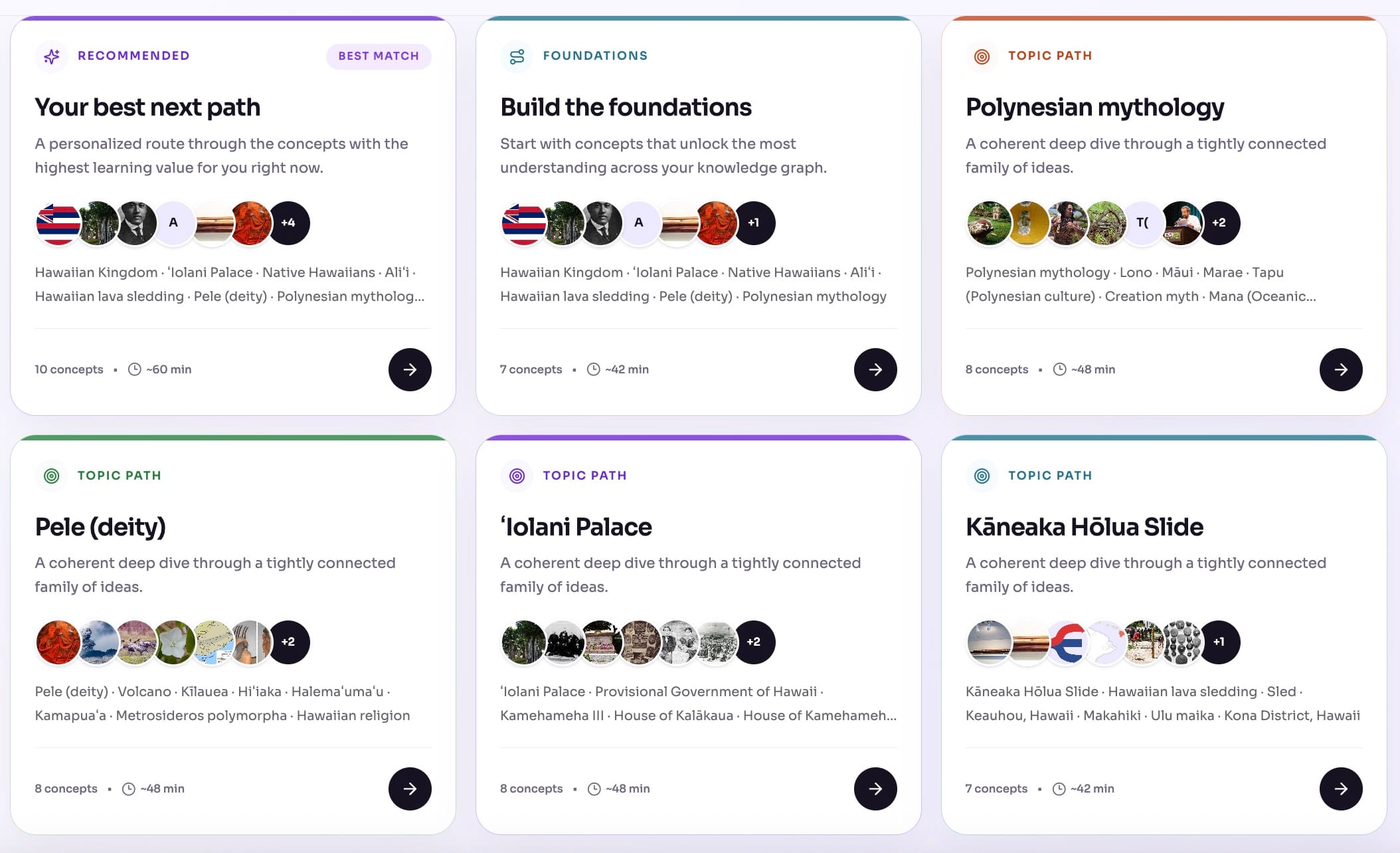
Turn a dense web of ideas into a route you can follow. Aristotree finds a coherent sequence through your graph and keeps the essential concepts in view.
- A numbered route drawn across your knowledge graph
- Recommended order based on the connections between concepts
- Key concepts called out before you begin
- Show or hide the route without changing your graph


Five views, one model
The same graph, different ways to see it.
See the same knowledge from multiple angles. Network, timeline, map, tree, and groups.
- Network: the free-form canvas for connections and spatial thinking
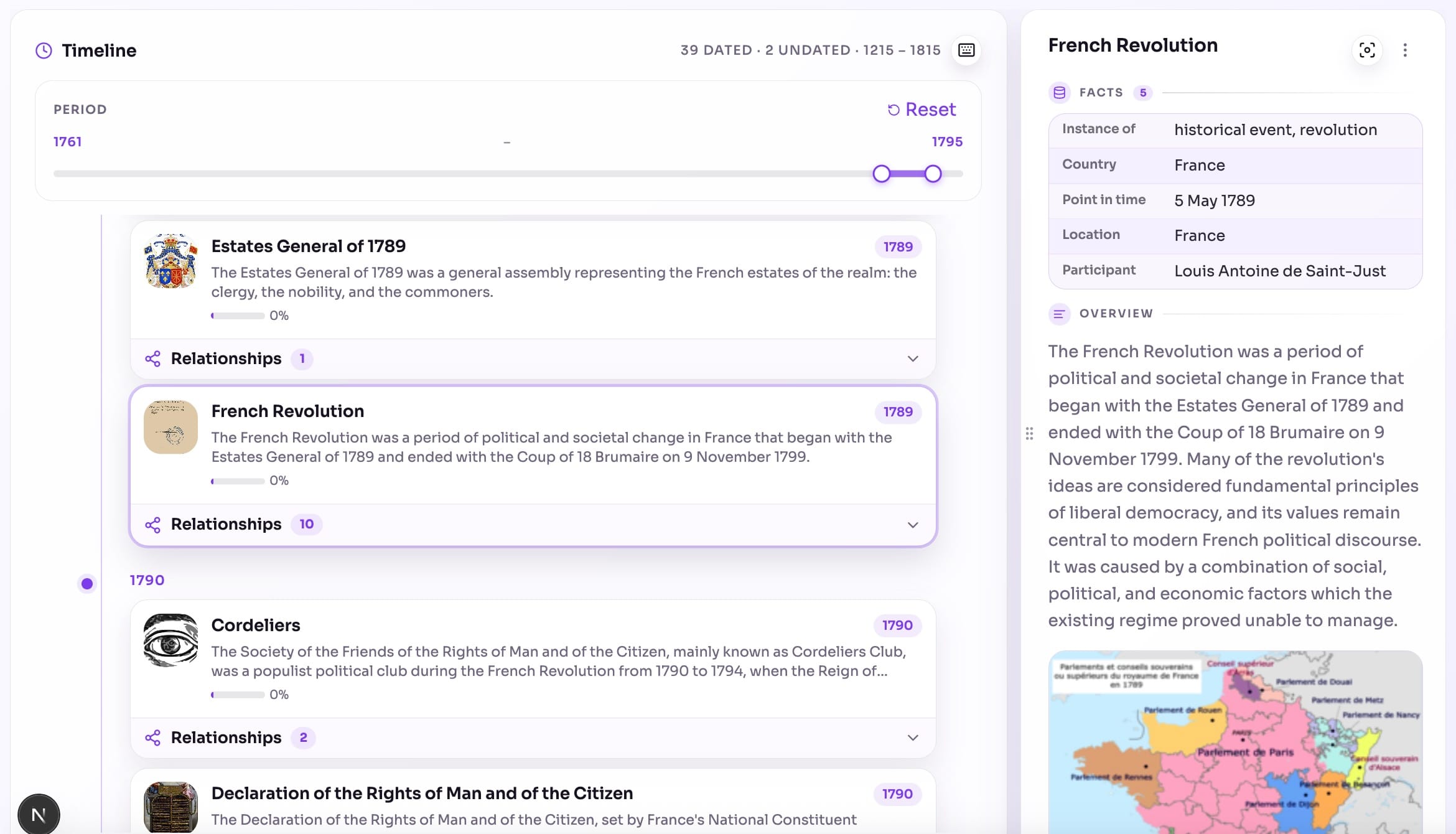
- Timeline: see concepts by date and watch a subject unfold
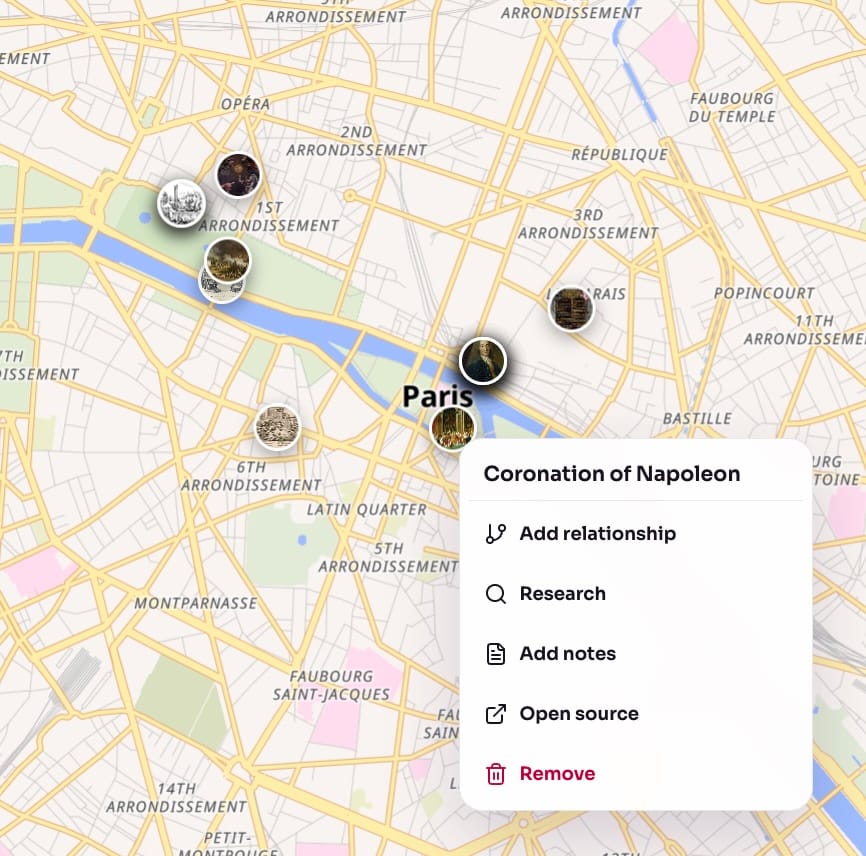
- Map: place concepts geographically with real coordinates and place search
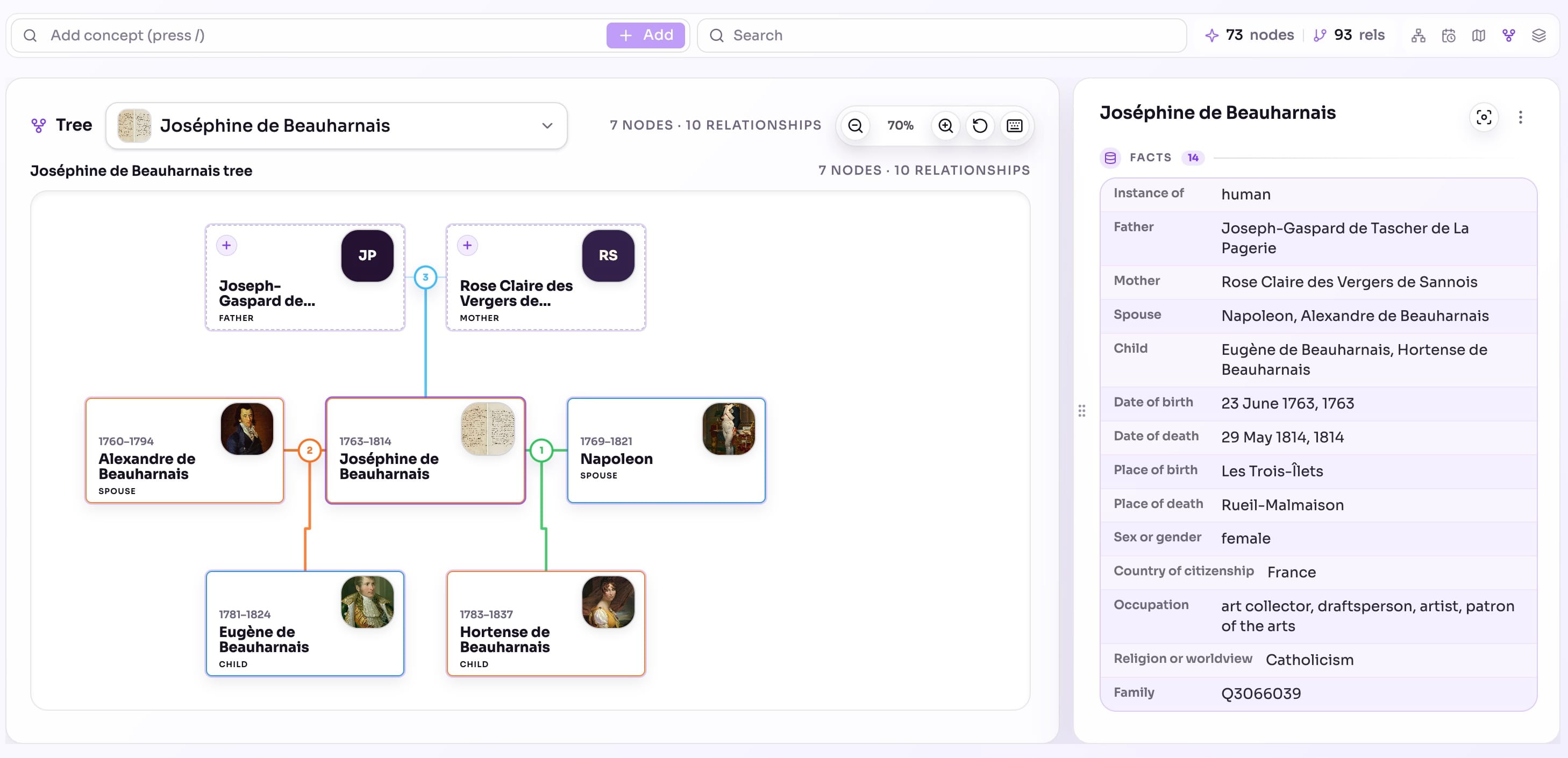
- Tree: trace a family tree
- Groups: cluster containment relationships into groups
- Articles: your concepts and relationships in a readable format
- Multilingual projects: research, maps, concepts, and articles in your language


Connected articles
Turn your graph into something worth reading.
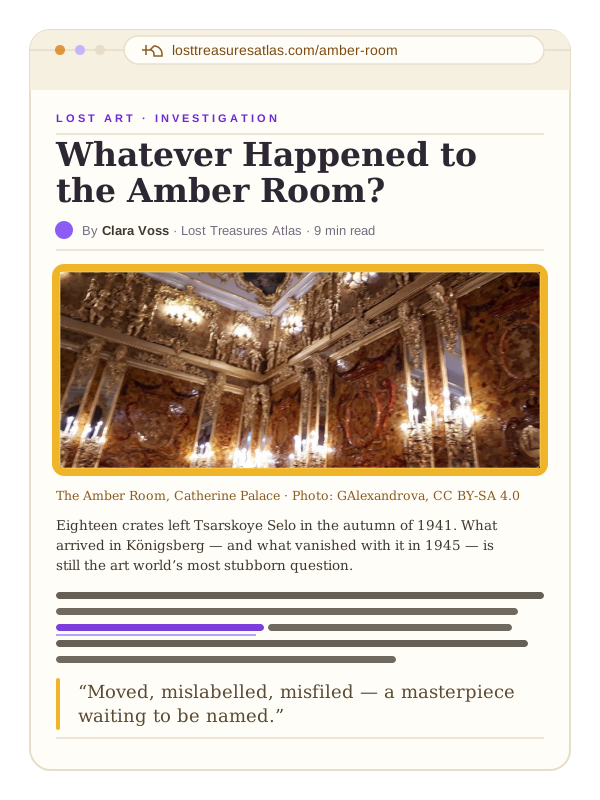
Select concepts and weave them into a focused article. Your relationships become the narrative, with sourced visuals and connection callouts that keep the graph visible in the prose.
- Generate an article from the concepts you select
- Magazine-style layouts
- Connection callouts explain why ideas belong together
- Save, revisit, and search articles with permanent links


Source-backed research
Expand with cited suggestions.
AI suggests new concepts and connections, each with a source you can check. You decide what enters your graph. The AI does the legwork; the judgment stays yours.
- Wikipedia-backed expansion with citations on every suggestion
- Accept or reject each item individually
- Automatic suggestions for related concepts and connections


Adaptive review
Practice what's about to slip.
Every concept you accept becomes a review prompt. Spaced repetition beats the forgetting curve, and active recall makes it stick — not passive re-reading.
- Spaced repetition scheduling driven by per-concept mastery and confidence
- Difficulty ladder from foundational to application as you improve
- Four focus areas: foundational, detail, relationship, application


Mastery tracking
Watch fragile turn durable.
Every answer updates your mastery score per concept. See what's solid, what's slipping, and where to focus next time.
- Per-concept mastery score, confidence, and review interval
- Weak-concept detection with focus-area breakdown
- Score trend, activity heatmap, review forecast
- Effort means learning, and it is rewarded


Streaks & badges
Stay in the habit.
Streaks, badges, and leaderboards to keep you motivated. They reward consistency, not cramming, so the habit sticks.
- Badges for real milestones: first concept, first mastery, cross-domain connections
- Review awards: comeback streaks, consecutive correct, perfect mastery, hard-correct chains
- Enrich your graph so all knowledge is well-connected. Earn badges along the way: Bridge Builder, Web Weaver, Constellation, Integrated Mind


The science is clear. The practice is yours.
Build a mind worth keeping.
Start free with 200 credits. Add more when you want AI-assisted research.