Amber Room
The Amber Room was a glowing chamber crafted from over six tons of Baltic amber and gold leaf. Considered the "Eighth Wonder of the World", it mysteriously disappeared in World War II.
Key topics
Alexander Danilovich Menshikov
Prince Alexander Danilovich Menshikov was a Russian soldier and statesman.
- **Alexander Danilovich Menshikov** was a prominent **Russian statesman** and **general** who lived from **1673** to **1729**.
- He held high-ranking titles including **generalissimo**, **prince of the Russian Empire**, and **duke of Izhora**.
- He was a close **associate and friend** of the Tsar **Peter the Great**.
Alexei Razumovsky
Count Alexei Grigorievich Razumovsky was a Ukrainian-born Russian Registered Cossack who rose to become the lover and, supposedly, morganatic spouse of Empress Elizabeth Petrovna of Russia.
- **Alexei Grigorievich Razumovsky** was a **Ukrainian-born** member of the **Russian Registered Cossacks**.
- He rose to prominence as the primary **lover** of **Empress Elizabeth Petrovna**.
- He was widely considered the **morganatic spouse** of the Empress.
Alfred Rosenberg
Alfred Ernst Rosenberg was a Baltic German Nazi philosopher and convicted war criminal.
- The **Eastern Front** operated from **22 June 1941** until **9 May 1945**.
- The theatre encompassed regions across **Central**, **Eastern**, **Northeast**, and **Southeast Europe**.
- Total fatalities on this front are estimated at **30 million** people, including **9 million** children.
Altaussee
Altaussee is a municipality and spa town in the district of Liezen in Styria, Austria.
Amber
Amber is fossilized tree resin.
- **Amber** is a natural **fossilized tree resin**.
- It has been utilized as a **gemstone** since **classical antiquity**.
- Human appreciation for its **color** and **natural beauty** dates back to the **Neolithic** period.
Amber Road
The Amber Road was an ancient trade route for the transfer of amber from coastal areas of the North Sea and the Baltic Sea to the Mediterranean Sea.
- The **Amber Road** was an **ancient trade route** facilitating the movement of goods between **Northern** and **Southern Europe**.
- It connected the **coastal areas** of the **North Sea** and the **Baltic Sea** to the **Mediterranean Sea**.
- The route was fundamental in defining **prehistoric trade** patterns across the continent.
Amber Room
The Amber Room was a chamber decorated in amber panels backed with gold leaf and mirrors, located in the Catherine Palace of Tsarskoye Selo near Saint Petersburg.
- The **Amber Room** was a lavishly decorated chamber featuring panels made of **amber**.
- The panels were backed with **gold leaf** and **mirrors** to enhance the room's brilliance.
- It was housed within the **Catherine Palace** located in **Tsarskoye Selo**.
Andreas Schlüter
Andreas Schlüter was a German baroque sculptor and architect, active in the Holy Roman Empire, the Polish–Lithuanian Commonwealth, and Russia.
- Andreas Schlüter was a prominent **German Baroque** sculptor and architect.
- He lived from **1659** to **1714**.
- His professional career spanned across the **Holy Roman Empire**.
Art Looting Investigation Unit
The Art Looting Investigation Unit (ALIU) was an American special intelligence unit during World War II whose mission was to gather information and write reports about Nazi art looting networks.
- The **Art Looting Investigation Unit** was established by the **Office of Strategic Services** during **World War II**.
- The unit operated primarily between **1944** and the end of the war to track **Nazi art looting networks**.
- Its small team of **handpicked intelligence officers** conducted investigations across **Germany**, **France**, **Switzerland**, and other European nations.
Baltic amber
Baltic amber or succinite is amber from the Baltic region, home of its largest known deposits.
- Baltic amber is scientifically classified as **succinite**.
- The resin originated during the **Eocene epoch** approximately **34 to 56 million years ago**.
- Historical deposits are estimated to have originated from over **100,000 tons** of fossilized resin.
Baroque architecture
Baroque architecture is a highly decorative and theatrical style which appeared in Italy in the late 16th century and gradually spread across Europe.
- **Baroque architecture** emerged in **Italy** during the late **16th century**.
- The style was promoted by the **Catholic Church** and the **Jesuits** to counter the **Reformation**.
- The **High Baroque** period, characterized by theatrical decoration, lasted from **1625** to **1675**.
Berlin Palace
The Berlin Palace, formerly known as the Royal Palace, is a large building adjacent to Berlin Cathedral and the Museum Island in the Mitte area of Berlin.
- The **Berlin Palace** served as the primary residence for **Electors of Brandenburg** and **Kings of Prussia**.
- The structure is located in the **Mitte** district of **Berlin**, adjacent to the **Berlin Cathedral**.
- It functioned as a royal residence from **1443** until **1918**.
Bombing of Königsberg in World War II
The bombing of Königsberg was a series of attacks made on the city of Königsberg in East Prussia during World War II.
- The **bombing of Königsberg** consisted of multiple aerial campaigns conducted during **World War II**.
- The **Soviet Air Force** initiated the first raids on the city starting in **1941**.
- The **RAF Bomber Command** executed major attacks during the **summer of 1944**.
Catherine I of Russia
Catherine I was Empress of Russia from 8 February 1725 until her death in 1727.
- Catherine I served as the **Empress of Russia** from **8 February 1725** until her death in **1727**.
- She held the title of **empress consort** of Russia between **1721** and **1725**.
- She was the **second wife** of the Russian Tsar **Peter the Great**.
Catherine Palace
The Catherine Palace is a Rococo palace in Tsarskoye Selo (Pushkin), located 30 kilometres (19 mi) south of St.
- The **Catherine Palace** is a prominent **Rococo** architectural landmark situated in **Tsarskoye Selo**.
- It is located approximately **30 kilometres** south of **Saint Petersburg**, **Russia**.
- The structure served as the official **summer residence** for the **Russian tsars**.
Catherine the Great
Catherine II, commonly known as Catherine the Great, was the Empress of Russia from 1762 to 1796.
- **Catherine the Great** ruled as **Empress of Russia** for a period of **34 years**, from **1762** to **1796**.
- She ascended to the throne following a **coup d'état** against her husband, **Peter III**.
- Her reign is widely considered a **golden age** for **Russia** during the **Enlightenment**.
Charles Cameron (architect)
Charles Cameron was a Scottish architect who made an illustrious career at the court of Catherine II of Russia.
- **Charles Cameron** was a **Scottish architect** active during the **18th century**.
- He built a significant professional career serving at the court of **Catherine II of Russia**.
- His lifespan extended from **1745** to **1812**.
Copal
Copal is a tree resin, particularly the aromatic resins from the copal tree Protium copal (Burseraceae) used by the cultures of pre-Columbian Mesoamerica as ceremonially burned incense and for other purposes.
- **Copal** is an **aromatic resin** derived primarily from the **Protium copal** tree of the **Burseraceae** family.
- It represents an **intermediate stage** of **polymerization** between **gummier resins** and **amber**.
- **Pre-Columbian Mesoamerican** cultures utilized it as **ceremonially burned incense**.
Degenerate art
Degenerate art was a term adopted in the 1920s by the Nazi Party in Germany to describe modern art.
- **Degenerate art** was a pejorative label used by the **Nazi Party** starting in the **1920s** to categorize modern art.
- The regime banned modernist works, claiming they were **un-German**, **Jewish**, or **Communist** in nature.
- Thousands of artworks were forcibly removed from **state-owned museums** across **Germany**.
Dominican amber
Dominican amber is amber from the Dominican Republic derived from resin of the extinct tree Hymenaea protera.
- **Dominican amber** is derived from the resin of the **extinct tree** species ***Hymenaea protera***.
- It is distinguished from other types by its high degree of **transparency**.
- The material contains a high frequency of **fossil inclusions**.
East Prussia (electoral district)
East Prussia was one of the 35 electoral districts used to elect members to the Reichstag during the Weimar Republic.
- **East Prussia** served as one of the **35 electoral districts** for the **Reichstag** during the **Weimar Republic**.
- The district participated in **nine democratic elections** between **1919** and **1933**.
- It continued to exist as a nominal entity for **show elections** to the **Nazi Reichstag** until **1938**.
Eastern Front (World War II)
The Eastern Front, also known as the Great Patriotic War, or the German–Soviet War, was a theatre of World War II fought between the European Axis powers and Allies, including the Soviet Union (USSR) and Poland.
Elizabeth of Russia
Elizabeth or Elizaveta Petrovna was Empress of Russia from 1741 until her death in 1762.
- **Elizabeth of Russia** reigned as Empress from **1741** until her death in **1762**.
- Her administration was notable for a policy of **zero executions** throughout her entire reign.
- She oversaw extensive **construction projects** that significantly altered the Russian architectural landscape.
Eocene
The Eocene is a geological epoch that began about 56 million years ago (Ma).
- The **Eocene** is the **second epoch** of the **Paleogene Period** within the **Cenozoic Era**.
- This geological epoch commenced approximately **56 million years ago**.
- The epoch concluded with the **Eocene-Oligocene transition** occurring between **33.9 and 33.4 million years ago**.
Erich Koch
Erich Koch was a Gauleiter of the Nazi Party (NSDAP) in East Prussia from 1 October 1928 until 1945.
- **Erich Koch** served as the **Gauleiter** of the **Nazi Party** in **East Prussia** from **1 October 1928** until **1945**.
- He held the position of **Chief of Civil Administration** for **Bezirk Bialystok** between **1941** and **1945**.
- He acted as the **Reichskommissar** in **Reichskommissariat Ukraine** from **September 1941** to **August 1944**.
Francesco Bartolomeo Rastrelli
Francesco Bartolomeo Rastrelli was an Italian architect who worked mainly in Russia.
- **Francesco Bartolomeo Rastrelli** was an **Italian architect** who achieved his primary professional success in **Russia**.
- He is credited with developing a distinctive style of **Late Baroque** architecture.
- His design aesthetic is defined by **sumptuousness**, **majesty**, and **extravagant luxury**.
Frederick I of Prussia
Frederick I, of the Hohenzollern dynasty, was Elector of Brandenburg (1688–1713) and Duke of Prussia in personal union (Brandenburg–Prussia).
- **Frederick I** was a member of the **Hohenzollern dynasty**.
- He served as the **Elector of Brandenburg** from **1688** to **1713**.
- He held the title of **Duke of Prussia** in a **personal union**.
Frederick William I of Prussia
Frederick William I, known as the Soldier King, was King in Prussia and Elector of Brandenburg from 1713 until his death in 1740, as well as Prince of Neuchâtel.
- **Frederick William I** reigned as the **King in Prussia** and **Elector of Brandenburg**.
- His rule spanned from **1713** until his death in **1740**.
- He was widely referred to by the moniker the **Soldier King**.
Frederick William, the Great Elector
Frederick William was Elector of Brandenburg and Duke of Prussia, thus ruler of Brandenburg-Prussia, from 1640 until his death in 1688.
- **Frederick William** ruled as the **Elector of Brandenburg** and **Duke of Prussia** from **1640** to **1688**.
- He was a prominent member of the **House of Hohenzollern**.
- His governance was defined by his adherence to the **Calvinist** faith.
Gauleiter
A Gauleiter was a regional leader of the Nazi Party (NSDAP) who served as the head of a Gau or Reichsgau.
- A **Gauleiter** functioned as the **regional leader** of the **Nazi Party** overseeing a **Gau** or **Reichsgau**.
- The role represented the **third-highest political rank** within the **Nazi Party** hierarchy.
- The position was strictly **subordinate** to the **Reichsleiter** and the **Führer**.
Generalplan Ost
The Generalplan Ost, abbreviated GPO, was Nazi Germany's plan for the settlement and "Germanization" of captured territory in Eastern Europe, involving the genocide, extermination and large-scale ethnic cleansing of Slavs, Eastern European Jews, and other indigenous peoples of Eastern Europe categorized as "Untermenschen" in Nazi ideology.
- **Generalplan Ost** was a strategic plan for the **settlement** and **Germanization** of **Eastern Europe**.
- The plan mandated the **genocide** and **ethnic cleansing** of populations labeled as **Untermenschen**.
- It targeted **Slavs**, **Eastern European Jews**, and other **indigenous peoples** for extermination.
Great Northern War
In the Great Northern War (1700–1721) a coalition led by Russia successfully contested the supremacy of Sweden in Northern, Central and Eastern Europe.
- The **Great Northern War** was a major conflict spanning from **1700** to **1721**.
- The war involved a **coalition** led by **Russia** challenging the regional supremacy of the **Swedish Empire**.
- Key initial alliance leaders included **Peter I of Russia**, **Frederick IV of Denmark–Norway**, and **Augustus II the Strong**.
Great Patriotic War (term)
The Great Patriotic War is a term used in Russia and some other post-Soviet states to describe the Eastern Front of World War II, fought primarily between the Soviet Union and Nazi Germany between 22 June 1941 and 9 May 1945.
- The **Great Patriotic War** is the official term used in **Russia** and post-Soviet states for the **Eastern Front** of **World War II**.
- The conflict was fought primarily between the **Soviet Union** and **Nazi Germany**.
- The standard timeframe for the war is **22 June 1941** to **9 May 1945**.
Hermann Göring
Hermann Wilhelm Göring was a German politician, aviator, military commander, and convicted war criminal.
- **Hermann Göring** was a high-ranking **German politician** and a central figure in the **Nazi Party**.
- He served as the **Oberbefehlshaber der Luftwaffe**, commanding the German air force until the end of the regime.
- His political influence spanned the duration of the **Nazi dictatorship** from **1933** to **1945**.
House of Hohenzollern
The House of Hohenzollern is a formerly royal German dynasty whose members were variously princes, electors, kings and emperors of Hohenzollern, Brandenburg, Prussia, the German Empire, and Romania.
- The **House of Hohenzollern** is a prominent **German royal dynasty** with origins in the **11th century**.
- The family name is derived from **Hohenzollern Castle** located near **Hechingen** in **Swabia**.
- The earliest recorded ancestors of the dynasty were documented in **1061**.
Inclusion (mineral)
An inclusion in mineralogy is any material trapped inside a mineral during its formation.
- An **inclusion** is any **material** trapped within a **mineral** during its **formation**.
- In **gemology**, it refers to an object enclosed inside a **gemstone** or reaching its **surface**.
- **James Hutton's law of inclusions** states that included **fragments** are older than the **host rock**.
Ivan VI of Russia
Ivan VI Antonovich, also known as Ioann Antonovich, was Emperor of Russia from October 1740 until he was overthrown by his cousin Elizabeth Petrovna in December 1741.
- **Ivan VI Antonovich** was proclaimed Emperor of Russia in **October 1740** at the age of **two months**.
- His mother, **Anna Leopoldovna**, served as the **regent** during his brief tenure.
- His reign ended in **December 1741** following a **coup** led by **Elizabeth Petrovna**.
Kaliningrad
Kaliningrad is the largest city and administrative centre of Kaliningrad Oblast, an exclave of Russia between Lithuania and Poland.
- **Kaliningrad** serves as the administrative center of the **Kaliningrad Oblast** exclave.
- The city is situated on the **Pregolya River** at the edge of the **Vistula Lagoon**.
- It functions as the only **ice-free Russian port** located on the **Baltic Sea**.
Königsberg
Königsberg was a German city established in the 13th century, which after the defeat of Nazi Germany became part of the Soviet Union and was renamed to Kaliningrad in 1946.
- **Königsberg** was founded in **1255** by the **Teutonic Knights** on the site of the **Old Prussian** settlement **Twangste**.
- The city was named in honor of **King Ottokar II of Bohemia** following his campaign against the **pagan Old Prussians**.
- It served as a historic **German city** for centuries before the end of **World War II**.
Königsberg Castle
Königsberg Castle was the seat of the grand masters of the Teutonic Order and of the dukes and kings of Prussia in the city of Königsberg.
- The **Königsberg Castle** served as the primary residence for the **grand masters** of the **Teutonic Order**.
- Construction of the original fortress began in the **1250s** under the direction of the **Teutonic Knights**.
- The structure functioned as the seat of power for the **dukes and kings of Prussia** for several centuries.
Monuments, Fine Arts, and Archives program
The Monuments, Fine Arts, and Archives Section Unit (MFAA) was a program established by the Allies in 1943 to help protect cultural property in war areas during and after World War II.
- The **Monuments, Fine Arts, and Archives program** was created by the **Allies** in **1943** to safeguard cultural heritage.
- The organization consisted of approximately **400 service members and civilians** tasked with protecting historic sites from **war damage**.
- The program operated under the **Civil Affairs and Military Government Sections** of Allied armies.
Moscow State University
Moscow State University (MSU), officially M.
- **Moscow State University** is a public research institution located in **Moscow**, **Russia**.
- The academic structure includes **43 faculties**, **15 research institutes**, and over **300 departments**.
- The university operates **six branches** in addition to its main campus.
Nazi Party
The Nazi Party, officially the National Socialist German Workers' Party, was a far-right political party in Germany active between 1920 and 1945 that created and supported the ideology of Nazism.
- The **Nazi Party** was a **far-right political organization** active in **Germany** from **1920** to **1945**.
- It originated from the **German Workers' Party**, which existed between **1919** and **1920**.
- The party drew its early membership from the **Freikorps paramilitary culture**.
Nuremberg trials
The Nuremberg trials were international criminal trials held by France, the Soviet Union, the United Kingdom, and the United States against leaders of defeated Nazi Germany for plotting and carrying out invasions of several countries across Europe and committing atrocities against their citizens in the Second World War.
- The **Nuremberg trials** were a series of **international criminal proceedings** against **Nazi German leaders**.
- The trials were conducted by a coalition of **France**, the **Soviet Union**, the **United Kingdom**, and the **United States**.
- Defendants were prosecuted for orchestrating **invasions** across **Europe** during **World War II**.
Office of Strategic Services
The Office of Strategic Services (OSS) was the second non-departmental civilian intelligence agency of the United States.
- The **Office of Strategic Services** served as the primary **United States** intelligence agency during **World War II**.
- It was established in **1942** as the successor to the **Office of the Coordinator of Information**.
- The agency functioned under the authority of the **Joint Chiefs of Staff** to coordinate espionage operations.
Operation Barbarossa
Operation Barbarossa was the invasion of the Soviet Union by Nazi Germany and several of its European Axis allies starting on Sunday, 22 June 1941, during World War II.
- The invasion commenced on **22 June 1941** as a massive military offensive by **Nazi Germany** and its **Axis allies**.
- The operation deployed over **3.8 million** Axis troops across a **2,900-kilometer** front.
- Strategic objectives aimed to secure territory reaching the **Arkhangelsk–Astrakhan** line, referred to as the **A–A line**.
Order of Saint Alexander Nevsky
The Imperial Order of Saint Alexander Nevsky was an order of chivalry of the Russian Empire first awarded on 1 June [O.S.
- The **Imperial Order of Saint Alexander Nevsky** is a prestigious **order of chivalry** within the **Russian Empire**.
- The order was first officially awarded on **1 June 1725**.
- The inaugural presentation of the award was conducted by **Empress Catherine I**.
Peter III of Russia
Peter III Fyodorovich was Emperor of Russia from 5 January 1762 until 9 July of the same year, when his wife, Catherine II, overthrew him in a palace coup d'état.
- **Peter III Fyodorovich** served as the Emperor of Russia for a brief period in **1762**.
- His reign lasted from **5 January 1762** until his deposition on **9 July 1762**.
- He was removed from power during a **palace coup d'état** orchestrated by his wife, **Catherine II**.
Peter the Great
Peter I was the Tsar of all Russia from 1682 and the first Emperor of Russia from 1721 until his death in 1725.
- **Peter I** reigned as the **Tsar of all Russia** starting in **1682**.
- He became the first **Emperor of Russia** in **1721**.
- His rule lasted until his death in **1725**.
Polymerization
In polymer chemistry, polymerization, or polymerisation, is a process of reacting monomer molecules together in a chemical reaction to form polymer chains or three-dimensional networks.
- **Polymerization** is a **chemical reaction** that links **monomer molecules** together.
- The process results in the formation of **polymer chains** or **three-dimensional networks**.
- There are **multiple forms** and **categorization systems** used to classify these chemical processes.
Reichskommissariat Ukraine
The Reichskommissariat Ukraine was an administrative entity of the Reich Ministry for the Occupied Eastern Territories of Nazi Germany from 1941 to 1944.
- The **Reichskommissariat Ukraine** was an administrative division under the **Reich Ministry for the Occupied Eastern Territories**.
- It operated as a **German civilian occupation regime** from **1941** to **1944**.
- The territory encompassed the **Ukrainian SSR** and portions of the **Byelorussian SSR**, **Russian SFSR**, and **eastern Poland**.
Reichsleiter Rosenberg Taskforce
The Reichsleiter Rosenberg Taskforce was a Nazi Party organization dedicated to appropriating cultural property during the Second World War.
- The **Reichsleiter Rosenberg Taskforce** was a specialized **Nazi Party** organization focused on the systematic seizure of cultural assets.
- The organization was directed by **Alfred Rosenberg**, the chief ideologue of the **NSDAP**.
- Active from **1940** to **1945**, the taskforce operated across occupied territories including **France**, the **Netherlands**, and the **Soviet Union**.
Rococo
Rococo, less commonly Roccoco, is a Western style of architecture, art, and decoration that emerged in France in the 1730s as a reaction against the Louis XIV style.
- **Rococo** emerged in **France** during the **1730s** as a stylistic reaction against the **Louis XIV** aesthetic.
- The style is defined by **asymmetry**, **fluid curves**, and extensive **ornamentation**.
- It utilizes **rocaille** motifs, which mimic the appearance of **shells** and **pebbles**.
Rose Valland
Rose Antonia Maria Valland was a French art curator, member of the French Resistance, captain in the French military, and one of the most decorated women in French history.
- **Altaussee** is a municipality and spa town located in the **Liezen** district of **Styria**, **Austria**.
- The village is situated on the shores of **Lake Altaussee** at the base of the **Loser Plateau**.
- The region is part of the **Salzkammergut**, a designated area for climatic spa treatments.
Saint Petersburg
Saint Petersburg, formerly known as Petrograd (Петроград) and later Leningrad (Ленинград), is the second-largest city in Russia, after Moscow, the nation's capital.
- **Saint Petersburg** is the second-largest city in **Russia**.
- The city is located on the **Neva River** at the head of the **Gulf of Finland**.
- It covers an area of **1,439 square kilometers**.
Sambia Peninsula
Sambia or Samland or Kaliningrad Peninsula is a peninsula in the Kaliningrad Oblast of Russia, on the southeastern shore of the Baltic Sea.
- The **Sambia Peninsula**, also known as **Samland**, is located in the **Kaliningrad Oblast** of **Russia**.
- It is situated on the **southeastern shore** of the **Baltic Sea**.
- The peninsula is bounded by the **Curonian Lagoon** to the northeast and the **Vistula Lagoon** to the southwest.
Schloss Charlottenburg
Schloss Charlottenburg is a Baroque palace in Berlin, located in Charlottenburg, a district of the Charlottenburg-Wilmersdorf borough, and is among the largest palaces in the world.
- **Schloss Charlottenburg** is a major **Baroque** palace located in **Berlin**.
- It is situated within the **Charlottenburg-Wilmersdorf** borough.
- The palace is recognized as one of the largest of its kind globally.
Siege of Leningrad
The Siege of Leningrad was a military blockade undertaken by the Axis powers against the city of Leningrad in the Soviet Union on the Eastern Front of World War II from 1941 to 1944.
- The **Siege of Leningrad** lasted for **872 days** between **1941** and **1944**.
- The blockade was enforced by **Germany** and **Finland** during **World War II**.
- The city suffered an estimated **1.5 million deaths** during the operation.
Sophia Charlotte of Hanover
Sophia Charlotte of Hanover was the first Queen consort in Prussia as the wife of King Frederick I.
- **Sophia Charlotte of Hanover** served as the first **Queen consort in Prussia**.
- She was married to **King Frederick I**.
- She was the daughter of **Elector Ernest Augustus of Hanover** and **Sophia of the Palatinate**.
Succinic acid
Succinic acid is a dicarboxylic acid with the chemical formula (CH2)2(CO2H)2.
- The chemical formula for **succinic acid** is **(CH2)2(CO2H)2**.
- It functions as a **dicarboxylic acid** within biological systems.
- In living organisms, it exists primarily as the anion known as **succinate**.
Supreme Privy Council
The Supreme Privy Council of Imperial Russia, founded on 19 February 1726 and operative until 1730, originated as a body of advisors to Empress Catherine I.
- The **Supreme Privy Council** was established in **Imperial Russia** on **19 February 1726**.
- The council functioned as the primary **advisory body** to **Empress Catherine I**.
- The institution remained active as a governing entity until **1730**.
Teutonic Order
The Teutonic Order is a Catholic religious institution founded as a military society c.
- The **Teutonic Order** was established as a **Catholic religious institution** around **1190**.
- The organization was founded in **Acre**, located in the **Kingdom of Jerusalem**.
- Its original mandate focused on assisting **Christian pilgrims** and operating **hospitals**.
The Holocaust in Ukraine
The Holocaust saw the systematic mass murder of Jews in the Reichskommissariat Ukraine, the General Government, the Crimean General Government and some areas which were located to the east of Reichskommissariat Ukraine, in the Transnistria Governorate and Bessarabia, Northern Bukovina and the Hertsa region and Carpathian Ruthenia during World War II.
- The **Holocaust in Ukraine** involved the **systematic mass murder** of **Jewish populations** during **World War II**.
- Geographic scope included the **Reichskommissariat Ukraine**, the **General Government**, and the **Crimean General Government**.
- Mass killings also occurred in the **Transnistria Governorate**, **Bessarabia**, **Northern Bukovina**, and **Carpathian Ruthenia**.
Treaty of Nystad
The Treaty of Nystad, or the Treaty of Uusikaupunki, was the last peace treaty of the Great Northern War of 1700–1721.
- The **Treaty of Nystad** was signed on **10 September 1721** to conclude the **Great Northern War**.
- The agreement was negotiated between the **Tsardom of Russia** and the **Swedish Empire**.
- The signing took place in the town of **Nystad**, which was under **Swedish** control at the time.
Treaty of Saint Petersburg (1762)
The Treaty of Saint Petersburg was concluded on 5 May 1762, and ended the fighting in the Seven Years' War between Prussia and Russia.
- The **Treaty of Saint Petersburg** was signed on **5 May 1762**.
- The agreement formally ended hostilities between **Prussia** and **Russia** in the **Seven Years' War**.
- The treaty was facilitated by the accession of **Emperor Peter III**.
Triboelectric effect
The triboelectric effect describes electric charge transfer between two objects when they contact or slide against each other.
- The **triboelectric effect** involves **electric charge transfer** occurring when two objects **contact** or **slide** against each other.
- It results in the generation of **tribocharge** across all **solid materials**.
- The phenomenon can occur between various combinations of **solids**, **liquids**, and **gases**.
Tsarskoye Selo
Tsarskoye Selo was the town containing a former residence of the Russian imperial family and visiting nobility, located 24 kilometers (15 mi) south from the center of Saint Petersburg.
- **Tsarskoye Selo** functioned as the primary **imperial residence** for the **Russian royal family** and visiting nobility.
- The site is positioned **24 kilometers** south of the center of **Saint Petersburg**.
- The area is now administratively integrated into the town of **Pushkin**.
Zeughaus
The Zeughaus is a listed building and the oldest structure on Unter den Linden boulevard in the historic centre of Berlin.
- The **Zeughaus** is the oldest building situated on the **Unter den Linden** boulevard.
- Construction of the **Baroque** structure occurred between **1695** and **1706**.
- The design was a collaborative effort by **Johann Arnold Nering**, **Martin Grünberg**, **Andreas Schlüter**, and **Jean de Bodt**.
Connections to explore
-
 Amber Room ↔
 Catherine Palace: location where the Amber Room was installed
-
Amber Room ↔
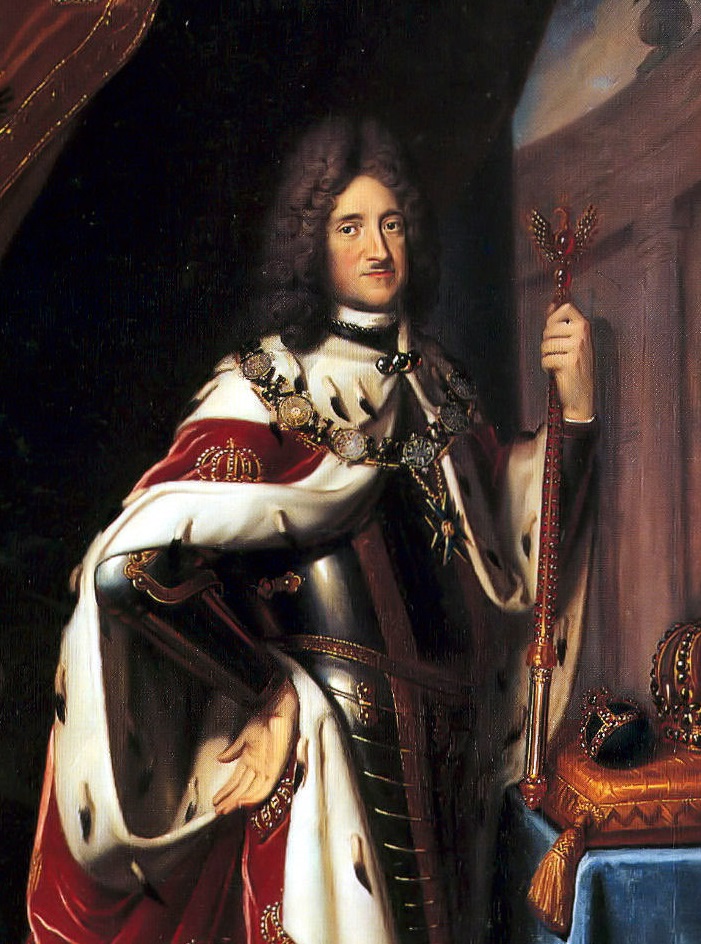 Frederick I of Prussia: commissioner of the original Amber Room
-
Amber Room ↔
 Peter the Great: recipient of the Amber Room as a diplomatic gift
-
Amber Room ↔
 Siege of Leningrad: context of the room's theft
-
Amber Room ↔
 Andreas Schlüter: architect who designed the original Amber Room
-
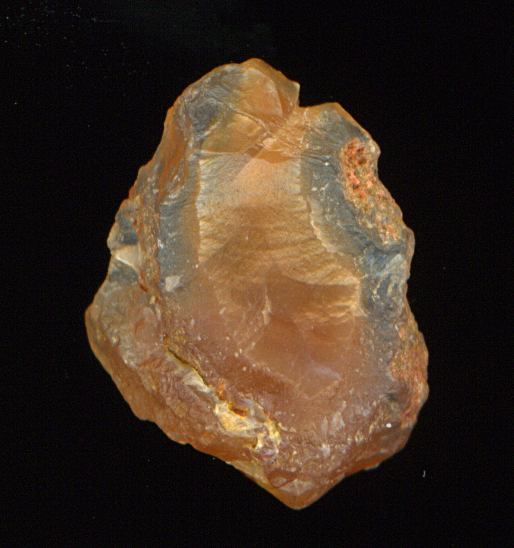 Amber ↔ Amber Room: famous decorative use of amber
-
Amber Room ↔
 Königsberg Castle: site where the Amber Room was stored during WWII
-
Amber ↔ Königsberg Castle: historical storage site for amber
-
Amber ↔ Andreas Schlüter: architect of the original Amber Room
-
Amber ↔ Frederick I of Prussia: commissioner of the Amber Room
-
Amber ↔ Peter the Great: recipient of the Amber Room
-
 Baltic amber ↔ Amber: general category of fossil resin
-
Amber ↔
 Amber Road: historical trade route for amber
-
Amber ↔
 Inclusion (mineral): biological preservation within amber
-
Amber ↔
 Polymerization: chemical process of amber formation
-
Amber ↔
 Dominican amber: geological alternative to Baltic amber
-
Amber ↔
 Triboelectric effect: physical property of amber
-
Königsberg Castle ↔ Andreas Schlüter: Architectural contributor to the castle's design
-
Königsberg Castle ↔ Frederick I of Prussia: Royal resident and patron
-
Königsberg Castle ↔
 Teutonic Order: Founding institution and original seat of power
-
Königsberg Castle ↔
 Bombing of Königsberg in World War II: Cause of structural destruction
-
Königsberg Castle ↔
 House of Hohenzollern: Dynastic seat of the Prussian monarchy
-
Königsberg Castle ↔
 Kaliningrad: Modern geographical location
-
Andreas Schlüter ↔ Peter the Great: Final employer and patron
-
Andreas Schlüter ↔ Frederick I of Prussia: Primary royal patron in Prussia
-
Andreas Schlüter ↔
 Berlin Palace: Primary architectural masterpiece and site of major sculptural work
-
Andreas Schlüter ↔
 Zeughaus: Major architectural project demonstrating his Baroque style
-
Andreas Schlüter ↔
 Baroque architecture: Artistic movement defining his professional style
-
Andreas Schlüter ↔
 Saint Petersburg: Final location of his professional activity
-
Andreas Schlüter ↔
 Frederick William, the Great Elector: Key patron of his early career
-
Andreas Schlüter ↔
 Sophia Charlotte of Hanover: Influential patron of his work
-
Andreas Schlüter ↔
 Schloss Charlottenburg: Architectural site featuring his design contributions
-
Amber Room ↔ Baltic amber: primary material used to create the Amber Room
-
Baltic amber ↔ Amber Road: historical trade route for Baltic amber
-
Baltic amber ↔ Inclusion (mineral): biological specimens preserved in amber
-
Baltic amber ↔
 Eocene: geological epoch of origin
-
Baltic amber ↔
 Succinic acid: chemical marker of Baltic amber
-
Baltic amber ↔
 Sambia Peninsula: primary geographical source
-
Catherine Palace ↔ Saint Petersburg: Nearby major city and cultural center
-
Catherine Palace ↔ Baroque architecture: Foundational style for the palace design
-
Catherine Palace ↔ Siege of Leningrad: Context for the destruction of the palace
-
Catherine Palace ↔ Peter the Great: Founder of the imperial estate
-
Catherine Palace ↔
 Tsarskoye Selo: Location of the Catherine Palace
-
 Elizabeth of Russia ↔ Catherine Palace: major imperial residence
-
Catherine Palace ↔
 Francesco Bartolomeo Rastrelli: Architect of the Catherine Palace
-
Catherine I of Russia ↔ Catherine Palace: Palace complex founded by Catherine I
-
Catherine Palace ↔
 Catherine the Great: Major patron and resident
-
Catherine Palace ↔
 Rococo: Architectural style of the palace
-
Catherine Palace ↔
 Great Patriotic War (term): Cause of extensive damage and looting
-
Catherine Palace ↔
 Charles Cameron (architect): Architect of neoclassical additions
-
Catherine I of Russia ↔ Peter the Great: Husband and predecessor as monarch
-
Elizabeth of Russia ↔ Catherine I of Russia: mother and predecessor
-
Catherine I of Russia ↔ Saint Petersburg: Capital city established by her husband
-
Catherine I of Russia ↔
 Great Northern War: Conflict that led to Catherine's capture and rise
-
Catherine I of Russia ↔
 Supreme Privy Council: Governing body established during Catherine's reign
-
Catherine I of Russia ↔
 Alexander Danilovich Menshikov: Key political ally and power broker for Catherine
-
Catherine I of Russia ↔
 Order of Saint Alexander Nevsky: Chivalric order established by Catherine I
-
Catherine I of Russia ↔
 Treaty of Nystad: Peace treaty ending the war that brought Catherine to power
-
Amber Room ↔
 Erich Koch: Nazi official responsible for the Amber Room in Königsberg
-
Amber Room ↔
 Art Looting Investigation Unit: organization that investigated the fate of the Amber Room
-
Erich Koch ↔ Königsberg Castle: administrative site managed by Erich Koch
-
Erich Koch ↔
 Gauleiter: political rank held by Erich Koch
-
Erich Koch ↔
 East Prussia (electoral district): administrative region governed by Erich Koch
-
Erich Koch ↔
 Reichskommissariat Ukraine: territory administered by Erich Koch during World War II
-
Erich Koch ↔
 Nazi Party: political organization led by Erich Koch
-
Erich Koch ↔
 Generalplan Ost: policy framework implemented by Erich Koch
-
Erich Koch ↔
 Nuremberg trials: legal proceedings related to Erich Koch's crimes
-
Erich Koch ↔
 The Holocaust in Ukraine: atrocities overseen by Erich Koch
-
Erich Koch ↔
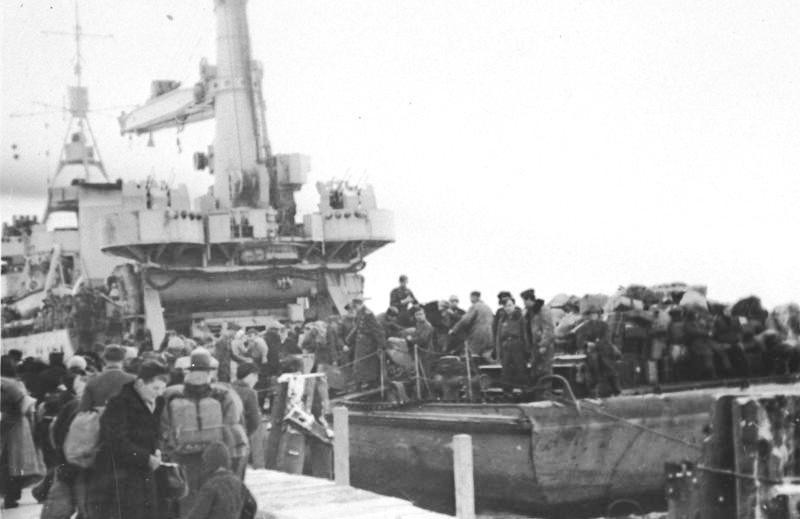 Königsberg: administrative center of Koch's Gau
-
Art Looting Investigation Unit ↔ Erich Koch: subject of ALIU investigation
-
Art Looting Investigation Unit ↔
 Monuments, Fine Arts, and Archives program: related Allied military unit with overlapping mission
-
Art Looting Investigation Unit ↔
 Reichsleiter Rosenberg Taskforce: primary target of ALIU intelligence gathering
-
Art Looting Investigation Unit ↔
 Office of Strategic Services: parent intelligence agency of the ALIU
-
Art Looting Investigation Unit ↔
 Rose Valland: key informant and collaborator with Allied units
-
Art Looting Investigation Unit ↔
 Hermann Göring: major figure investigated by the ALIU
-
Art Looting Investigation Unit ↔
 Altaussee: major recovery site identified by Allied intelligence
-
Art Looting Investigation Unit ↔
 Degenerate art: context for Nazi art policy and looting
-
Amber Room ↔ Elizabeth of Russia: patron who expanded the Amber Room
-
 Operation Barbarossa ↔ Amber Room: The central artifact of the historical mystery
-
Amber Room ↔
 Frederick William I of Prussia: donor of the Amber Room to Russia
-
Elizabeth of Russia ↔ Catherine the Great: successor and daughter-in-law
-
Elizabeth of Russia ↔ Francesco Bartolomeo Rastrelli: court architect
-
Elizabeth of Russia ↔ Saint Petersburg: imperial capital
-
Elizabeth of Russia ↔ Peter the Great: father and predecessor of the Russian Empire
-
Elizabeth of Russia ↔
 Peter III of Russia: nephew and successor
-
Elizabeth of Russia ↔
 Ivan VI of Russia: deposed infant emperor
-
Elizabeth of Russia ↔
 Alexei Razumovsky: long-term companion and rumored husband
-
Elizabeth of Russia ↔
 Moscow State University: educational institution founded during her reign
-
Elizabeth of Russia ↔
 Treaty of Saint Petersburg (1762): diplomatic reversal following her death
-
Operation Barbarossa ↔ Hermann Göring: High-ranking Nazi official involved in art looting
-
Operation Barbarossa ↔ Siege of Leningrad: The military context for the seizure of the Amber Room
-
Operation Barbarossa ↔ Altaussee: A site used for storing looted Nazi art
-
Operation Barbarossa ↔ Tsarskoye Selo: The location from which the Amber Room was looted
-
Operation Barbarossa ↔ Königsberg Castle: The final known location of the Amber Room
-
Operation Barbarossa ↔ Amber: The primary material used in the construction of the room
-
Operation Barbarossa ↔
 Alfred Rosenberg: Leader of the organization responsible for looting cultural treasures
-
Operation Barbarossa ↔
 Eastern Front (World War II): The theater of war where the Amber Room was lost
-
Catherine the Great ↔ Amber Room: The Amber Room's location in the Catherine Palace
-
Amber Room ↔ Francesco Bartolomeo Rastrelli: designed by
 Copal