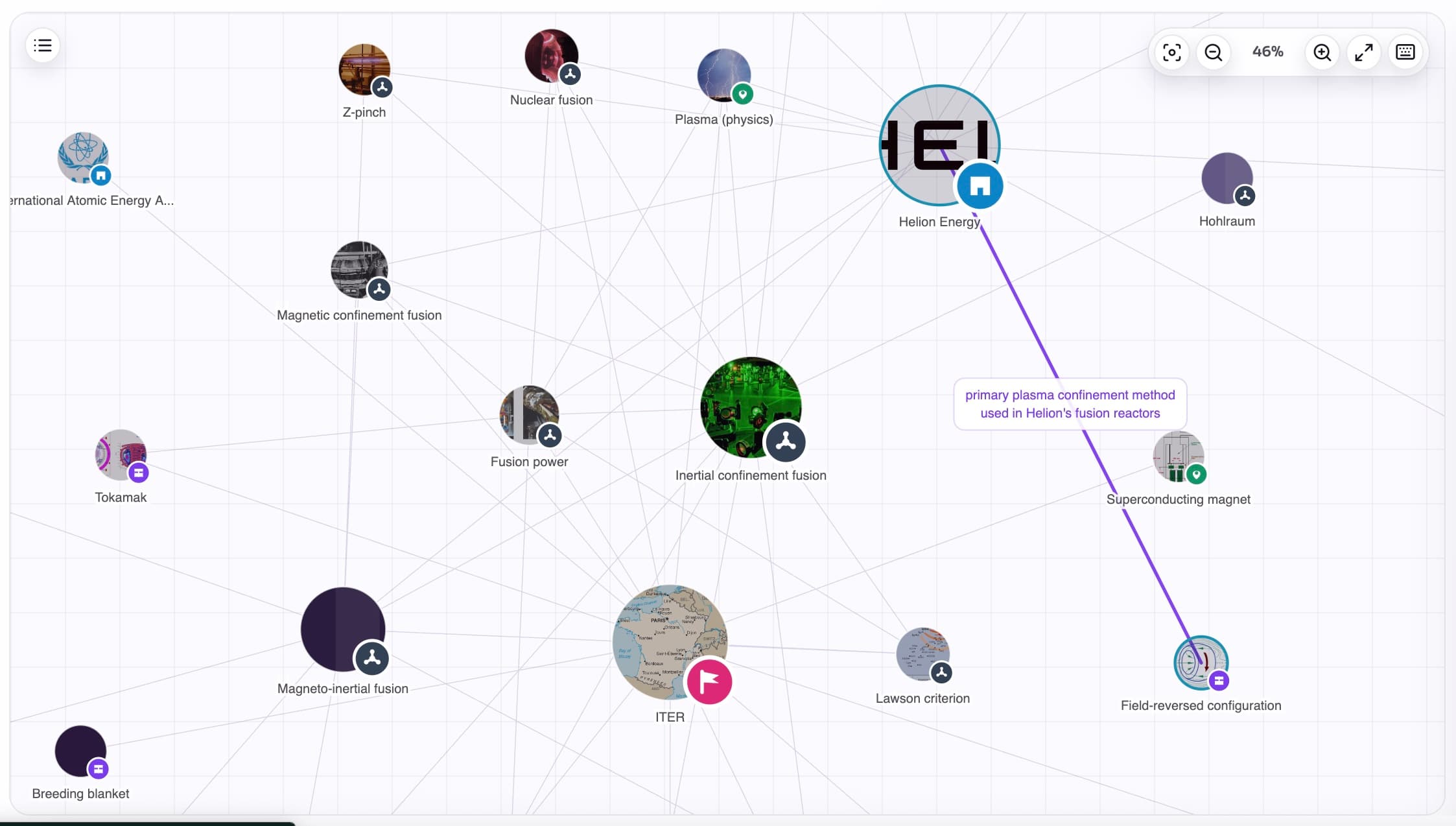
I'd write something down, file it, and weeks later have no idea why it mattered or what it related to. A knowledge graph didn't fix this by storing more. It fixed it by making me connect each idea to something else as I went. That small habit is the whole point.
Nodes are just named ideas
A node is one concept you can name: photosynthesis, supply and demand. If you can't give it a short label, you probably don't understand it yet. Nodes stay small on purpose — just enough to connect to something else.
The connections are the point
The edges between nodes are where the learning happens. Saying two ideas relate is a claim, and making that claim is thinking. Each connection is a small decision that turns a pile of facts into something you can reason with.
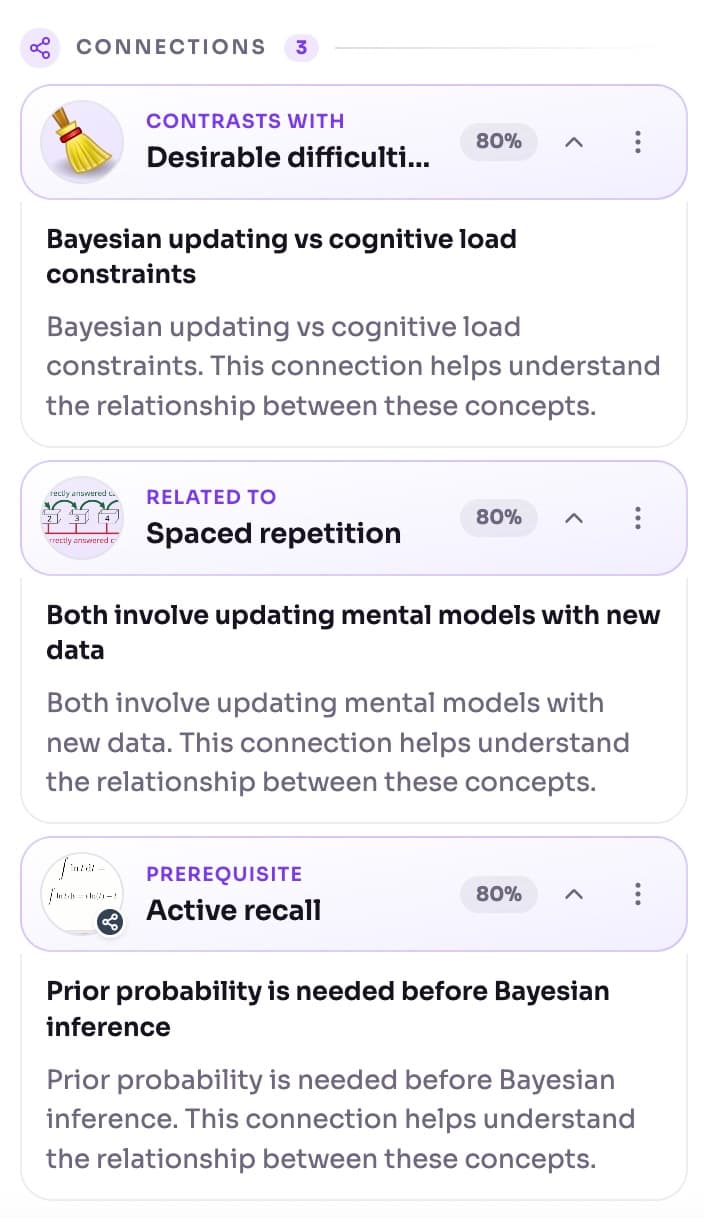
Why a graph beats a list
A list tells you what to know but not how it fits together. A graph shows the structure, so the gaps get obvious. You can see what you understand — and what you only think you do.
It only works if you build it
The graph that helps you remember is the one you made yourself. Copying a finished map skips the part that makes it stick: deciding what belongs and what doesn't. The graph ends up being a record of your own thinking, which is why it's hard to lose.