How to learn history as an adult
If you want to learn history outside a classroom, the first difficulty is often choosing where to start. “The Roman Empire” is a lot to take on. “How did Rome’s government change?” gives you a question to read around. You can widen the subject as you go.
Get your bearings before going into detail
Choose an introductory book or a museum’s overview of the period. Look for an author you can identify, references you can follow, and a clear account of the subject. An absorbing podcast can spark an interest; its bibliography or episode notes can help you find the next thing to read.
Keep a rough chronology and a map nearby. When an unfamiliar person or place appears, note where it fits. You do not need to learn every date before reading, but you do need enough context to tell whether two people lived at the same time.
Ask what kind of evidence you are reading
A speech tells you something different from a later historian’s account. Ask who produced it, when, for whom, and what other evidence supports it. The Digital Inquiry Group’s historical thinking chart organizes this work around sourcing, context, comparison of documents, and close reading.
Try those questions with a painting, too. Versailles dates the Tennis Court Oath to 20 June 1789 and describes David’s initial sketch from 1791. The image was made after the event. That is a useful detail to record before treating it as a literal view of the day.
Keep a question open as you read
When two accounts disagree, write down the claim each makes and the evidence each uses. Sometimes they describe different experiences; sometimes they argue for different explanations. You do not have to settle the disagreement immediately.
At the end of a session, write a few sentences about what you now understand and one question that remains. For the next session, choose a chapter or source that addresses that question. This gives your reading a direction without turning an interest into a full syllabus.
For example, “What changed in the deputies’ relationship with the king in June 1789?” is a manageable next question to the Tennis Court Oath. You can investigate it through an overview first, then look at documents from the period.
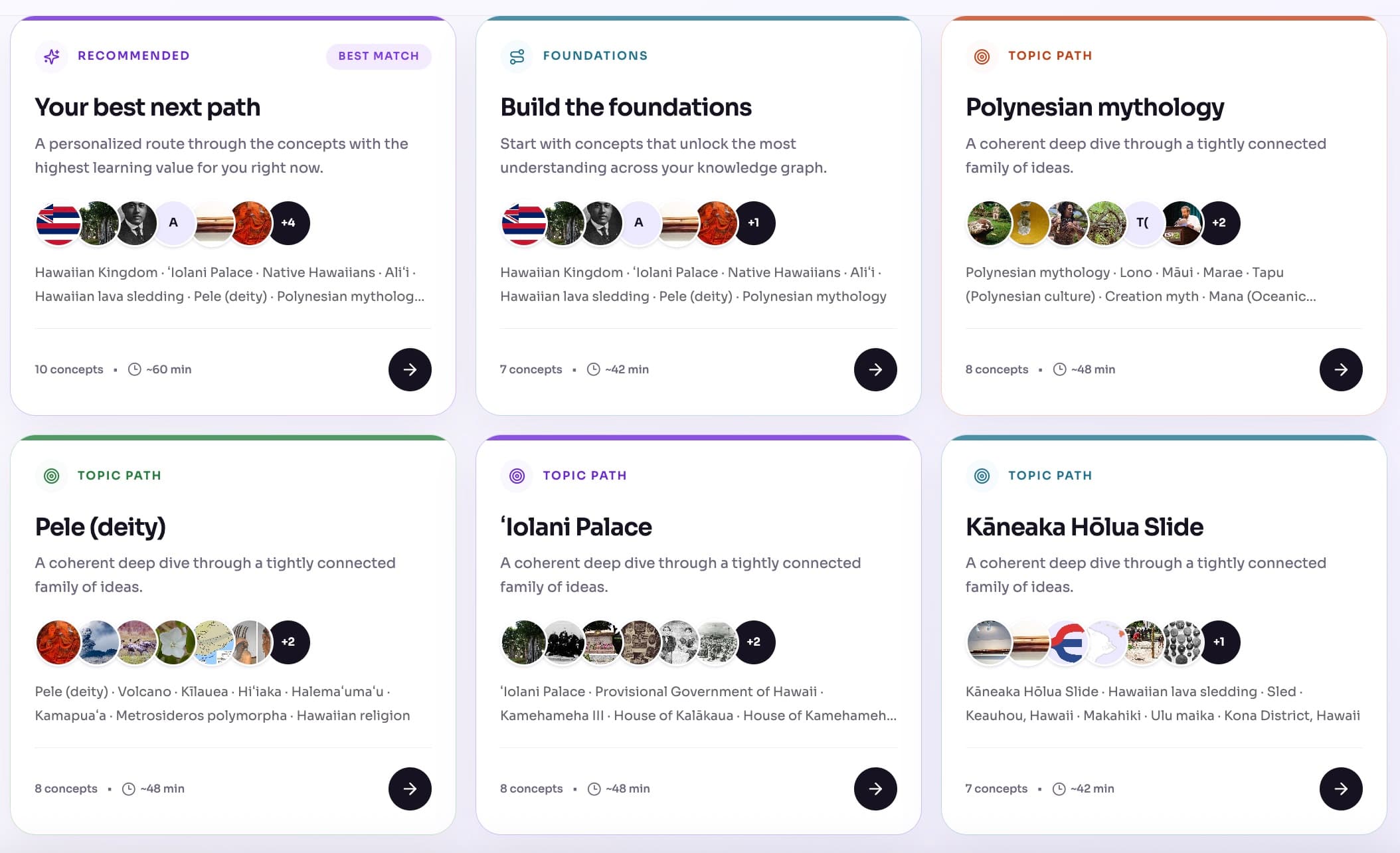
Organize your reading in Aristotree
Keep the people, events, and questions from your sources together in a history map you can revisit.