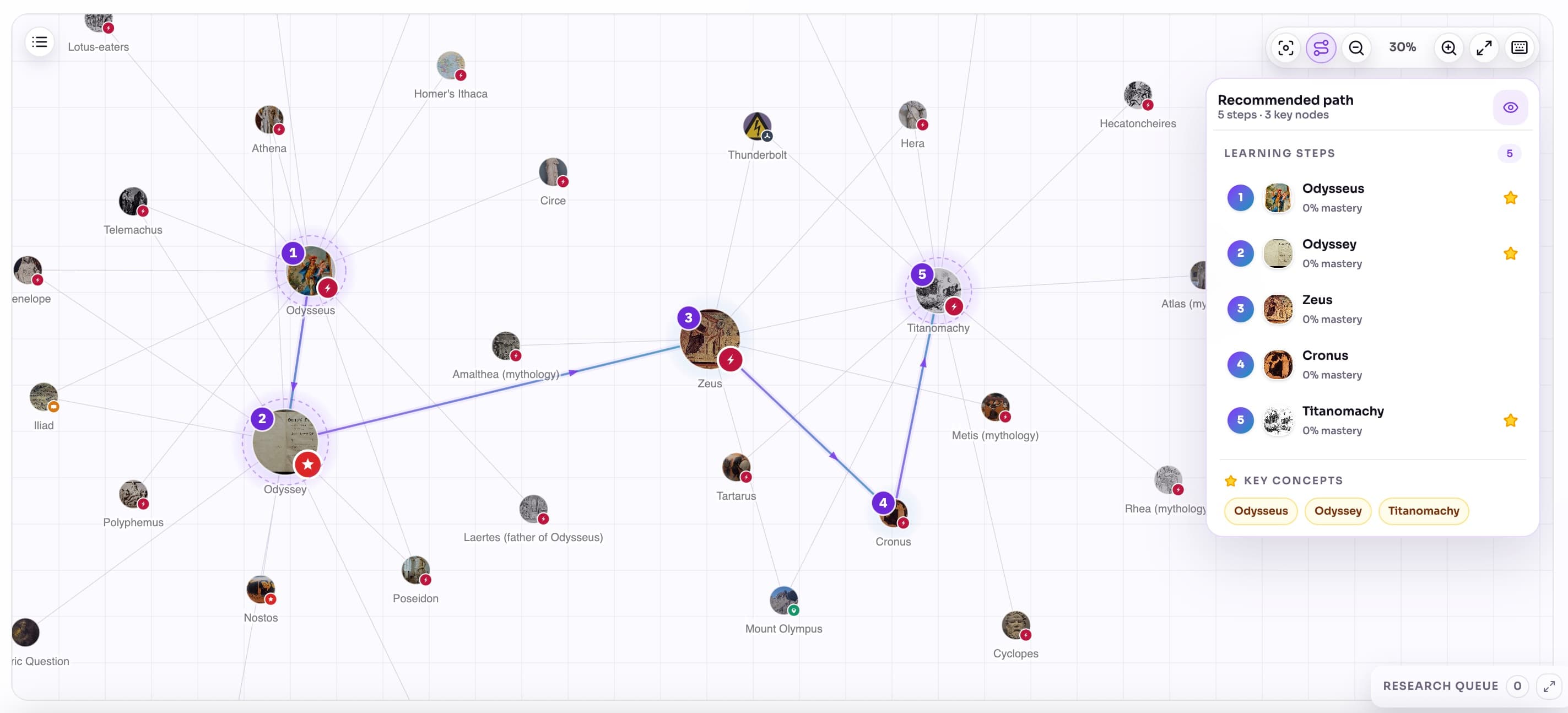
A knowledge graph is freeing until it grows. Fifty concepts are great; three hundred are hard to navigate. A recommended learning path reads the structure of your graph and suggests a sequence, so you're not stuck deciding where to start every time.
Order is part of understanding
Curricula are ordered for a reason: prerequisites matter. You can't learn derivatives before functions, or demand without supply. A graph holds all the connections, but a path turns them into a narrative where each step builds on the ones before it.
It's not a random walk
A good path follows the connections you've made (prerequisites, dependencies, examples) and weighs concepts by how central and ready they are. The result respects what you already know, surfaces what's next, and avoids dropping you into a concept whose foundations aren't there yet.
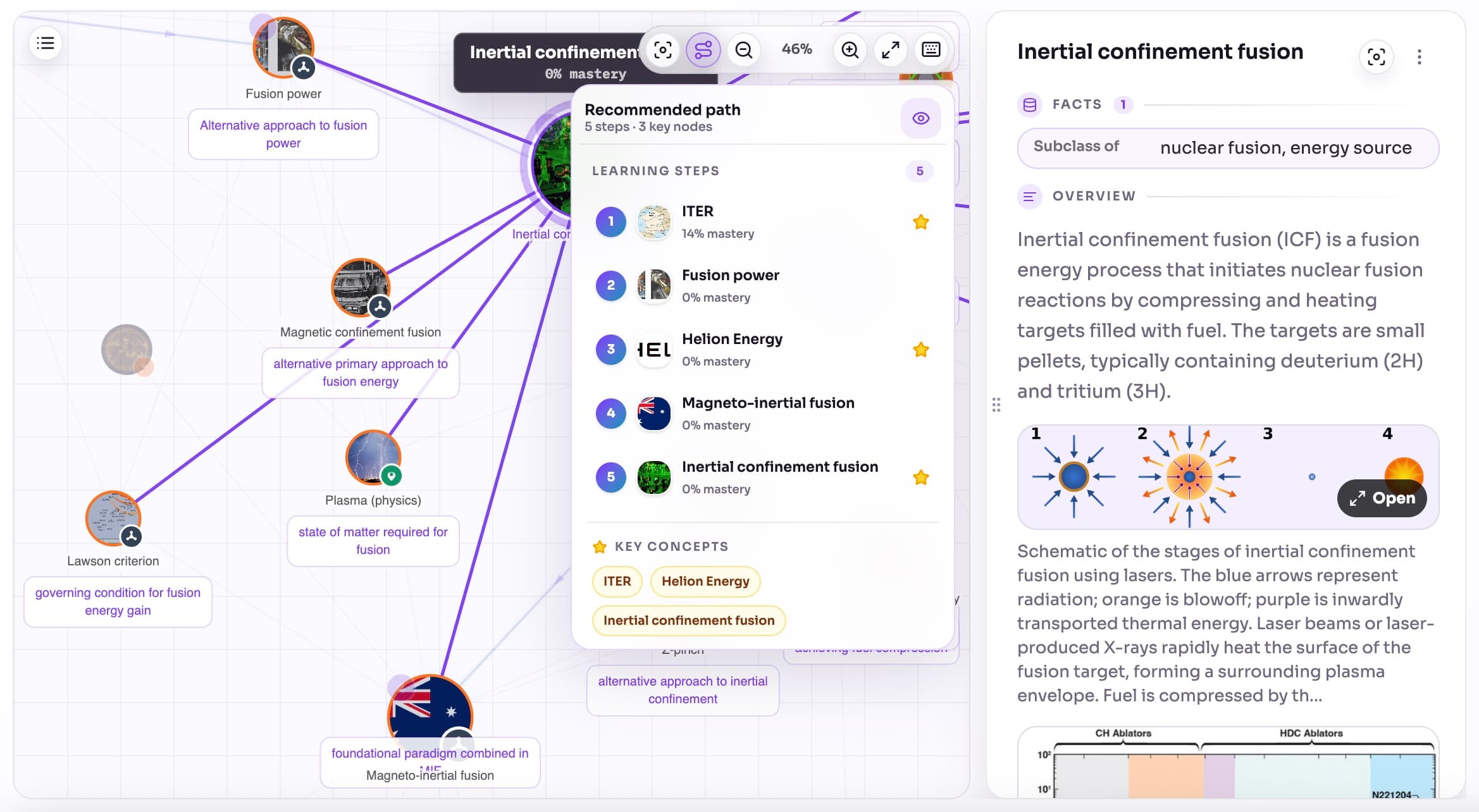
Key concepts get flagged
A path that's just a list of nodes isn't much better than a syllabus. The useful version points out the concepts that matter most — the hubs and prerequisites you can't skip — so you know where to slow down.
Show it or hide it
A recommended path shouldn't lock your graph into one reading order. Reveal it when you want direction, hide it when you want to explore. The graph is what matters; the path is just a way to read it.