How to remember the history you read
You finish a history book, enjoy it, and a month later struggle to explain what it said. Before starting another one, try changing what you do at the end of a reading session. A few questions answered from memory are a useful place to begin.
What can you explain with the book closed?
After reading, put the book aside and write a short account of what happened. Who was involved? What changed? What explanation does the author give? Then check your answer against the chapter and correct the gaps.
There is research behind the first part of this exercise. In a 2006 study, students who recalled prose passages remembered more after two days or a week than students who repeatedly reread them. Rereading performed better on a test just five minutes later. That distinction matters when you want to remember a book next month.
Make notes you can return to
Write down the book, chapter, and page beside a claim you want to keep. Separate the author’s explanation from your own question. A note such as “The author argues that financial pressure weakened the monarchy” is easier to check than “Money caused the Revolution.”
Choose questions that ask for an explanation as well as a name or date. “What happened at the Tennis Court Oath?” and “Why did the deputies’ promise matter?” ask different things. Keep whichever questions help you understand the chapter; there is no required number.
Come back after a gap
Answer your questions again on another day, before opening your notes. If you cannot reconstruct the answer, read the relevant passage and try again later. A reminder for later in the week is a reasonable starting point, rather than a schedule you have to follow exactly.
A 2006 review of distributed practice found that the spacing between study sessions and the time until the final test both mattered. Longer retention periods generally called for longer gaps. It does not give every reader one ideal timetable.
Use a map when the relationships get complicated
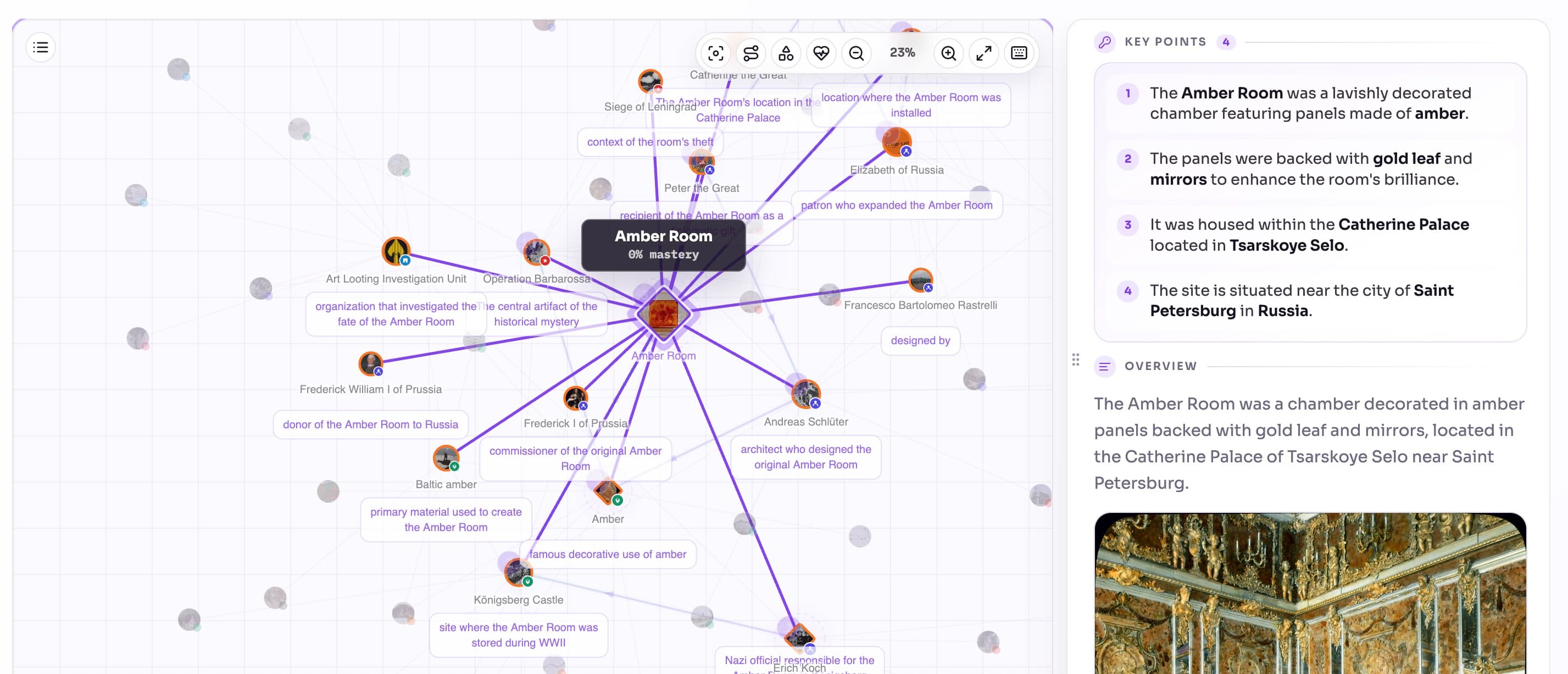
A family tree, timeline, or small graph can give you somewhere to record names and relationships. Label a connection precisely, such as “succeeded” or “allied with,” and save the passage that supports it. An unlabeled line leaves you guessing when you return.
You still need to practice explaining those relationships. In experiments with science texts, Karpicke and Blunt found that retrieval practice outperformed studying by making concept maps. The study did not test history books or Aristotree, but it is a reason to include recall alongside a map.
Keep your book notes in Aristotree
Record the people, events, and sources from your reading, then use review questions to practice what you can explain.