Antonio Gaudí
This knowledge graph presents Antoni Gaudí as the central figure and connects him to the main ideas, places, and works associated with his career.
Key topics
Antoni Gaudí
Antoni Gaudí i Cornet was a Catalan architect and designer, widely known as the greatest exponent of Catalan Modernisme.
Art Nouveau
Art Nouveau is an international style of art, architecture, and applied art, especially the decorative arts.
- Popularized internationally between **1890 and 1910**.
- Characterized by **sinuous curves** and forms inspired by nature.
- Utilized modern materials including **iron, glass, and concrete**.
Artigas Gardens
The Artigas Gardens are a park in La Pobla de Lillet, Barcelona.
- Designed by **Antoni Gaudí** and built between **1905** and **1906**.
- Located in the municipality of **La Pobla de Lillet**.
- Features architectural **arches** and **Catholic symbols**.
Augustus Pugin
Augustus Welby Northmore Pugin was an English architect, designer, artist and critic with French and Swiss origins.
- He lived from **1812 to 1852**.
- He is noted for his pioneering work in **Gothic Revival** architecture.
- He designed the interior and **clock tower** of the **Palace of Westminster**.
Barcelona
Barcelona is a city on the northeastern coast of Spain.
- It is the capital city of the autonomous community of **Catalonia**.
- The city hosts a population of **1.7 million** residents within its municipal boundaries.
- The broader urban area encompasses **5.7 million** people, making it the fifth-largest in the **European Union**.
Baroque architecture
Baroque architecture is a highly decorative and theatrical style which appeared in Italy in the late 16th century and gradually spread across Europe.
- Originated in **Italy** in the late **16th century**.
- Promoted by the **Catholic Church** and the **Jesuits** to inspire awe.
- Reached its peak during the **High Baroque** period from **1625 to 1675**.
Casa Amatller
Casa Amatller is a building in the Modernisme style in Barcelona, Catalunya, Spain, designed by renowned Catalan architect Josep Puig i Cadafalch.
- Designed by the influential Catalan architect **Josep Puig i Cadafalch**.
- Represents a key example of the **Modernisme** style in **Barcelona**.
- Forms part of the **Illa de la Discòrdia**, a block noted for its architectural diversity.
Casa Batlló
Casa Batlló is a building in the center of Barcelona, Spain.
- The building underwent a major redesign in **1904** under the direction of **Antoni Gaudí**.
- It is widely recognized as one of the most significant architectural **masterpieces** by Gaudí.
- The project was a comprehensive **remodel** of a previously existing house in central **Barcelona**.
Casa Botines
The Casa Botines is a modernista building in León, Spain designed by Antoni Gaudí.
- The building was designed by the famous Catalan architect **Antoni Gaudí**.
- It is a representative work of the **modernista** architectural movement.
- The structure is situated in the city of **León, Spain**.
Casa Calvet
Casa Calvet is a building, designed by Antoni Gaudí for a textile manufacturer which served as both a commercial property and a residence.
- Designed by **Antoni Gaudí** for a textile manufacturer.
- Located at **Carrer de Casp 48** in the **Eixample district**.
- Construction occurred between the years **1898 and 1900**.
Casa Lleó Morera
The Casa Lleó Morera is a building designed by noted modernisme architect Lluís Domènech i Montaner, located at Passeig de Gràcia 35 in the Eixample district of Barcelona.
- Designed by the architect **Lluís Domènech i Montaner** in the **Modernisme** style.
- Originally constructed as **casa Rocamora** in **1864** before its major remodel in **1902**.
- Awarded the **Barcelona town council's Arts Building Annual Award** in **1906**.
Casa Milà
Casa Milà, popularly known as La Pedrera in reference to its unconventional rough-hewn appearance, is a Modernista building in Barcelona, Catalonia, Spain.
- Known as **La Pedrera** due to its rugged, stone-like exterior appearance.
- Designed by the architect **Antoni Gaudí** as his last private residence.
- Construction took place over a six-year period between **1906 and 1912**.
Casa Vicens
Casa Vicens is a modernist building situated in the Gràcia neighbourhood of Barcelona.
- Designed by **Antoni Gaudí** between **1883** and **1885**.
- Features an **orientalist** aesthetic inspired by **Neo-Mudéjar** traditions.
- Represents the first major project of the **Modernisme** architect.
Castile and León
Castile and León is an autonomous community of Spain.
- **Castile and León** is an **autonomous community** in northern **Spain**.
- The region does not have an officially designated **capital city**.
- **Valladolid** hosts the **executive** and **legislative** branches of government.
Catalan nationalism
Catalan nationalism promotes the idea that the Catalan people form a distinct nation and national identity.
- Asserts that the **Catalan people** form a distinct nation.
- Promotes the preservation of a unique **national identity**.
- Distinguished from **Catalanism**, which is more closely associated with **regionalism**.
Catenary arch
A catenary arch is a type of architectural arch that follows an inverted catenary curve.
- Follows an **inverted catenary curve**.
- Used in buildings since **ancient times**.
- Distinct from a **parabolic arch**.
Church of Colònia Güell
The Church of Colònia Güell is an unfinished work by Antoni Gaudí.
- Designed by the architect **Antoni Gaudí**.
- Commissioned in **1898** by **Count Eusebi de Güell**.
- Construction officially began in **1908**.
City Council of Barcelona
The City Council of Barcelona is the top-tier administrative and governing body of the municipality of Barcelona, Catalonia, Spain.
- Acts as the **top-tier administrative body** for the municipality of **Barcelona**.
- Includes the **Mayor of Barcelona** as the head of the executive branch.
- Features an elected **41-member Plenary** with legislative and scrutiny authority.
Comillas
Comillas is a small township and municipality in the northern reaches of Spain, in the autonomous community of Cantabria.
- Located in the autonomous community of **Cantabria**, Spain.
- Home to the seat of the **Marquessate of Comillas**.
- Formerly hosted the **Comillas Pontifical University**.
Eixample
The Eixample is a district of Barcelona between the old city and what were once surrounding small towns, constructed in the 19th and early 20th centuries.
- Developed between the **19th and early 20th centuries**.
- Located between the **old city** and former surrounding towns.
- Recorded a population of **262,000** in the **2005 census**.
El Capricho
El Capricho is a villa in Comillas (Cantabria), Spain, designed by Antoni Gaudí.
- Designed by the architect **Antoni Gaudí**.
- Built between the years **1883 and 1885**.
- Located in **Comillas**, Spain.
El Raval
El Raval is a neighborhood in the Ciutat Vella district of Barcelona, the capital city of Catalonia.
- Located in the **Ciutat Vella** district of **Barcelona**.
- Formerly known as **Barri Xinès** or **Barrio Chino**.
- Borders the famous street **La Rambla**.
English landscape garden
The English landscape garden, also called English landscape park or simply the English garden, is a style of "landscape" garden which emerged in England in the early 18th century, and spread across Europe, replacing the more formal, symmetrical French formal garden which had emerged in the 17th century as the principal gardening style of Europe.
- Emerged in **England** in the early **18th century**.
- Replaced the **French formal garden** style.
- Pioneered by **William Kent** and other designers.
Eusebi Güell
Eusebi Güell Bacigalupi, 1st Count of Güell, also referred as Eusebio Güell, was a Spanish entrepreneur who profited greatly from the industrial revolution in Catalonia in the late 19th century.
- Held the noble title of **1st Count of Güell**.
- Built his fortune during the **industrial revolution** in **Catalonia**.
- Recognized as a key **industrial magnate** of the late **19th century**.
Francisco de Paula del Villar y Lozano
Francisco de Paula del Villar y Lozano was a Spanish architect.
- He was a **Spanish architect** active during the 19th century.
- His lifespan extended from **1828** to **1901**.
- He contributed to the architectural development of **Spain** during his career.
Garden city movement
The garden city movement is a 20th-century urban planning movement that promoted satellite communities surrounding a central city, separated by green belts.
- Proposed by **Ebenezer Howard** in **1898**.
- Features satellite communities separated by **green belts**.
- Integrates **residences**, **industry**, and **agriculture** in balanced proportions.
Gaudí House Museum
The Gaudí House Museum, located within the Park Güell in Barcelona, is a historic home museum that houses a collection of furniture and objects designed by the Catalan architect Antoni Gaudí.
- Located within **Park Güell** in **Barcelona**.
- Served as the residence of **Antoni Gaudí** from **1906** to **1925**.
- Opened as a museum on **28 September 1963**.
Gothic Revival architecture
Gothic Revival is an architectural movement that after a gradual build-up beginning in the second half of the 17th century became a widespread movement in the first half of the 19th century, mostly in England.
- The movement gained significant momentum during the first half of the **19th century**.
- It draws inspiration from **medieval Gothic** design features.
- Key architectural elements include **decorative patterns**, **finials**, and **lancet windows**.
Gràcia
Gràcia, is a district of the Mediterranean city of Barcelona, in the northeastern autonomous community of Catalonia, Spain.
- Formally annexed by **Barcelona** in **1897**.
- Comprises five distinct neighborhoods known as **barris**.
- Formerly an **independent municipality** for several centuries.
History of the cotton industry in Catalonia
The cotton industry was the first and leading industry of Catalan industrialisation that led by the mid-19th century to Catalonia becoming the main industrial region of Spain.
- Acted as the leading industry for **Catalan industrialisation**.
- Enabled **Catalonia** to become the main industrial region of **Spain** by the **mid-19th century**.
- Represented a rare **Mediterranean exception** to northern European industrial concentration.
Horace Walpole
Horatio Walpole, 4th Earl of Orford, better known as Horace Walpole, was a British Whig politician, writer, historian and antiquarian.
- He held the title of **4th Earl of Orford**.
- His life spanned the years **1717 to 1797**.
- He was an active member of the **Whig** political party.
Hyperboloid
In geometry, a hyperboloid of revolution, sometimes called a circular hyperboloid, is the surface generated by rotating a hyperbola around one of its principal axes.
- A **circular hyperboloid** is formed by rotating a **hyperbola** around a principal axis.
- It is classified as a **quadric surface**.
- General hyperboloids are created via **directional scalings** or **affine transformations**.
Illa de la Discòrdia
The Illa de la Discòrdia or Mansana de la Discòrdia — "Block of Discord"; Spanish: Manzana de la Discordia — is a city block on Passeig de Gràcia in the Eixample district of Barcelona, Catalonia, Spain.
- The block is located on **Passeig de Gràcia** in **Barcelona**.
- It features works by **Lluís Domènech i Montaner**, **Antoni Gaudí**, **Josep Puig i Cadafalch**, and **Enric Sagnier**.
- The buildings were constructed in the **early 20th century**.
Ironwork
Ironwork is any weapon, artwork, utensil, or architectural feature made of iron, especially one used for decoration.
- Categorized into **wrought iron** and **cast iron**.
- Early extraction and weapon development attributed to the **Hittites**.
- Historical usage dates back to **4000 BC**.
Joan Martorell
Joan Martorell i Montells was a Catalan architect and designer.
- He lived from **1833** to **1906**.
- He was a professional **Catalan architect** and designer.
- He was the uncle of the architect **Bernardí Martorell i Puig**.
John Ruskin
John Ruskin was an English polymath – a writer, lecturer, art historian, art critic, draughtsman and philanthropist of the Victorian era.
- He lived from **1819 to 1900**.
- He was a prolific **writer**, **lecturer**, and **art critic**.
- His expertise included **architecture** and **political economy**.
Josep Maria Jujol
José María Jujol Gibert was a Catalan Spanish architect.
- He lived from **1879 to 1949**.
- He was a practitioner of **Modernisme** and **Art Nouveau**.
- He collaborated with **Antoni Gaudí** on major projects.
Josep Maria Subirachs
Josep Maria Subirachs i Sitjar was a Spanish sculptor and painter of the late 20th century.
- He was a **Spanish sculptor** and **painter** of the late **20th century**.
- His most famous work is the **Passion Facade** of the **Sagrada Família**.
- His artistic approach was noted for being **controversial** due to its departure from the original architect's style.
Josep Puig i Cadafalch
Josep Puig i Cadafalch was a Spanish architect who designed many significant buildings in Barcelona, and a politician who had a significant role in the development of Catalan regional institutions.
- Lived from **1867** to **1957**.
- Renowned for designing numerous significant buildings throughout **Barcelona**.
- Active as a **politician** involved in the advancement of **Catalan regional institutions**.
José María Bocabella
José María Bocabella y Verdaguer was a Spanish bookseller and philanthropist, best known for initiating the construction of the Basílica i Temple Expiatori de la Sagrada Família in Barcelona.
- Born in **1846**, he worked as a professional **bookseller** in Barcelona.
- He founded the **Asociación Espiritual de Devotos de San José** in **1866**.
- He purchased the land for the **Sagrada Família** in **1881**.
La Rambla, Barcelona
La Rambla is considered the most well known street in central Barcelona.
- Stretches for **1.2 kilometres** through central **Barcelona**.
- Connects **Plaça de Catalunya** to the **Christopher Columbus Monument**.
- Serves as the boundary between **Barri Gòtic** and **El Raval**.
León, Spain
León is a city and municipality of Spain and the capital of the province of León located in the autonomous community of Castile and León.
- León is the capital of the **province of León** in **Spain**.
- The city is located south of the **Cantabrian Mountains**.
- It is situated between the **Bernesga** and **Torío** rivers.
Lluís Domènech i Montaner
Lluís Domènech i Montaner was a Catalan architect who was very much involved in and influential for the Catalan Modernisme català, the Art Nouveau/Jugendstil movement.
- He lived from **1849 to 1923**.
- He was a key figure in **Modernisme català**.
- His work is associated with **Art Nouveau** and **Jugendstil**.
Modernisme
Modernisme, also known as Catalan modernism and Catalan art nouveau, is the historiographic denomination given to an art and literature movement associated with the search for a new entitlement of Catalan culture, one of the most predominant cultures within Spain.
- Also known as **Catalan art nouveau**.
- Rooted in the cultural revindication of **Catalan identity**.
- Primary expression through **Modernista architecture**.
Mudéjar art
Mudéjar art, or Mudéjar style, was a type of ornamentation and decoration used in the Iberian Christian kingdoms, primarily between the 13th and 16th centuries.
- Primarily active between the **13th and 16th centuries**.
- Combines **Al-Andalus** motifs with **Romanesque**, **Gothic**, and **Renaissance** styles.
- Includes the production of **Hispano-Moresque lustreware**.
Neo-Mudéjar
Neo-Mudéjar is a type of Moorish Revival architecture practised in the Iberian Peninsula and to a far lesser extent in Ibero-America.
- A form of **Moorish Revival architecture** originating in the late **19th century**.
- Centered in **Spain** and **Portugal**, with minor presence in **Ibero-America**.
- Utilizes the **horseshoe arch** as a primary structural and aesthetic element.
Neoclassical architecture
Neoclassical architecture, sometimes referred to as Classical Revival architecture, is an architectural style produced by the Neoclassical movement that began in the mid-18th century in Italy, France and Germany.
- The movement began in the **mid-18th century**.
- It originated in **Italy**, **France**, and **Germany**.
- It is also referred to as **Classical Revival architecture**.
Orientalism
In art history, literature, and cultural studies, Orientalism is the imitation or depiction of aspects of the Eastern world by writers, designers, and artists from the Western world.
- Involves the depiction of the **Eastern world** by Western creators.
- Prominent in **19th-century academic art** and literature.
- Focuses heavily on regions including **West Asia** and **North Africa**.
Palace of Westminster
The Palace of Westminster is the meeting place of the Parliament of the United Kingdom and is located in London, England.
- It is the meeting place of the **UK Parliament**.
- The building contains the **House of Commons** and the **House of Lords**.
- The **Elizabeth Tower** houses the famous bell known as **Big Ben**.
Palau Güell
The Palau Güell is a mansion designed by the architect Antoni Gaudí for the industrial tycoon Eusebi Güell, and was built between 1886 and 1888.
- Designed by **Antoni Gaudí** for **Eusebi Güell**.
- Construction took place between **1886 and 1888**.
- Located on the **Carrer Nou de la Rambla** in **Barcelona**.
Park Güell
Park Güell is a complex of parks and gardens in Barcelona with architectural elements, located in the La Salut neighborhood of the Gràcia district in Barcelona, Catalonia, Spain.
- Located in the **La Salut** neighborhood of **Barcelona**.
- Positioned on the southern slope of the **Turó del Carmel**.
- Part of the **Collserola** mountain range.
Passeig de Gràcia
Passeig de Gràcia is one of the major avenues in Barcelona and one of its most important shopping and business areas, containing several of the city's most celebrated pieces of architecture.
- Located in the central **Eixample** district of **Barcelona**.
- Stretches between the major landmarks of **Plaça Catalunya** and **Carrer Gran de Gràcia**.
- Functions as a primary center for **shopping and business** in the city.
Porcelain tile
Porcelain tiles are a dense, vitrified ceramic tiles characterised by a water absorption less 0.5 per cent.
- Characterized by a **water absorption rate** under **0.5 percent**.
- Engineered through **high-temperature firing** to eliminate internal porosity.
- Regulated by international standards including **ISO 13006** and **BS EN 14411**.
Romanticism
Romanticism was an artistic and intellectual movement that originated in Europe towards the end of the 18th century.
- The movement originated in **Europe** in the late **18th century**.
- It emphasized the importance of **subjectivity** and **imagination**.
- It promoted a deep **appreciation of nature**.
Ruled surface
In geometry, a surface S in 3-dimensional Euclidean space is ruled if through every point of S, there is a straight line that lies on S.
- A surface is ruled if a **straight line** passes through every point on it.
- It exists within **3-dimensional Euclidean space**.
- Examples include the **plane**, **cylinder**, and **cone**.
Sagrada Família
Basílica i Temple Expiatori de la Sagrada Família, or simply Sagrada Família, is a Catholic church under construction in the Eixample district of Barcelona, Catalonia, Spain.
- Construction of the basilica officially commenced in **1882**.
- The project was designed by the influential Catalan architect **Antoni Gaudí**.
- The church is located within the **Eixample** district of **Barcelona**, **Spain**.
Strawberry Hill House
Strawberry Hill House—often called simply Strawberry Hill—is a Gothic Revival villa in Twickenham, London, built by Horace Walpole from 1749 onward.
- Construction of the villa commenced in **1749**.
- It is located in **Twickenham, London**.
- The house is the primary example of the **Strawberry Hill Gothic** style.
Structural engineering
Structural engineering is a sub-discipline of civil engineering in which structural engineers are trained to design the 'bones and joints' that create the form and shape of human-made structures.
- A sub-discipline of **civil engineering** focused on structural integrity.
- Engineers calculate **stability, strength, and rigidity** for various structures.
- Involves assessing **earthquake-susceptibility** in building design.
Trencadís
Trencadís, also known as pique assiette, broken tile mosaics, bits and pieces, memoryware, and shardware, is a type of mosaic made from cemented-together tile shards and broken chinaware.
- The technique uses **cemented-together tile shards** and **broken chinaware**.
- It is also known by names such as **pique assiette** and **shardware**.
- The style is strongly associated with the architect **Antoni Gaudí**.
UNESCO
The United Nations Educational, Scientific and Cultural Organization is a specialized agency of the United Nations (UN) with the aim of promoting world peace and security through international cooperation in education, arts, sciences and culture.
- Headquartered in **Paris, France**.
- Comprises **194 member states** and **12 associate members**.
- Operates **53 regional field offices** and **199 national commissions**.
Victorian architecture
Victorian architecture is a series of architectural revival styles in the mid-to-late 19th century.
- The period spans the reign of **Queen Victoria** from **1837 to 1901**.
- Popularity of these styles peaked from **1850** and later.
- The movement is defined by **eclectic revivals** of historic styles.
World Heritage Site
World Heritage Sites are landmarks and areas with legal protection under an international treaty administered by UNESCO for having cultural, historical, or scientific significance.
- Administered by **UNESCO** under an international legal treaty.
- Designated based on **cultural, historical, or scientific significance**.
- Sites must demonstrate **outstanding universal value** to humanity.
Connections to explore
-
 Antoni Gaudí ↔
 Sagrada Família: defining architectural masterpiece and life-long project
-
Antoni Gaudí ↔
 Modernisme: artistic and architectural movement of which he was the primary exponent
-
Antoni Gaudí ↔
 Eusebi Güell: primary patron and long-term collaborator
-
Antoni Gaudí ↔
 Park Güell: major urban design project demonstrating his integration of nature and...
-
Antoni Gaudí ↔
 Casa Batlló: iconic residential renovation project
-
Antoni Gaudí ↔
 Casa Milà: innovative residential building showcasing his structural engineering
-
Antoni Gaudí ↔
 Gothic Revival architecture: early stylistic influence and departure point
-
Antoni Gaudí ↔
 Catenary arch: structural principle fundamental to his design methodology
-
Casa Milà ↔ Modernisme: architectural style defining the building
-
Casa Milà ↔ Catenary arch: structural element used in the attic
-
Casa Milà ↔ Casa Batlló: comparative residential work by the same architect
-
Casa Milà ↔
 World Heritage Site: designated as a protected cultural landmark
-
Casa Milà ↔
 Passeig de Gràcia: located on this major thoroughfare
-
Casa Milà ↔
 Art Nouveau: broader international movement context
-
Casa Milà ↔
 Structural engineering: pioneering use of self-supporting stone facades
-
Casa Milà ↔
 Eixample: urban district where the building is located
-
Sagrada Família ↔ Modernisme: Architectural movement context
-
Sagrada Família ↔ Catenary arch: Structural engineering principle used by Gaudí
-
Sagrada Família ↔ Eusebi Güell: Primary patron and collaborator
-
Sagrada Família ↔ Gothic Revival architecture: Stylistic influence on the early design
-
Sagrada Família ↔
 Francisco de Paula del Villar y Lozano: Original architect of the Sagrada Família
-
Sagrada Família ↔
 José María Bocabella: Founder of the project
-
Sagrada Família ↔
 Josep Maria Subirachs: Sculptor of the Passion façade
-
Sagrada Família ↔ Eixample: District where the basilica is located
-
Sagrada Família ↔ World Heritage Site: International recognition status
-
Casa Batlló ↔ Modernisme: stylistic framework of the building
-
Casa Batlló ↔ Catenary arch: structural element used in the design
-
Casa Batlló ↔ Passeig de Gràcia: location of the building
-
Casa Batlló ↔ Art Nouveau: broader international artistic movement
-
Casa Batlló ↔ World Heritage Site: international recognition status
-
Casa Batlló ↔
 Trencadís: architectural technique used in the facade
-
Casa Batlló ↔
 Josep Maria Jujol: collaborator on the project
-
Casa Batlló ↔
 Illa de la Discòrdia: architectural context of the block
-
Casa Batlló ↔
 Lluís Domènech i Montaner: architect of a neighboring building
-
Eusebi Güell ↔ Park Güell: major urban development project commissioned by Güell
-
Eusebi Güell ↔ Modernisme: artistic movement patronized by Güell
-
Eusebi Güell ↔
 Church of Colònia Güell: industrial project commissioned by Eusebi Güell
-
Eusebi Güell ↔
 Palau Güell: urban residence commissioned by Eusebi Güell
-
Eusebi Güell ↔
 History of the cotton industry in Catalonia: economic context for Güell's wealth
-
Eusebi Güell ↔
 Comillas: location of Güell's summer estate
-
Eusebi Güell ↔
 El Capricho: early architectural commission by Güell's family
-
Eusebi Güell ↔
 Catalan nationalism: political and cultural movement supported by Güell
-
Antoni Gaudí ↔ Church of Colònia Güell: Industrial village site for structural experimentation
-
Antoni Gaudí ↔
 Casa Vicens: First major residential project by Gaudí
-
Antoni Gaudí ↔
 Joan Martorell: Influential mentor and architect
-
Antoni Gaudí ↔
 Casa Calvet: Most conventional work by Gaudí
-
Antoni Gaudí ↔
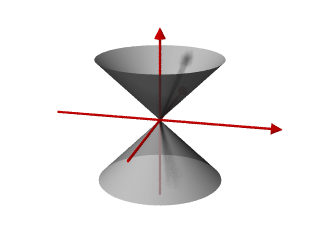 Hyperboloid: Geometric basis for Gaudí's architectural forms
-
Antoni Gaudí ↔
 Casa Botines: Rare project outside of Catalonia
-
Antoni Gaudí ↔
 Ruled surface: Mathematical foundation of Gaudí's organic designs
-
Gothic Revival architecture ↔ Art Nouveau: stylistic successor and departure from historicist revivals
-
Gothic Revival architecture ↔
 Horace Walpole: pioneer of the Gothic Revival style
-
Gothic Revival architecture ↔
 Strawberry Hill House: defining early example of Gothic Revival architecture
-
Gothic Revival architecture ↔
 Augustus Pugin: key architect and theorist of the Gothic Revival
-
Gothic Revival architecture ↔
 Palace of Westminster: major landmark of the Gothic Revival
-
Gothic Revival architecture ↔
 John Ruskin: influential critic who championed Gothic architecture
-
Gothic Revival architecture ↔
 Neoclassical architecture: architectural movement that Gothic Revival reacted against
-
Gothic Revival architecture ↔
 Romanticism: cultural context that fueled the Gothic Revival
-
Gothic Revival architecture ↔
 Victorian architecture: broad era encompassing the peak of Gothic Revival
-
José María Bocabella ↔ Francisco de Paula del Villar y Lozano: first architect commissioned by the source for the basilica
-
José María Bocabella ↔ Antoni Gaudí: architect hired by the source to continue the basilica project
-
José María Bocabella ↔ Joan Martorell: architect who recommended Gaudí to the source
-
José María Bocabella ↔ Gothic Revival architecture: original architectural style intended for the Sagrada Família
-
José María Bocabella ↔
 Barcelona: location of the source's life and his major philanthropic project
-
Palau Güell ↔ Antoni Gaudí: Architect and designer of the mansion
-
Palau Güell ↔ Modernisme: Architectural movement of the building
-
Palau Güell ↔ World Heritage Site: Conservation status of the building
-
Palau Güell ↔ Barcelona: City where the mansion is located
-
Palau Güell ↔
 La Rambla, Barcelona: Location of the mansion
-
Palau Güell ↔
 Orientalism: Architectural influence on the design
-
Palau Güell ↔
 Mudéjar art: Stylistic precursor and influence
-
Palau Güell ↔
 Ironwork: Key material in the mansion's construction
-
Palau Güell ↔
 El Raval: Neighborhood context of the building
-
Palau Güell ↔
 UNESCO: Designating body for the site
-
Casa Vicens ↔ Modernisme: Architectural movement to which the building belongs
-
Casa Vicens ↔ Trencadís: Artistic technique used in the building's decoration
-
Casa Vicens ↔ Barcelona: City where the building is located
-
Casa Vicens ↔ Orientalism: Influenced the decorative and structural aesthetic of the building
-
Casa Vicens ↔
 Neo-Mudéjar: Provided the stylistic foundation for the building's design
-
Casa Vicens ↔
 Gràcia: Location of the building within Barcelona
-
Casa Vicens ↔
 Porcelain tile: Key material used for the building's exterior cladding
-
Casa Vicens ↔
 Artigas Gardens: Reflects the same early design philosophy as Casa Vicens
-
Park Güell ↔ Trencadís: is the signature decorative technique used throughout the park
-
Park Güell ↔ Modernisme: is the architectural movement defining the park's style
-
Park Güell ↔ Gràcia: is the district where the park is located
-
Park Güell ↔ World Heritage Site: designates the park as a protected cultural landmark
-
Park Güell ↔
 English landscape garden: influenced the design philosophy of the park
-
Park Güell ↔
 Garden city movement: provided the urban planning context for the project
-
Park Güell ↔
 Gaudí House Museum: is located within the park grounds
-
Casa Calvet ↔ Modernisme: exemplifies the early phase of this architectural movement
-
Casa Calvet ↔ Eixample: located within this historic district of Barcelona
-
Casa Calvet ↔ Ironwork: features intricate examples of this decorative technique
-
Casa Calvet ↔
 City Council of Barcelona: awarded the building a prize for the best building of the year
-
Casa Calvet ↔
 Baroque architecture: influenced the design through its restrained decorative elements
-
Casa Botines ↔ Modernisme: architectural movement classification
-
Casa Botines ↔ Gothic Revival architecture: architectural style influence
-
Casa Botines ↔
 León, Spain: geographic location of the building
-
Casa Botines ↔
 Castile and León: regional context of the site
-
Casa Batlló ↔
 Casa Lleó Morera: architectural neighbor in the Illa de la Discòrdia
-
Casa Batlló ↔ Casa Amatller: architectural neighbor in the Illa de la Discòrdia
-
Casa Batlló ↔
 Josep Puig i Cadafalch: contemporary architect and rival